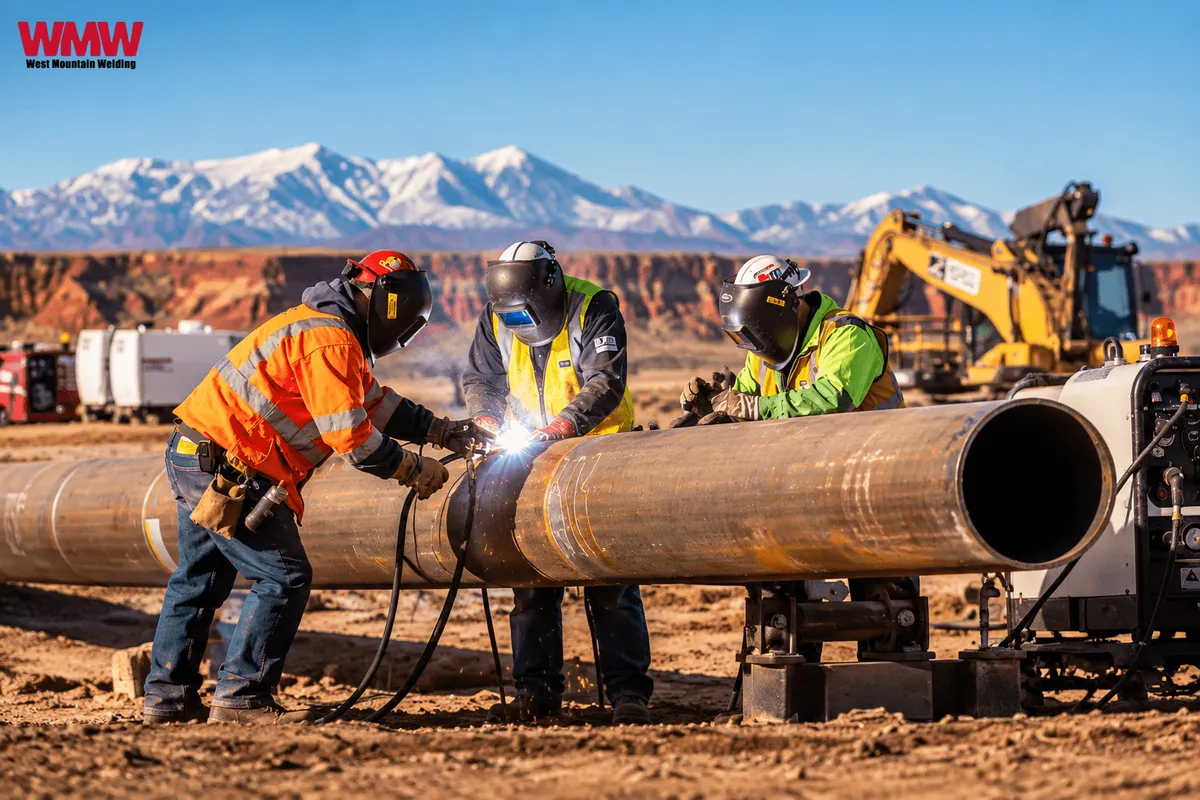
How Much Does Oil and Gas Pipe Welding Cost in Utah?
Oil and gas pipe welding cost in Utah depends on more than the amount of pipe being welded. Pricing is influenced by code certifications, field experience, mobile response capability, prefabrication capacity, quality control, pipe size and material, site access, and mobilization distance.
West Mountain Welding, based in Payson, UT, evaluates these factors when preparing project-specific quotes for oil and gas welding work.
Key Takeaways
Oil and gas pipe welding cost depends on qualifications, experience, mobilization, prefabrication, and QC, not crew size alone.
West Mountain Welding serves operators and contractors across Utah, including remote oil and gas regions.
Verify applicable certifications and welding qualifications before comparing bids.
Prefabrication can reduce field labor, installation time, and cost exposure.
Experienced, qualified welders can be difficult to secure for compressed project schedules.
What Drives Oil and Gas Pipe Welding Cost in Utah?
A weld defect in a pressurized pipeline can create safety, environmental, compliance, and production risks. That's why a responsible quote accounts for more than the welding itself.
Before comparing contractors, Utah operators should evaluate five factors:
Verified code certifications
Documented field experience
Mobile response capability
Prefabrication capacity
A visible quality control process
For additional background, see this guide to pipe welding in oil and gas.
Five Factors Utah Operators Should Compare
1. Verified Code Certifications
Confirm that the contractor's crews are qualified for the specific welding work required. Depending on the project, requirements may involve API 1104, ASME B31.1, ASME B31.3, AWS standards, or project-specific specifications.
Proper qualifications help reduce failed inspections, rejected welds, and rework.
2. Documented Field Experience
Field experience matters when crews are working around wellheads, pipelines, production facilities, remote sites, or active operations. Contractors familiar with these conditions can identify installation challenges and work more efficiently.
3. Mobile Response Capability
Remote projects can make mobilization a significant part of total cost. A contractor with genuine mobile capabilities can respond faster and help reduce downtime when field welding cannot wait for normal shop schedules.
4. Prefabrication Capacity
Moving appropriate welding and fabrication work into a controlled shop environment can reduce field labor and installation time.
West Mountain Welding's prefabricated piping systems allow pipe spools to be fabricated and labeled before reaching the jobsite.
5. Visible Quality Control
Quality control should be supported by documentation, including applicable welding procedures, qualifications, inspections, and material records.
A documented process helps identify defects before components reach the jobsite or enter service.
Location and Contractor Availability Across Utah
Remote wellhead and pipeline projects require more than a contractor located somewhere in Utah. Operators need a qualified crew capable of reaching the site with the necessary equipment and skills.
Mobilization distance, transportation, equipment, and response time can all affect the final price.
West Mountain Welding supports oil and gas projects throughout Utah and the Mountain West. Learn more about its certified welding and field experience.
Certifications That Affect Welding Cost
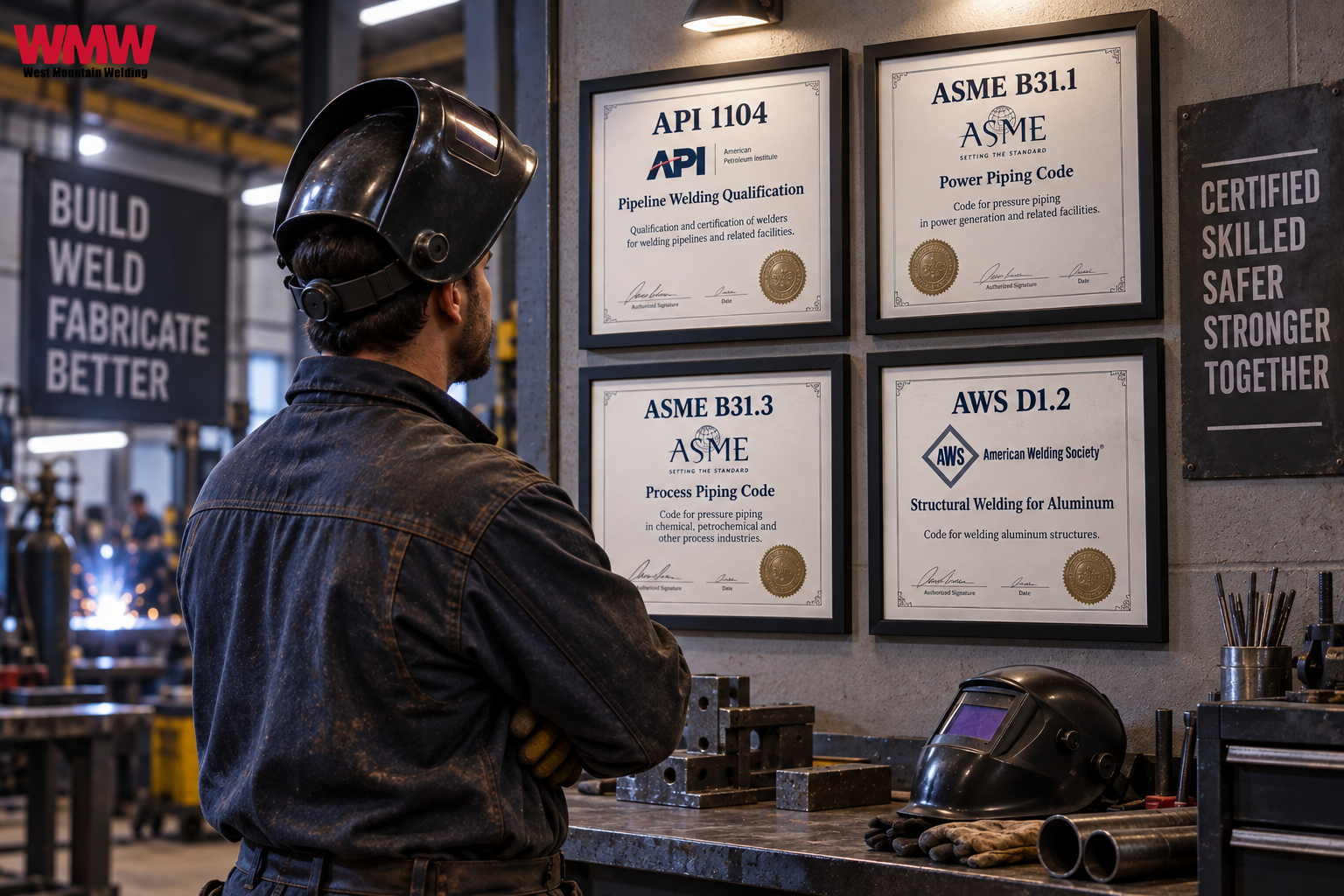
Certifications establish the baseline for compliant welding work. Depending on the application, Utah oil and gas projects may involve:
API 1104 — pipeline welding
ASME B31.1 — power piping
ASME B31.3 — process piping
AWS D1.2 — applicable aluminum welding
The correct requirements should always be confirmed against the project's engineering specifications.
Why Standards Matter
Oil and gas piping can operate under high pressure and demanding temperature and environmental conditions. Welding procedures must therefore account for material, joint design, service conditions, inspection requirements, and acceptance criteria.
An oil and gas pipe welding inspection checklist can help operators understand important inspection and documentation considerations.
Field Experience and Project Cost
Experienced crews can reduce the risk of delays, installation problems, and rework. This is particularly important on remote projects where bringing another crew or additional equipment to the site can be expensive.
Field-ready contractors may support:
New piping installation
Pipeline and rig repairs
Shutdown and turnaround work
Field modifications
Emergency welding response
West Mountain Welding provides oil and gas pipe welding and installation for applications including gathering lines, injection systems, production piping, pipe supports, skids, field fit-up, and commissioning support.
Welder Availability and Pricing
Qualified welding labor can significantly influence project pricing. Oil and gas work may require welders qualified for specific processes, materials, positions, and codes.
Experienced welders are not always available on short notice, especially during periods of high construction activity. This limited availability can increase labor costs when projects require qualified crews on compressed schedules.
How Prefabrication Can Lower Cost
Prefabrication shifts appropriate work from the field into a controlled shop environment. This can reduce:
Field labor hours
Onsite welding
Weather-related delays
Installation time
Fit-up problems
Overall cost exposure
For more information, see this overview of a prefabricated pipe system.
Prefabricated vs. Field-Only Welding
Prefabricated, labeled piping
Lower field hours
Reduced onsite welding
Faster installation
Lower exposure to site-related delays
Field-only welding
Higher field labor requirements
Longer installation times
Greater exposure to weather and access issues
Potentially higher mobilization and downtime costs
The best approach depends on project design, transportation, site conditions, and schedule.
Welding Processes Can Affect Cost
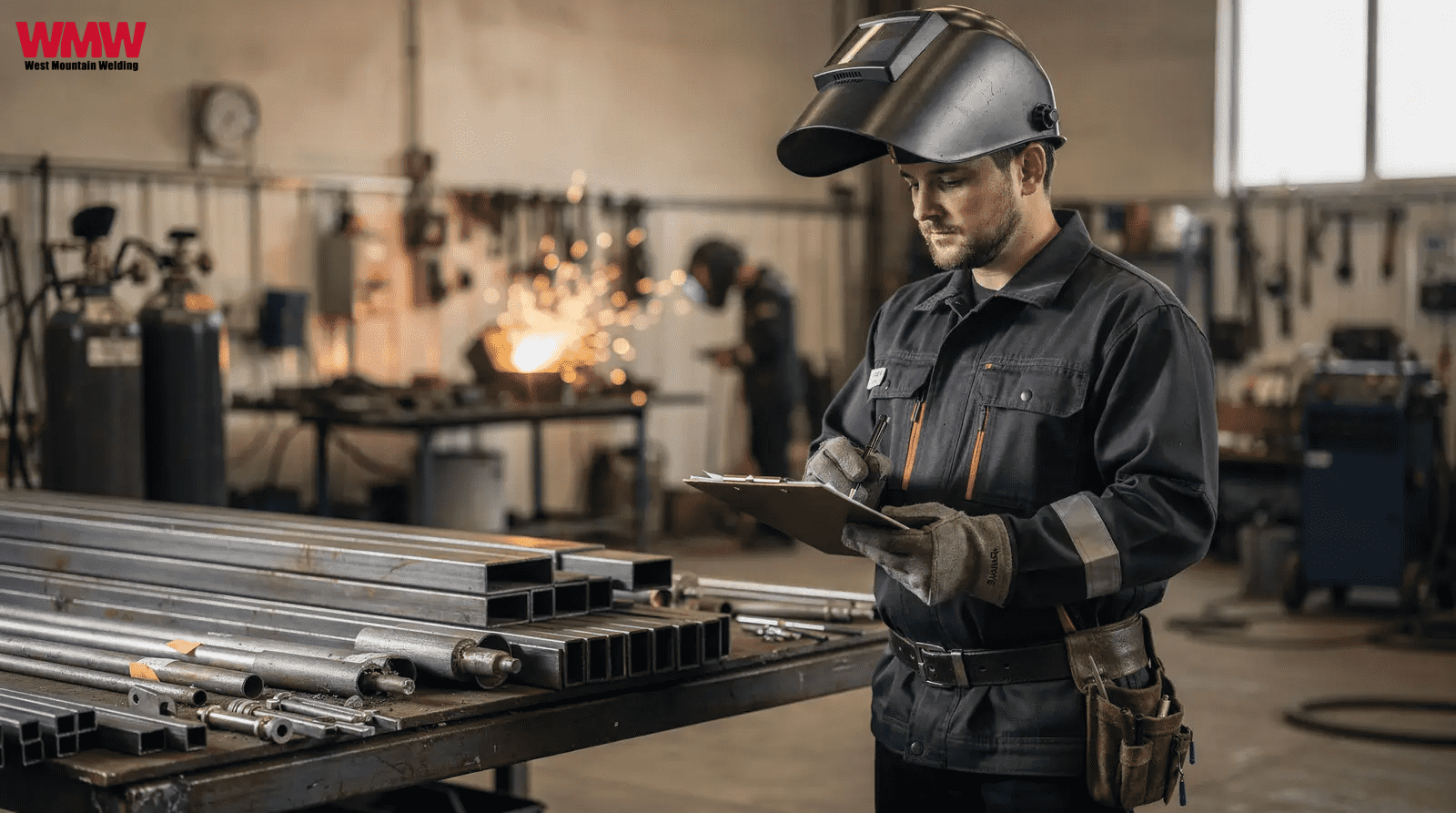
The selected welding process can influence production rates, labor requirements, inspection, and project cost.
For suitable applications, MIG welding for oil and gas pipelines can provide high productivity. GTAW/TIG may be selected when greater control is required for root passes or specific materials.
Proper GTAW root pass techniques for oil and gas pipelines can be especially important where weld integrity is critical.
The appropriate process should be determined by the qualified welding procedure and project requirements.
Reducing Downtime
The lowest welding invoice isn't always the lowest overall project cost. For operating oil and gas facilities, downtime can quickly exceed the direct cost of welding.
Specialized applications may also help reduce operational interruptions. For example, hot tap welding in oil and gas pipelines can be used for certain connections to operating pipelines under controlled procedures.
Final Takeaway
Oil and gas pipe welding cost in Utah is influenced by much more than labor hours. Certifications, field experience, mobilization, prefabrication, welding processes, inspection, and quality control all contribute to total project cost.
When comparing welding contractors, look beyond the lowest bid. A qualified contractor that can fabricate accurately, mobilize efficiently, document its work, and complete field installation properly can help reduce the rework, downtime, and unexpected costs that make an inexpensive welding project more expensive.
Frequently Asked Questions
What determines oil and gas pipe welding cost in Utah?
Cost depends on project scope, pipe size and material, applicable codes, site conditions, labor qualifications, mobilization, inspection, and prefabrication requirements.
How does West Mountain Welding provide a quote?
West Mountain Welding reviews the project scope, drawings, materials, site requirements, fabrication needs, and field installation requirements before preparing a project-specific quote.
What should Utah operators check before hiring a welding contractor?
Verify applicable qualifications, field experience, mobile response capability, prefab capacity, and documented quality control.
Does prefabrication reduce oil and gas pipe welding cost?
It can. Prefabrication can reduce field labor, onsite welding, installation time, and exposure to weather and site conditions when the project is suitable for shop fabrication.
Why is 24/7 field service valuable?
Fast response can help reduce downtime and production losses when urgent welding or repair work is required, particularly at remote locations.