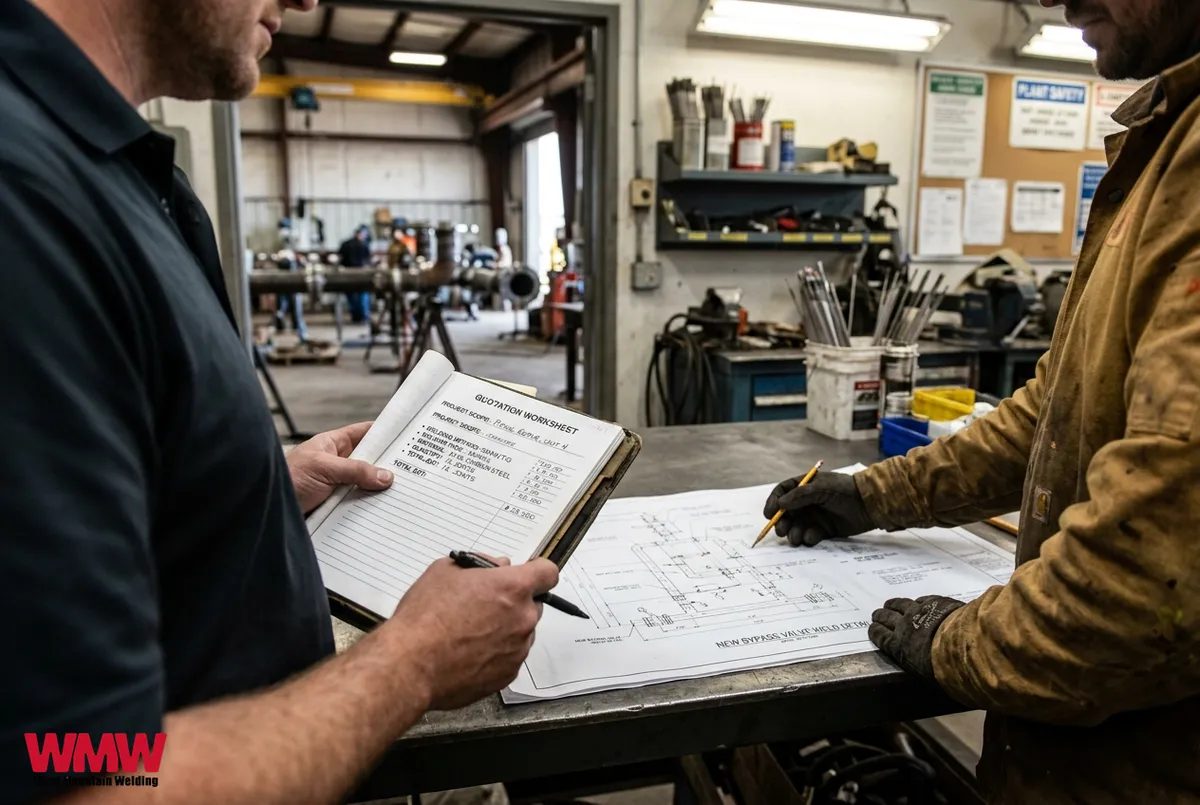
How to Get an Accurate Quote for an Oil and Gas Welding Project?
To get an accurate oil and gas welding quote, provide complete drawings, material specifications, project scope, applicable codes, site conditions, and scheduling requirements. Include pipe diameter, wall thickness, material grade, weld requirements, and installation details. The more complete the information, the more accurately a contractor can estimate labor, materials, equipment, mobilization, and project timing.
Key Takeaways
Detailed drawings and specifications are the foundation of an accurate welding estimate.
Pipe size, material, wall thickness, weld quantity, and project complexity affect cost.
Applicable codes and inspection requirements should be identified before requesting pricing.
Field conditions, location, access, and scheduling can influence mobilization costs.
A complete quote package reduces clarification, revisions, and unexpected scope changes.
What Should You Prepare Before Requesting a Welding Quote?
The first step is to define the project clearly. A welding contractor needs enough technical and logistical information to understand what must be fabricated, welded, installed, inspected, and delivered.
Start with engineering documentation. Depending on the project, this may include:
Piping isometric drawings
P&IDs
Fabrication or spool drawings
Equipment drawings
Material specifications
Project specifications
Weld details and requirements
The drawings should provide enough information to determine pipe sizes, configurations, connections, and fabrication requirements.
You should also identify the applicable welding and construction codes. Oil and gas projects may involve standards such as API 1104, ASME B31.1, or ASME B31.3, depending on the application and project specifications.
Providing these requirements upfront helps the contractor understand the required welding procedures, qualifications, inspection, documentation, and acceptance criteria.
What Information Speeds Up an Accurate Quote?
A useful quote package should include pipe diameter and wall thickness, material grade and quantity, weld types and estimated quantities, applicable codes, drawings or isometrics, inspection requirements, project location, site access conditions, target dates, and fabrication or installation requirements.
Submitting these details together gives the contractor a clearer picture of the project and reduces back-and-forth during the quoting process.
What Factors Affect an Oil and Gas Welding Quote?
Several variables determine the final cost of a welding project. Understanding them helps project managers prepare more realistic budgets.
Material Type and Specifications
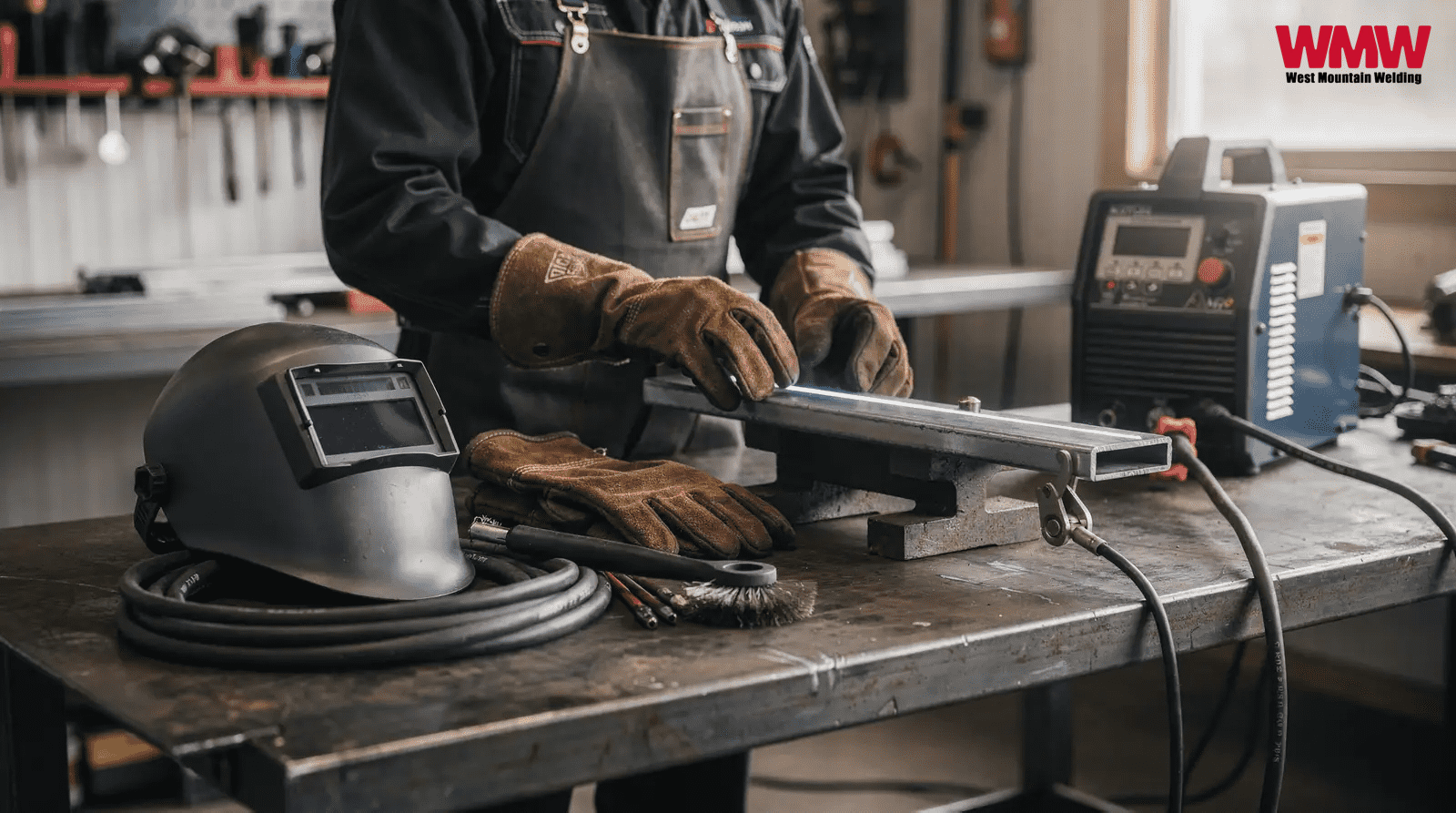
The material being welded affects the required process, consumables, preparation, labor, and quality requirements.
For example, carbon steel, stainless steel, aluminum, and HDPE can have different fabrication and welding requirements. Pipe diameter and wall thickness also influence preparation and welding time.
For projects involving different pipe materials, clearly identify the grade, dimensions, quantities, and any material certification requirements.
West Mountain Welding's published capabilities include pipe welding involving carbon steel, stainless steel, aluminum, and HDPE.
Project Scope
The contractor also needs to know exactly what work is included.
An oil and gas project might involve:
Gathering lines
Flowlines
Injection systems
Pump station piping
Facility piping
Pipe supports
Skids
Field fit-up
Mechanical installation
Testing and commissioning support
Emergency repairs
State whether you need fabrication, field welding, mechanical installation, or a combination of services.
For projects that can be fabricated before reaching the jobsite, prefabricated piping systems may be an option. Prefabrication can involve shop fabrication, spool identification, packaging, and delivery before field installation.
Weld Quantity and Complexity
The number and type of welds can significantly affect labor requirements. A project with a small number of straightforward welds will generally have different labor requirements from one involving numerous joints, complex configurations, tight tolerances, or difficult access.
If weld maps or estimated weld counts are available, include them with the quote request.
Inspection and Quality Requirements
Inspection requirements should be identified before pricing.
Depending on the project, requirements may include visual inspection, nondestructive examination, documentation, material traceability, or specific client quality procedures.
If these requirements are not communicated until after pricing, the original estimate may need to be revised.
How Do Site Conditions Affect Welding Costs?
Field conditions can be just as important as the welding itself.
Provide information about:
Project location
Site access
Work area limitations
Safety requirements
Shutdown or outage windows
Available utilities and equipment
Working conditions
Required mobilization date
Travel and mobilization requirements can affect the cost of field welding. Remote sites, restricted access, or limited work windows may require additional planning, equipment, or crew coordination.
For projects in Utah and the Mountain West, West Mountain Welding provides field welding and mechanical installation services in addition to shop fabrication.
Should You Choose Shop Fabrication or Field Welding?
The right approach depends on the project.
Shop fabrication can be useful when piping can be fabricated away from the jobsite. Controlled shop conditions can make it easier to manage dimensions, quality control, spool identification, and production.
Field welding is necessary when components must be fitted or installed at the project location or when site conditions prevent complete shop fabrication.
Some projects use both approaches. Pipe spools can be fabricated in a shop and then transported to the site for final fit-up and installation.
Understanding which portions of the work can be completed in the shop versus the field should be part of the initial quote discussion.
How Do You Submit an Accurate Quote Request?
A practical quote request can follow this process:
Collect drawings and specifications. Include P&IDs, isometrics, spool drawings, and project requirements.
Identify materials. Provide grades, pipe sizes, wall thicknesses, and quantities.
Define the scope. Explain whether the project involves fabrication, welding, installation, or all three.
Provide technical requirements. Identify applicable codes, inspection, and documentation requirements.
Provide site information. Include location, access restrictions, safety requirements, and working conditions.
Provide the schedule. State the required mobilization, start, and completion dates.
Submit the complete package. Give the contractor enough information to review the project before developing pricing.
For projects requiring oil and gas pipe welding services, West Mountain Welding can review project requirements and determine the appropriate fabrication or field-welding approach.
What Happens After You Request a Quote?
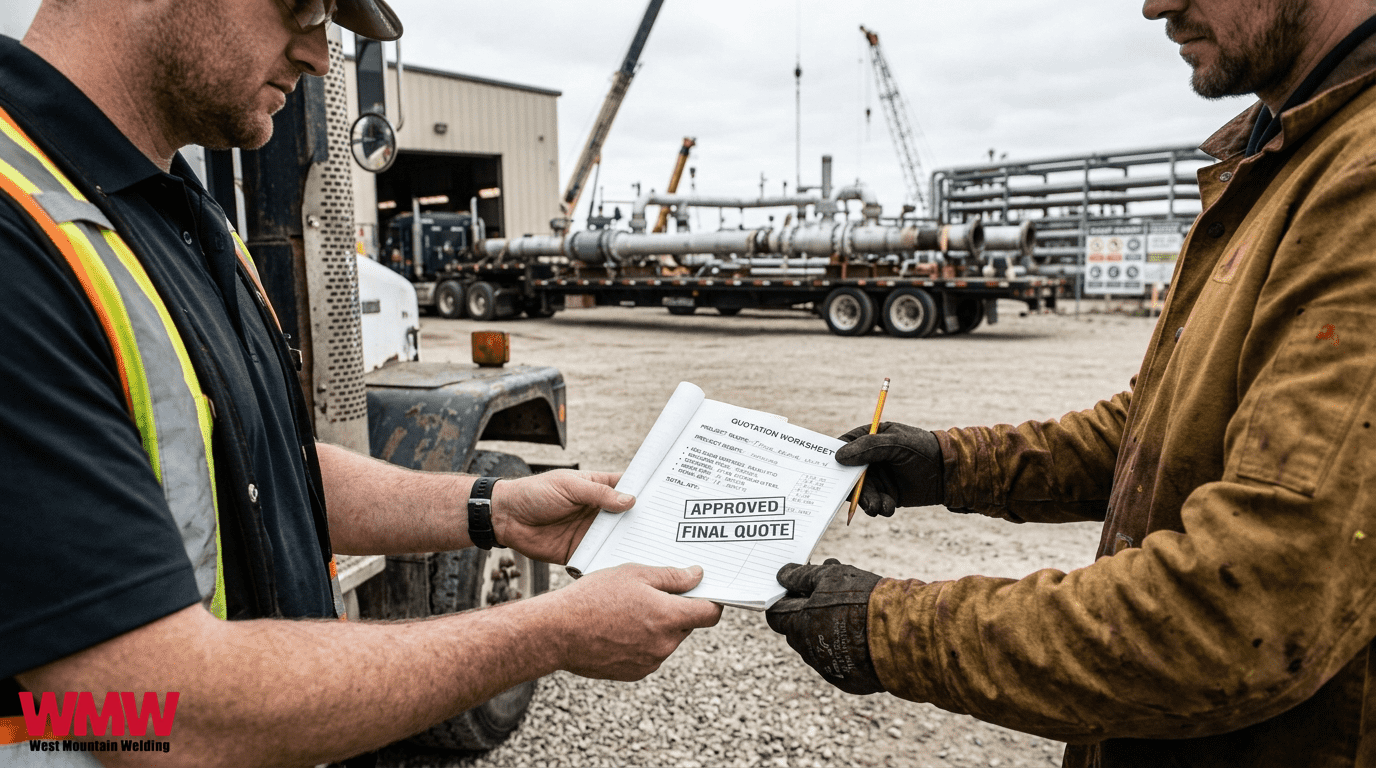
The contractor reviews the information to determine the project's labor, material, equipment, fabrication, and logistical requirements.
There may be follow-up questions if drawings are incomplete or certain requirements are unclear. Responding quickly can help keep the estimating process moving.
The contractor may also identify opportunities to fabricate components in the shop rather than performing all welding at the jobsite.
West Mountain Welding states that it reviews project drawings and specifications and works with customers to establish project scope, timelines, and crew availability.
What Common Mistakes Delay Welding Quotes?
Incomplete information is a common cause of quoting delays. A general request such as “oil and gas pipe welding needed” does not provide enough detail to price the work accurately. Include available drawings, material grades, pipe dimensions, weld quantities, applicable codes, project location, installation scope, schedule, and inspection requirements.
If final drawings are not available, explain what has been completed and what remains to be finalized. This helps the contractor understand the current scope and avoid unnecessary assumptions.
Conclusion
An accurate oil and gas welding quote starts with a well-defined scope and complete project information. Drawings, material specifications, pipe dimensions, welding codes, inspection requirements, site conditions, and scheduling details all help a contractor develop a more reliable estimate.
Before requesting pricing, organize as much information as possible and clearly distinguish between shop fabrication and field work. This reduces assumptions and makes it easier to account for labor, materials, equipment, inspection, transportation, and mobilization.
For Utah and Mountain West projects, West Mountain Welding combines pipe welding, prefabricated piping, industrial fabrication, and field capabilities to support oil and gas and other industrial applications.
FAQ
What documents are needed for an oil and gas welding quote?
Provide drawings, material specifications, pipe dimensions, project scope, applicable codes, site information, and scheduling requirements.
Does pipe size affect welding costs?
Yes. Diameter, wall thickness, material, weld configuration, and quantity can affect labor and production requirements.
Do welding codes affect project pricing?
Yes. Code requirements can affect welding procedures, qualifications, inspection, documentation, and testing.
Does project location affect the quote?
Yes. Travel, transportation, equipment, crew logistics, and field mobilization can affect the estimate.
Can oil and gas piping be prefabricated?
Yes. Suitable piping can often be fabricated and prepared in a shop before being transported to the jobsite for installation.