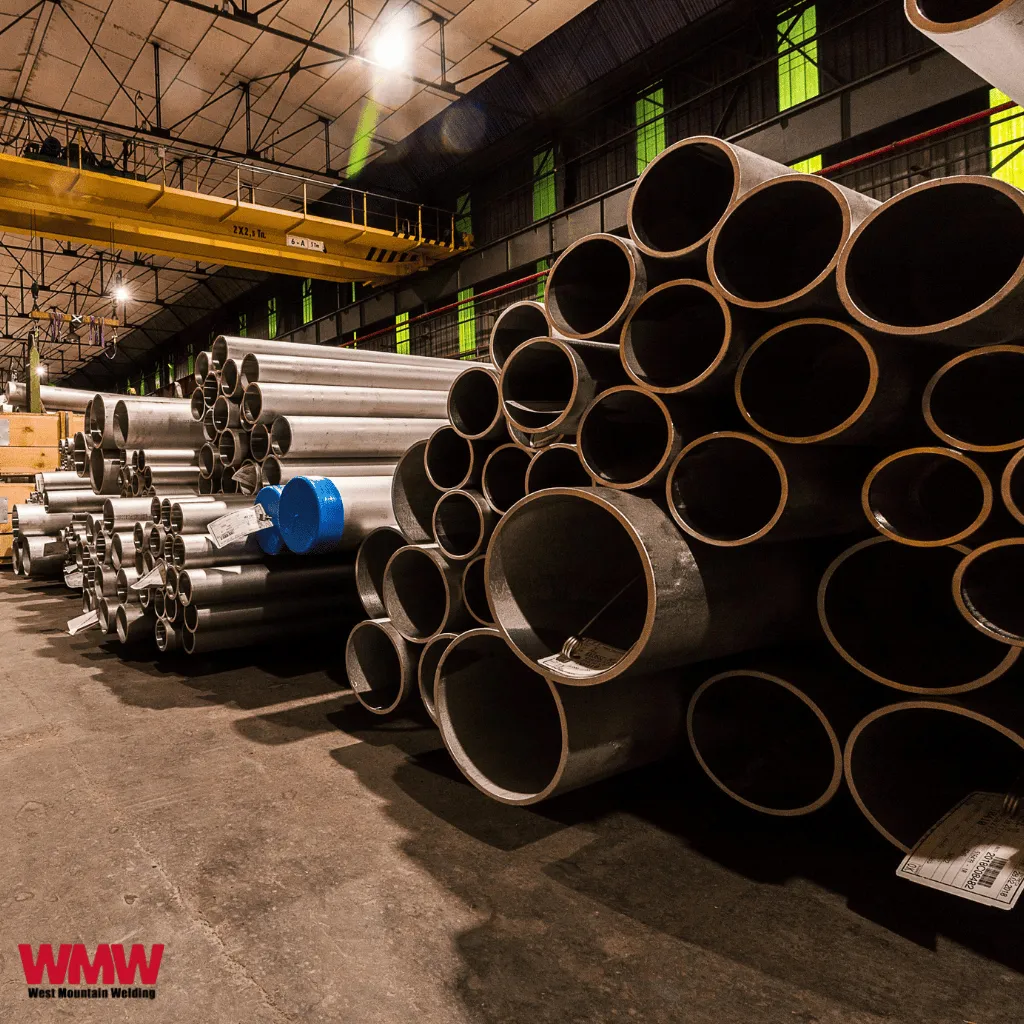
Carbon Steel Pipes: Benefits, Uses, and Selection Guide
Whether you're managing a large-scale industrial project, overseeing an oil and gas pipeline, or simply trying to spec the right material for a structural application, carbon steel pipes are almost certainly on your shortlist. Durable, cost-effective, and available in a wide range of sizes and grades, carbon steel pipe is the workhorse of modern industry.
This guide breaks down everything you need to know, from the different carbon steel pipe types to their real-world applications, how they compare to stainless steel, what you should expect to pay, and how to find the right supplier for your project.
What Are Carbon Steel Pipes?
Carbon steel pipes are hollow steel cylinders manufactured from an alloy of iron and carbon. The carbon content, typically ranging from 0.05% to 2.0%, is the defining variable that determines the pipe's hardness, strength, and ductility. Unlike stainless steel, carbon steel contains little to no significant amounts of chromium or other corrosion-resistant alloying elements, which makes it both more affordable and more versatile for applications where corrosion resistance isn't the primary concern.
The American Society for Testing and Materials (ASTM) and the American Society of Mechanical Engineers (ASME) both publish widely accepted standards that govern how carbon steel pipe is manufactured, tested, and certified, giving engineers and contractors a reliable framework for material selection.
Carbon Steel Pipe Types: Understanding the Grades
One of the first decisions you'll face when sourcing carbon steel pipe is selecting the right grade. The three broad categories are low, medium, and high carbon steel, each with distinct properties.
Low Carbon Steel Pipe (Mild Steel)
Low-carbon steel contains less than 0.30% carbon. It's the most widely used variety because it's easy to weld, bend, and form without becoming brittle. Common specifications include ASTM A53 and ASTM A106 Grade A, making it a go-to choice for water distribution lines, structural supports, and general construction.
Medium Carbon Steel Pipe
With a carbon content between 0.30% and 0.60%, medium carbon steel offers a meaningful step up in strength and hardness. It's commonly used in mechanical tubing, automotive components, and moderate-pressure systems where additional tensile strength is required.
High Carbon Steel Pipe
High carbon steel (0.60%–2.0% carbon) is the strongest and hardest of the three, but also the least ductile. It's used in specialized industrial applications where hardness takes priority over weldability.
Common ASTM Specifications at a Glance
ASTM A53 – Standard spec for black and hot-dipped galvanized welded and seamless pipe; widely used in plumbing and mechanical systems
ASTM A106 – Seamless carbon steel pipe for high-temperature service; essential in power plants and refineries
ASTM A333 – Low-temperature service applications where impact resistance is critical
API 5L – Line pipe used in the oil and gas transmission industry
Carbon Steel Pipe Benefits: Why Engineers Prefer It
Understanding the core carbon steel pipe benefits is essential before making any procurement or design decision. Here's why it remains the dominant piping material across dozens of industries.
1. High Strength-to-Cost Ratio
Carbon steel delivers exceptional mechanical strength with tensile strengths typically ranging from 400 to 700 MPa, depending on grade, at a fraction of the cost of specialty alloys. For large projects where hundreds or thousands of linear feet of pipe are required, this cost efficiency makes a measurable difference to the bottom line.
2. Weldability
Low and medium-carbon steel pipe is highly weldable using standard processes, including SMAW, GTAW, GMAW, and FCAW. This makes it ideal for field fabrication and prefabricated piping systems where precise, code-compliant welds are non-negotiable.
3. Versatility Across Temperature and Pressure Ranges
Carbon steel pipe, particularly ASTM A106 Grade B, can handle service temperatures up to approximately 450°C (842°F). Combined with its ability to withstand high-pressure environments, it's trusted in boilers, heat exchangers, and steam systems worldwide.
4. Wide Availability
Carbon steel pipe is one of the most readily stocked products in the global piping market. Whether you're sourcing locally or through international carbon steel pipe suppliers, lead times are typically shorter than for exotic alloys.
5. Ease of Fabrication and Modification
Beyond welding, carbon steel pipe can be cut, threaded, flanged, grooved, and bent with standard tooling. This flexibility reduces fabrication time and lowers labor costs on complex installations.
6. Recyclability
Carbon steel is one of the most recycled materials on earth. At the end of life, carbon steel pipe can be fully reclaimed and remelted, contributing to sustainable materials cycles and reducing environmental impact.
Carbon Steel Pipe Sizes: What You Need to Know
Carbon steel pipe sizing can be confusing at first because the naming convention doesn't always reflect the actual outside diameter. Here's how it works.
Nominal Pipe Size (NPS) and Schedule
Pipe is described by its Nominal Pipe Size (NPS) and its Schedule, which determines wall thickness. For example:
NPS 2, Schedule 40 — outside diameter of 2.375 inches, wall thickness of 0.154 inches
NPS 2, Schedule 80 — same outside diameter, thicker wall (0.218 inches) for higher pressure ratings
As NPS increases above 14, the nominal size and actual outside diameter converge. Below NPS 14, they do not match; always reference a pipe schedule chart when designing systems.
Common Carbon Steel Pipe Sizes
Carbon steel pipes are commercially available from 1/8 inch NPS to 80 inches NPS and beyond. The most commonly stocked sizes fall between ½ inch and 24 inches NPS, covering the vast majority of commercial, industrial, and energy sector requirements. Standard mill lengths are typically 21 feet (6.4 meters), with cut-to-length options widely available.
Carbon Steel Pipes Applications: Where It Gets Used
Carbon steel pipe is found in virtually every sector of the built environment. Here are the most significant carbon steel pipe applications across industries.
Oil and Gas
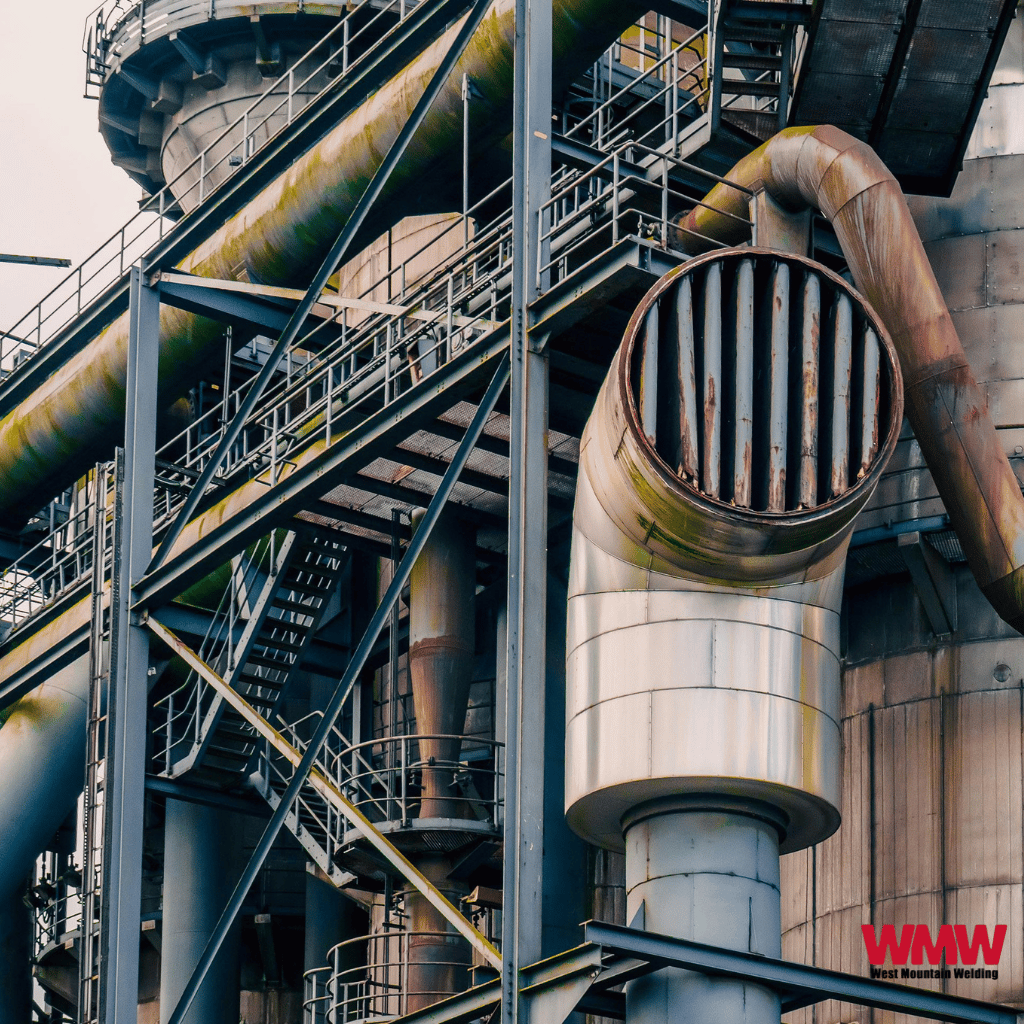
API 5L carbon steel line pipe forms the backbone of upstream gathering systems, midstream transmission pipelines, and downstream refinery networks. Its ability to handle high-pressure hydrocarbon service at varying temperatures makes it indispensable in the energy sector.
Power Generation
In coal, gas, and geothermal power plants, carbon steel pipe carries high-pressure steam and feedwater between boilers, turbines, and condensers. Scheduled maintenance, repair, and replacement of this pipe is a critical part of plant operations.
Water and Wastewater Infrastructure
Galvanized and black carbon steel pipe has long been used in potable water distribution, fire suppression systems, and wastewater conveyance. Carbon steel remains dominant for large-diameter industrial water supply applications.
Construction and Structural Applications
Structural steel pipe and hollow sections are used extensively in building frames, bridges, scaffolding, columns, and handrails. The material's predictable mechanical properties make structural calculations straightforward.
Mechanical and HVAC Systems
Compressed air lines, hydraulic systems, chilled water loops, and steam distribution within industrial facilities rely on carbon steel pipe for its pressure-handling capability and long service life.
Mining and Mineral Processing
Slurry transport, dewatering systems, and process plant piping in mining operations frequently use heavy-wall carbon steel pipe for its resistance to abrasion and mechanical loading.
Carbon Steel Pipes vs. Stainless Steel Pipes: How to Choose
Carbon Steel Pipe
Generally more affordable than stainless steel pipe, making it a popular choice for budget-conscious projects. However, its corrosion resistance is limited and usually requires protective coatings to prevent rust and deterioration over time. In terms of tensile strength, carbon steel offers high durability and performs well in demanding industrial applications.
It is also highly weldable, making fabrication and installation easier. Its maximum service temperature is typically around 450°C, but it is not recommended for hygienic applications such as food processing or pharmaceuticals.
Stainless Steel Pipe
Comes at a significantly higher cost but provides excellent corrosion resistance, even in harsh or moisture-rich environments. Its tensile strength ranges from moderate to high depending on the grade, and while it is weldable, extra care is often needed during the welding process.
Stainless steel performs exceptionally well across extreme temperatures and is widely preferred for hygienic applications because of its clean, non-reactive surface, making it ideal for food, beverage, and pharmaceutical industries.
Choose carbon steel when cost is a primary driver, corrosion is manageable through coatings or cathodic protection, and the application involves high mechanical stress without aggressive chemical exposure.
Choose stainless steel when the application involves corrosive media, cleanliness is critical (food, pharma, semiconductor), or the system faces extreme temperature cycling.
For most oil and gas, power generation, structural, and general industrial applications, carbon steel is the economically and technically sound default choice. Stainless steel earns its premium in environments where carbon steel would simply fail prematurely.
Carbon Steel Pipes Price: Factors That Affect Cost
Understanding carbon steel pipes price dynamics helps you budget accurately and avoid procurement surprises.
Grade and specification — ASTM A53 ERW is among the most affordable options; seamless A106 Grade B or API 5L X65 commands a premium due to manufacturing complexity.
Wall thickness (Schedule) — Heavier schedules require more raw material and processing time, increasing cost per linear foot.
Market steel pricing — Carbon steel pipe pricing tracks global hot-rolled coil (HRC) and scrap steel prices, which fluctuate with supply chains, energy costs, and broader economic conditions.
Surface treatment — Black pipe is the baseline. Hot-dip galvanizing, fusion-bonded epoxy, or polyethylene coatings add upfront cost but significantly extend service life in corrosive environments.
Quantity and lead time — Larger volume orders typically receive better per-unit pricing. Expedited delivery or non-standard lengths carry logistics premiums.
Always obtain quotes from multiple carbon steel pipe suppliers and request certified mill test reports (MTRs) to benchmark pricing and verify material compliance.
How to Select the Right Carbon Steel Pipe for Your Project
Here's a practical, step-by-step selection framework:
1. Define the service conditions. What will the pipe carry? What are the operating temperature and pressure? Is the environment corrosive internally or externally?
2. Identify the governing code. ASME B31.3 (process piping), B31.1 (power piping), B31.4 (liquid pipeline), or B31.8 (gas transmission) will dictate your material and design requirements.
3. Select the appropriate specification. Match the ASTM or API grade to your temperature, pressure, and toughness requirements.
4. Determine size and schedule. Size to flow requirements; select wall thickness based on pressure rating, corrosion allowance, and mechanical loading.
5. Specify surface protection. Choose bare, galvanized, or coated pipe based on your corrosion exposure profile.
6. Qualify your supplier. Work only with carbon steel pipe suppliers who provide full material traceability, MTRs, and documented compliance with applicable standards.
7. Plan for fabrication. Confirm that your selected grade is compatible with your welding procedure specification (WPS) and that certified welders are available for the scope of work.
Working with a Certified Welding Partner
Selecting the right pipe material is only half the equation. The performance of your fabricated piping system depends equally on the skill and certification of the welders installing it. Poorly executed welds on carbon steel pipe, even with the correct material specification, can result in joint failures, code violations, and expensive rework.
Working with a certified welding and pipe fabrication team that holds qualifications to ASME, AWS, and API standards ensures your carbon steel piping system performs as designed over its full service life.
Frequently Asked Questions
1. What is the most common carbon steel pipe grade used in industrial applications?
ASTM A106 Grade B is the go-to grade for high-temperature and high-pressure service. ASTM A53 Grade B covers most lower-temperature mechanical and plumbing applications.
2. How long do carbon steel pipes last?
With proper installation and corrosion protection, carbon steel pipes typically last 25 to 50 years or more. Service life varies based on fluid type, environment, and coating quality.
3. Can carbon steel pipe be used for natural gas lines?
Yes, API 5L and ASTM A53 are both approved for natural gas distribution and transmission. Weld quality, pressure testing, and cathodic protection are required for safe service.
4. What's the difference between seamless and welded carbon steel pipe?
Seamless pipe has no weld seam, giving it uniform strength, ideal for high-pressure critical service. Welded pipe is more affordable and suited for structural and lower-pressure applications.
5. How do I protect carbon steel pipe from corrosion?
Common methods include galvanizing, fusion-bonded epoxy coatings, internal linings, and cathodic protection for buried lines. Proper surface prep before coating is essential for long-term performance.