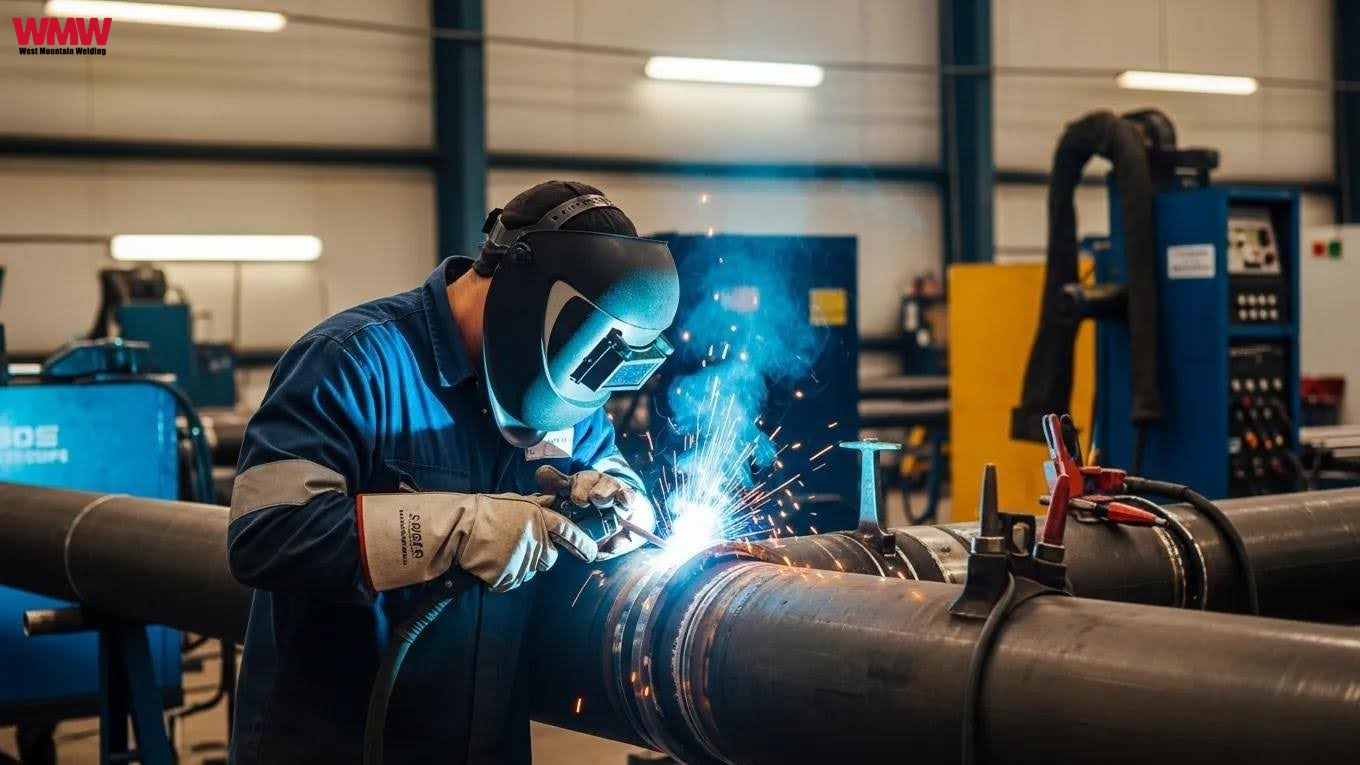
What Is Pipe Welding And How Is It Used In Oil And Gas
Pipe welding is the specialised process of permanently joining pipes, fittings, and piping systems to form strong, leak-resistant connections built to withstand high pressure, extreme temperatures, and chemically aggressive environments. In oil and gas, every weld on pipe segments must meet strict safety requirements, because a single failed joint can trigger shutdowns, environmental damage, or catastrophic incidents.
This guide covers the core pipe welding techniques used in oil and gas operations, how gas pipe welding requirements differ by application, the ASME and API standards that govern every joint, and the inspection methods that confirm structural integrity before a line enters service
Key Takeaways
Pipe welding creates strong, leak-proof joints that withstand high pressures in oil and gas systems.
Butt welding, TIG, and MIG welding serve distinct roles depending on material, wall thickness, and service environment.
Every weld on oil and gas pipelines must comply with ASME and API standards to satisfy safety codes and regulatory requirements.
NDT methods, including ultrasonic and radiographic testing, assess weld quality without damaging the pipeline.
Hydrostatic testing verifies full-system integrity before a line enters service.
Certified welders holding ASME, API, and OSHA credentials are required for all critical pipeline welding work.
Automation and advanced equipment improve precision and cost efficiency across pipe welding operations.
Localised fabrication reduces logistics costs and improves turnaround for regional pipeline projects.
What Is Pipe Welding?
Pipe welding is a category of fusion welding applied to cylindrical pipe sections, fittings, and flanges. Unlike flat-plate structural welding, it requires working around a circular joint while maintaining consistent penetration and fusion across all positions: flat, horizontal, vertical, and overhead.
The term "weld on pipe" covers any welding operation performed directly on pipe material: field girth welds connecting line pipe sections, shop welds attaching flanges, or repair welds on existing systems. Gas pipe welding adds requirements around leak tightness and the use of inert shielding gases to prevent oxidation and porosity in the finished joint.
In oil and gas, a defective weld can have severe consequences. This is why the industry uses detailed Welding Procedure Specifications (WPS), qualification protocols, and third-party inspection programmes that go well beyond general construction requirements.
Pipe Welding Techniques
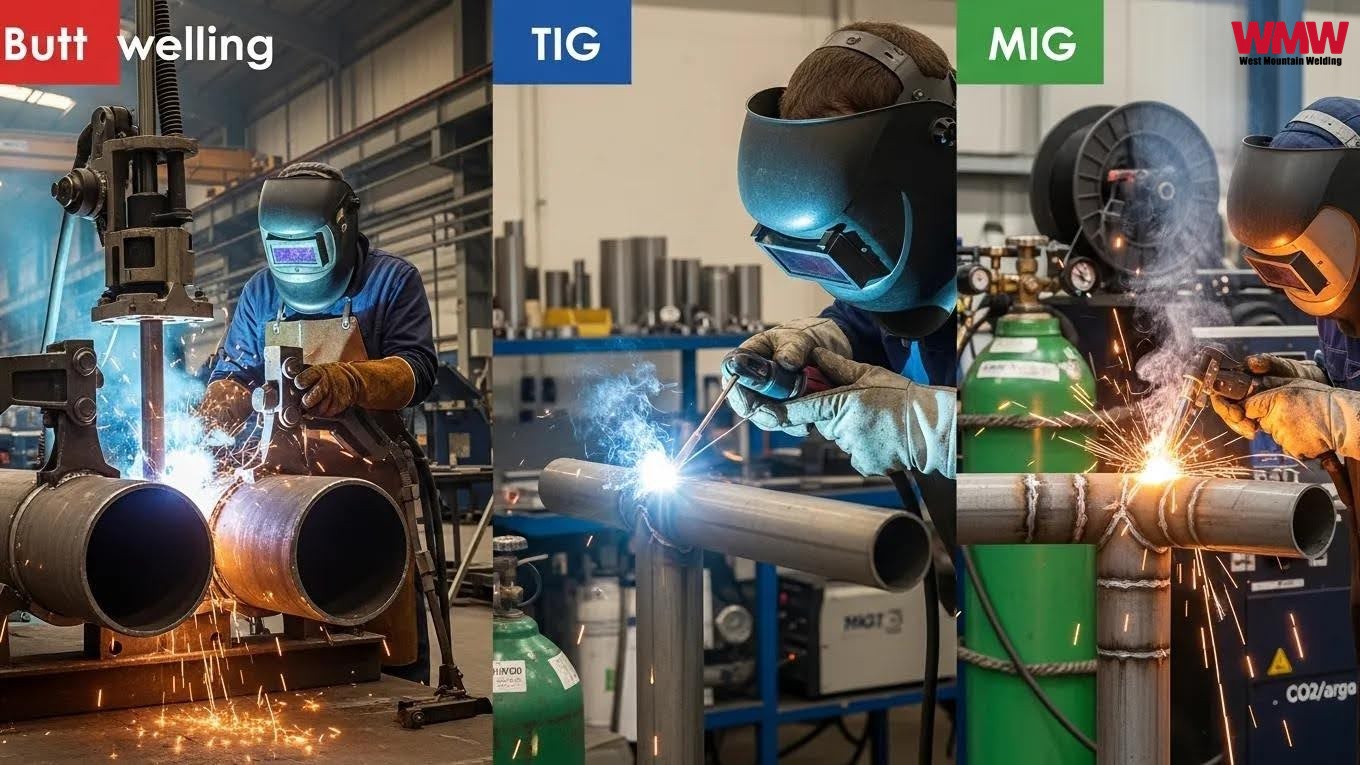
Three primary methods dominate pipeline and plant piping work, each selected based on base metal, wall thickness, joint configuration, and required quality level.
Butt Welding
Butt welding joins two pipe ends on the same axis to form a continuous, full-penetration seam, the standard method for girth welds on transmission pipelines and pressure vessels. The weld profile (root pass, fill passes, cap pass) is defined in the WPS and evaluated against API 1104 or ASME B31.3 acceptance criteria. Automated orbital systems are increasingly used for butt welding on high-volume pipeline projects.
TIG Welding (GTAW)
TIG welding uses a non-consumable tungsten electrode and an inert shielding gas, typically argon, to produce a controlled, low-heat-input arc. It is the preferred process for thin-walled pipe, stainless steel, and chrome-moly alloys where contamination or distortion would compromise corrosion resistance. In critical gas pipe welding applications, TIG is often specified for the full weld to meet stringent quality requirements.
MIG Welding (GMAW)
MIG welding feeds a consumable wire electrode at a controlled rate while shielding the arc with an inert or semi-inert gas mix. Significantly faster than TIG, it is well-suited to thicker-walled carbon steel pipe and high-volume fabrication. On large pipeline projects, MIG or flux-cored processes handle fill and cap passes after a TIG root to balance speed with quality.
Application and Advantage:
Butt Welding
Typical application: High-pressure transmission pipelines
Key advantage: Provides a full-penetration, pressure-rated joint
TIG (GTAW)
Typical application: Stainless steel, alloy pipe, and root passes
Key advantage: Offers precision, a clean weld, and low distortion
MIG (GMAW)
Typical application: Carbon steel, large-diameter pipe, and shop fabrication
Key advantage: High speed and productivity with lower labor cost
Stick (SMAW)
Typical application: Field welds, repair work, and remote locations
Key advantage: Highly portable and does not require shielding gas
Applications in Oil and Gas
Pipeline construction: Long-distance transmission pipelines are built through thousands of individual girth welds. Each weld on a transmission line must meet API 1104 criteria before coating and burial, making rework after lowering-in extremely costly.
Processing plant and refinery piping: Inside facilities, gas pipe welding and process piping work involves a wider range of materials, carbon steel, stainless steel, and duplex alloys governed by ASME B31.3, which requires qualified procedures and welder certifications for each material group.
Pressure vessels and storage tanks: Pipe welding techniques extend to fabricating pressure vessels and storage tanks, requiring full radiographic or ultrasonic examination of butt welds under ASME Section VIII.
Repair and maintenance: Weld-on pipe repair work, hot tap welding, sleeve repairs, and tie-in work on operating pipelines require specialised procedures that address burn-through risk, hydrogen cracking, and heat-affected zone embrittlement when welding on pressurised or product-contaminated pipe.
ASME and API Standards
Compliance with recognised standards is a contractual and regulatory requirement in oil and gas pipe welding.
ASME Section IX defines qualification requirements for welding procedures and welders across all processes and material types. ASME B31.3 (Process Piping) and ASME B31.8 (Gas Transmission) reference Section IX for welder and procedure qualification.
API 1104 is the primary standard for welding of pipelines and related facilities, covering procedure qualification, welder qualification, production welding, inspection, and repair of girth and fillet welds. It is updated periodically and referenced by most transmission pipeline welding programmes worldwide.
Together, these standards define acceptable procedures, inspection methods, defect acceptance criteria, documentation requirements, and welder re-qualification intervals.
Weld Inspection and Testing
Quality assurance combines visual, non-destructive, and pressure testing to verify every joint before the system enters service.
Visual inspection is the first check after welding, assessing bead profile, surface porosity, undercut, and dimensional conformance. It is a mandatory gate before any NDT is performed.
Ultrasonic Testing (UT) transmits high-frequency sound waves through the weld to detect and size internal flaws, including lack of fusion, cracks, and slag inclusions. Automated Ultrasonic Testing (AUT) is widely used on pipeline girth welds, providing full volumetric coverage and a permanent digital record.
Radiographic Testing (RT) uses X-ray or gamma-ray sources to produce an image of the weld cross-section. RT has been the traditional method for pipeline girth weld examination and remains in wide use.
Magnetic Particle Testing (MT) applies magnetic fields to reveal surface and near-surface discontinuities on ferromagnetic welds, used on fillet welds and repair areas where surface-breaking cracks are a concern.
Hydrostatic testing pressurises the completed pipeline with water typically to 1.25–1.5 times the maximum allowable operating pressure (MAOP), to confirm leak tightness and structural capacity across every weld on the line. It is required by ASME B31.8 and DOT regulations before a pipeline is placed in service.
Certifications and Safety Standards
Pipeline welders must hold current qualifications under the applicable code:
ASME Section IX qualifies welders for specific processes, positions, and material groups. Required for plant piping and pressure vessel work under ASME B31.3 and Section VIII.
API 1104 qualifies welders for pipeline girth and fillet welding. Defines re-qualification requirements when a welder has not used a process for more than six months.
AWS D1.1 (American Welding Society structural code) is referenced for structural attachments and support fabrication within oil and gas facilities.
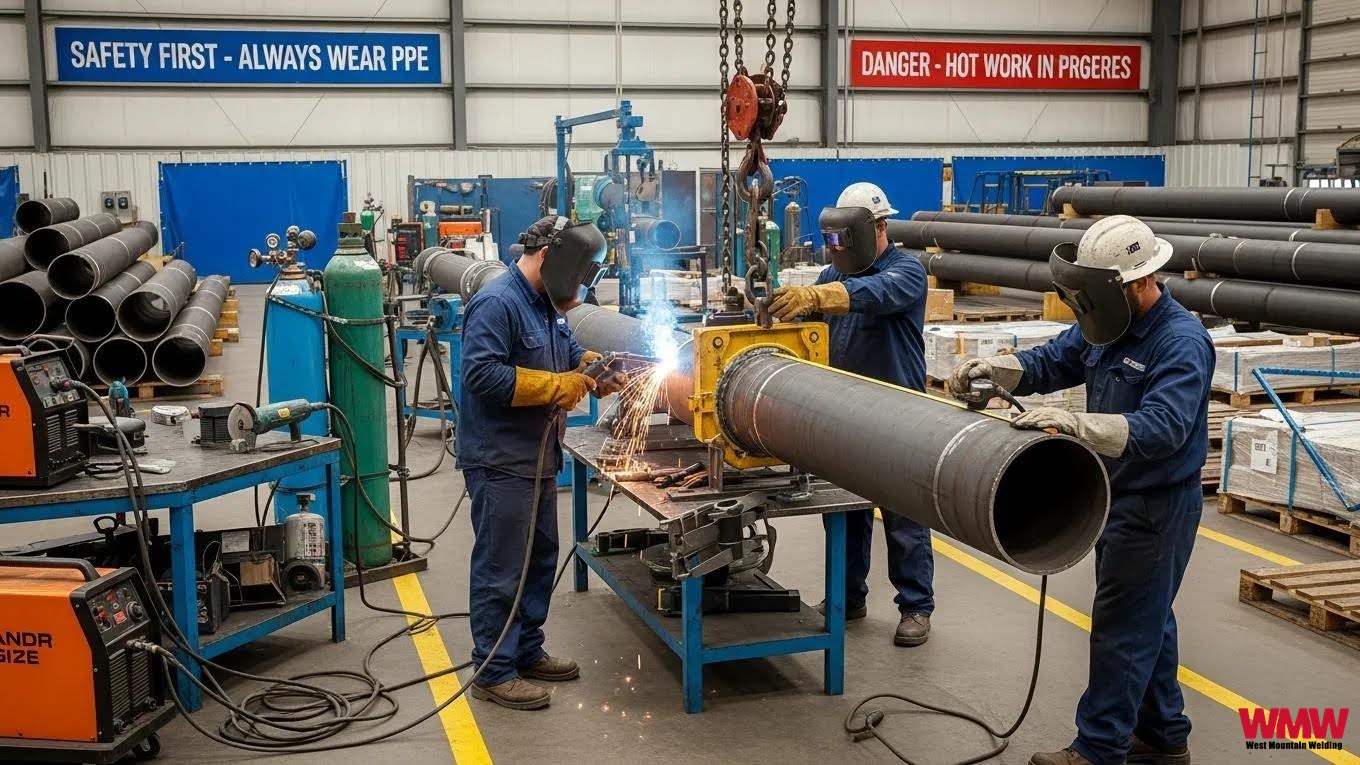
OSHA 1910 and 1926 standards govern all welding operations, requiring proper ventilation, fire watch protocols, hot work permit systems, and appropriate PPE, including welding helmets, flame-resistant clothing, leather gloves, and hearing protection.
Gas pipe welding near live lines requires gas testing and confirmation of isolation before any arc is struck.
Equipment and Technology
Modern pipe welding operations deploy a range of equipment to improve precision and productivity:
Automated and orbital welding systems travel the electrode around the joint under programmed parameters, used for small-bore alloy tubing in process plants and for large-diameter pipeline fill and cap passes via automated bug-and-band systems.
Advanced multi-process power sources — such as the Miller Multimatic 215, Lincoln Electric Power MIG 210 MP, and ESAB Rebel EMP 215ic offer real-time parameter monitoring and data logging that support quality records and audit trails.
Preheat and PWHT equipment using induction or resistance heating applies and maintains the preheat temperatures required on thick-walled carbon steel and chrome-moly pipe to control hydrogen cracking risk.
Benefits of Localised Fabrication in the Mountain West
For operators and EPC contractors working in Wyoming, Colorado, Utah, and surrounding states, sourcing pipe fabrication locally from a provider like West Mountain Welding delivers real advantages.
Proximity eliminates long-haul freight costs and transit damage risk on fabricated spools and assemblies. Local fabricators can respond quickly to design changes, expedite critical items, and provide on-site support, keeping projects on schedule and within budget.
Conclusion
Pipe welding is the foundational skill that holds oil and gas infrastructure together. Selecting the right process for each application, qualifying procedures and personnel to ASME and API standards, and verifying every joint through rigorous inspection and testing is what separates reliable systems from costly failures.
For Mountain West project teams seeking a certified welding and fabrication partner, West Mountain Welding has the credentials, equipment, and field experience to deliver pipeline and plant piping work to code. Contact our team to discuss your project requirements.
Frequently Asked Questions
1. What is pipe welding, and why is it important in oil and gas?
Pipe welding permanently joins pipe sections and fittings to create strong, leak-proof joints capable of handling high-pressure service. In oil and gas, weld quality directly determines pipeline safety and operational reliability.
2. What is the difference between TIG and MIG pipe welding?
TIG produces precise, clean welds suited to thin-walled or corrosion-sensitive pipe; MIG is faster and better suited to thicker carbon steel pipe and high-volume production work.
3. What does "weld on pipe" mean in pipeline construction?
It refers to any welding operation performed directly on pipe material girth: welds, branch connection fillet welds, or repair welds, each of which must pass inspection before the system enters service.
4. What standards govern gas pipe welding in North America?
API 1104 governs transmission pipeline welding; ASME B31.8 covers gas transmission piping design; and ASME Section IX defines procedure and welder qualification requirements.
5. How is weld quality verified on oil and gas pipelines?
Through visual inspection, non-destructive testing (UT, RT, or MT), and hydrostatic pressure testing, all assessed against the acceptance criteria of the applicable code.