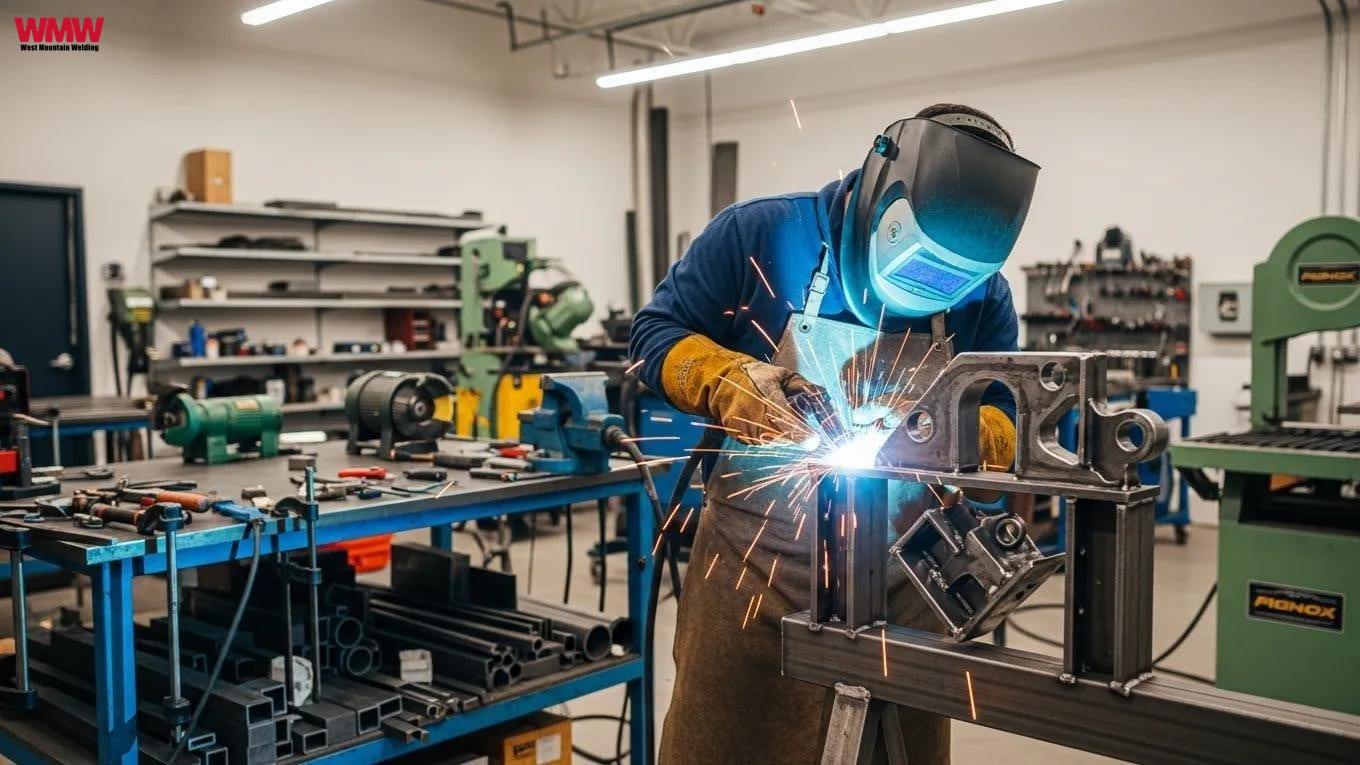
What Makes Custom Industrial Fabrication Essential in Utah
Custom industrial fabrication in Utah is no longer a niche offering; it's a baseline requirement for projects across the Mountain West. From oil pipelines running through the Uinta Basin to substations serving Salt Lake Valley's expanding grid, the components that keep these systems running cannot come off a standard shelf. They must be engineered, welded, and verified to exact specifications. That's the foundation of what West Mountain Welding delivers: precision metal fabrication built for the operational realities Utah industries actually face.
This article breaks down what makes custom fabrication indispensable, which industries rely on it most, how quality is maintained from shop to field, and what trends are shaping demand going forward.
What Is Custom Industrial Fabrication, and Why Does Utah Need It?
Custom industrial fabrication is the process of designing, cutting, welding, and assembling metal components to a client's exact specifications rather than pulling pre-made parts from a catalog. In Utah's industrial landscape, which spans energy extraction, power generation, heavy construction, mining, and municipal utilities, standard components frequently fall short. Site conditions vary, load requirements differ, and tolerances are tight.
Custom steel fabrication in Utah addresses this directly. When a compressor skid needs to fit within a specific footprint at a gas processing facility, or when a pipe support system must handle thermal expansion in a high-cycle environment, fabricated solutions close the gap that off-the-shelf products leave open. The result is fewer field modifications, faster installation, and longer service life.
West Mountain Welding serves industrial clients, contractors, utility companies, and EPC firms throughout the Mountain West. Their work spans in-shop fabrication and field services, with emergency response capability for unplanned shutdowns and critical repairs.
Core Industrial Metal Fabrication Services
Effective industrial metal fabrication in Utah draws on several integrated capabilities. Here are the core services that drive project outcomes:
1. Skid Fabrication
Custom-fabricated skids support pumps, compressors, instrumentation, and process equipment. Proper skid design accounts for structural loading, equipment weight distribution, and site access constraints. A well-built skid arrives on site ready to set, minimizing labor and reducing the risk of field-fit issues.
2. Custom Pipe Supports and Brackets
Pipe support systems must be engineered to specific load cases, pipe diameters, and installation environments. Custom supports and brackets accommodate thermal movement, seismic considerations, and the geometry of existing infrastructure. Generic supports often require modification on-site; custom-fabricated supports install cleanly.
3. CNC Plasma Cutting
Precision metal fabrication in Utah depends on accurate material processing. CNC plasma cutting delivers consistent, repeatable cuts on structural steel and plate, reducing waste and improving dimensional accuracy across production runs. This matters on projects where dozens of identical components must fit within tight tolerances.
4. Structural Steel Fabrication
Structural steel fabrication in Utah supports everything from equipment platforms and mezzanines to pipe racks and module frames. Structural work demands close coordination between fabrication drawings, field conditions, and applicable welding codes, areas where experienced industrial fabricators add measurable value.
5. Field Welding and Emergency Services
Not every weld happens in a controlled shop environment. Field welding services extend fabrication capability to job sites, turnarounds, and emergency repairs. When a critical weld fails on active infrastructure, response time and certified field capability determine how quickly operations resume.
Welding Techniques and When Each Applies
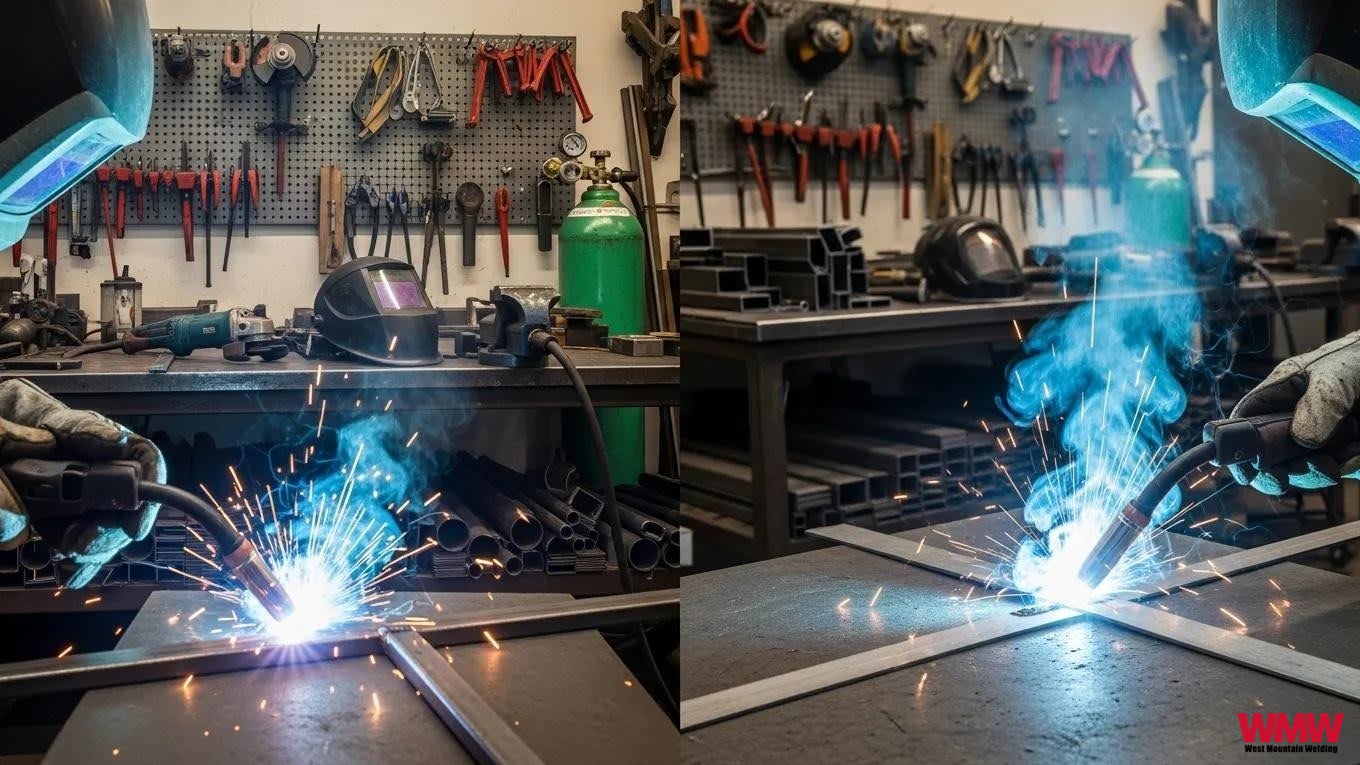
Selecting the right welding process is central to producing code-compliant, structurally sound work. Industrial welding services in Utah typically draw on three primary methods:
MIG (GMAW) – Best for general fabrication, structural steel, and skids. It offers a high deposition rate, making it efficient for heavier materials.
TIG (GTAW) – Commonly used for pipe welds, thin materials, stainless steel, and alloys. It provides superior weld quality, clean appearance, and precise heat control.
Stick (SMAW) – Ideal for field repairs, heavy plate welding, and outdoor conditions. It is highly versatile and performs well in variable environments.
Robotic Welding – Designed for high-volume repeat assemblies. It delivers consistent weld quality and high production throughput.
For structural steel fabrication in Utah, MIG welding is common due to its efficiency on heavier sections. TIG is favored for precision pipe work and specialty alloys where weld quality directly affects service life. Robotic welding improves consistency on repeat components, a growing factor as projects scale.
Industries That Depend on Custom Steel Fabrication in Utah
Oil and Gas
The Uinta Basin is one of the most active oil and gas-producing regions in the Intermountain West. Custom fabrication supports wellsite infrastructure, gathering system components, processing equipment, and pipeline tie-ins. Components must meet API 1104 welding standards and withstand the operational demands of continuous production.
Power Generation and Utilities
Utah's evolving energy mix, natural gas, renewables, and transmission infrastructure, creates ongoing demand for custom steel fabrication. Structural platforms, equipment supports, conduit systems, and substation components all require fabricated solutions sized to specific equipment and site layouts.
Mining
Utah's mining sector operates in some of the most demanding environments in the region. Custom-fabricated wear parts, structural frames, conveyor supports, and processing equipment components must handle high loads, abrasion, and harsh conditions. Specialty fabrication ensures parts are built to those exact service conditions rather than adapted from standard stock.
Heavy Construction and EPC Contractors
Engineering, procurement, and construction firms working across Utah rely on precision metal fabrication to keep field schedules moving. Prefabricated assemblies, built to spec in the shop, reduce site labor, cut installation time, and remove uncertainty from the construction sequence.
Municipal Utilities and Infrastructure
Water treatment plants, pump stations, wastewater facilities, and transmission infrastructure all involve fabricated metal components. Compliance with applicable codes, material traceability, and dimensional accuracy are baseline requirements for utility work.
How Quality and Compliance Are Maintained
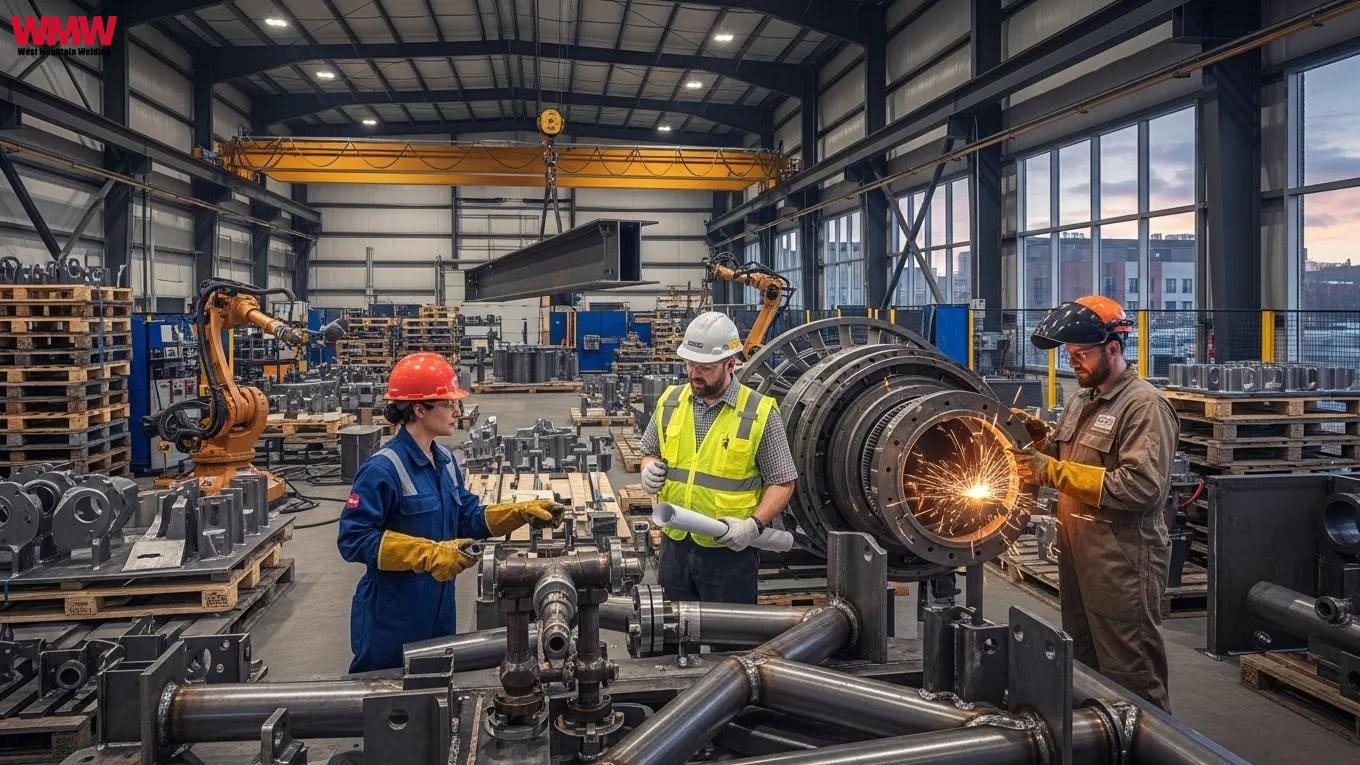
Industrial welding services in Utah are only as reliable as the quality systems behind them. Certified fabricators maintain documented welding procedure specifications (WPS), qualified welders through performance qualification records (PQR), and inspection protocols that cover fit-up, in-process checks, and final dimensional verification.
Key certifications and standards relevant to Utah fabrication work include:
AWS D1.1 — Structural Welding Code for steel; governs procedure and welder qualification on structural applications
ASME Section IX — Welding and brazing qualification standard; required for pressure vessel and pressure piping work
API 1104 — Welding standard for pipelines and related facilities; critical for oil and gas infrastructure
These aren't just credentials on a wall. They define the procedures welders follow, the tests components must pass, and the documentation clients receive. For EPC firms and utilities managing compliance across complex projects, working with a certified fabricator simplifies audits, reduces risk, and supports faster project closeout.
Material traceability, knowing where steel came from and being able to prove it, is a related requirement on many industrial projects. Reputable steel fabrication services in Utah maintain mill certifications and material documentation throughout the fabrication process.
In-Shop vs. Field Fabrication: Matching Method to Project Need
Most industrial fabrication work benefits from a combination of shop and field capability. Shop fabrication offers controlled conditions, better access to equipment, and more efficient quality inspection. Components arrive at the site prequalified and ready to install.
Field welding services extend that capability to locations where shop fabrication isn't practical, such as tie-ins on active systems, repairs during turnarounds, or structural work on a structure already under construction. Emergency response capability matters here: when a critical component fails on an operating facility, having a fabricator who can mobilize quickly and work to code under field conditions directly affects how long the outage lasts.
West Mountain Welding provides both certifications and field experience to maintain weld quality regardless of whether work happens on the shop floor or at the job site.
Future Trends in Utah's Fabrication Industry
Several trends are shaping demand for custom industrial fabrication across the Mountain West:
Automation and Robotic Welding — Fabrication shops adopting robotic systems and CNC-driven processes are improving throughput and repeatability on high-volume components. This benefits clients on large projects where consistent quality across many identical parts is critical.
Infrastructure Investment — Federal and state investment in energy, transportation, and water infrastructure continues to generate fabrication demand. Projects that were on hold are moving forward, and many require custom structural steel and precision-welded components.
Sustainability in Fabrication — Reduced material waste through precision cutting, improved energy efficiency in fabrication processes, and closer attention to material sourcing are becoming competitive factors. Clients increasingly ask about environmental performance alongside cost and schedule.
Workforce and Certification — As experienced welders retire across the industry, certified fabricators who invest in workforce development and training hold a structural advantage. Qualification records and certified welding inspectors (CWIs) will continue to differentiate shops in a competitive market.
Conclusion
Custom industrial fabrication in Utah is a technical discipline that directly affects whether projects come in on schedule, within budget, and to the safety standards that industrial operations require. West Mountain Welding combines certified welding expertise, structural steel capability, and field service flexibility to support the full range of industrial clients operating across the Mountain West.
Explore their services to see how precision fabrication can reduce risk and improve performance on your next project.
Frequently Asked Questions
1. What certifications should I require from a Utah fabrication company?
At minimum, look for AWS D1.1 for structural work, ASME Section IX for pressure applications, and API 1104 if your project involves pipelines. Ask to see documented WPS and welder qualification records.
2. What's the difference between structural steel fabrication and custom metal fabrication?
Structural steel fabrication focuses on load-bearing assemblies, platforms, pipe racks, and frames. Custom metal fabrication is broader, covering any component fabricated to a specific design, including supports, brackets, skids, and specialty assemblies.
3. Can custom fabrication reduce my overall project cost?
Yes. Shop-fabricated components typically reduce field labor, minimize rework, and shorten installation time, all of which lower total installed cost even when fabrication itself carries a premium over standard parts.
4. Does West Mountain Welding provide field welding services?
Yes. West Mountain Welding provides certified field welding and emergency repair services throughout Utah and the Mountain West region, in addition to in-shop fabrication.
5. How do I verify a fabricator's quality system before awarding work?
Request a copy of their quality plan, sample WPS documents, and welder qualification records. Ask about their inspection process and whether they maintain material traceability through mill certifications.