What Is CNC Plasma Cutting and How Does the Process Work?
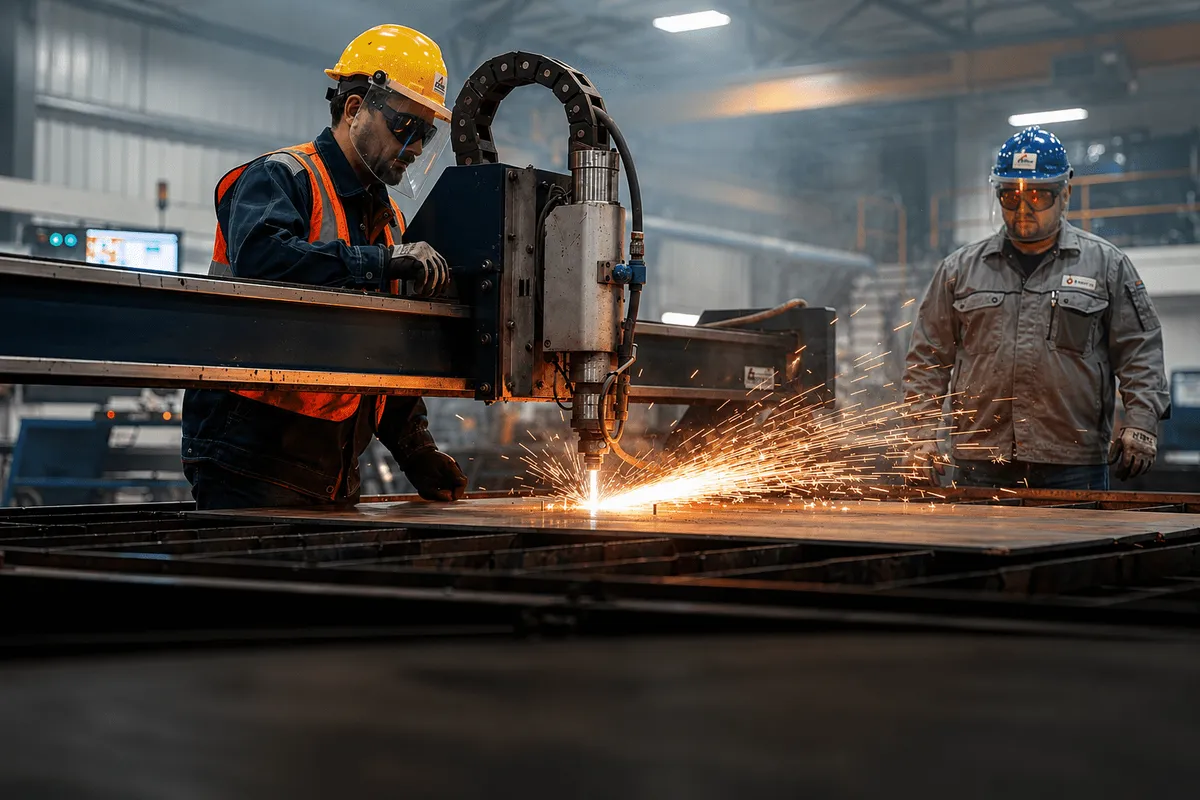
CNC plasma cutting is a computer-guided cutting process that fires an accelerated jet of superheated, electrically conductive gas plasma, the fourth state of matter, through metals like steel, stainless steel, and aluminum. A computer numerical control (CNC) system steers the torch along a programmed path, so the cut follows the exact geometry loaded into the machine instead of a hand-drawn line.
Key Takeaways
CNC plasma cutting uses a computer-guided torch to drive an ionized gas jet through electrically conductive metal, producing fast, repeatable cuts.
Steel, stainless steel, aluminum, brass, and copper are the five materials shops most commonly run through a CNC plasma cutter.
A CNC plasma cutter works by passing an electric arc through pressurized gas, converting it into plasma hot enough to melt metal on contact.
Shops use the process across structural fabrication, pipe prefabrication, automotive repair, and salvage/scrap work.
Cut quality directly affects downstream welding; a clean, accurate cut cuts fit-up time; a sloppy one adds it back.
At West Mountain Welding, we run CNC plasma cutters on tight-tolerance shop fabrication work every week, and the short version is this: it's the fastest way to turn a flat plate or pipe wall into a precisely shaped, weld-ready component.
What Is CNC Plasma Cutting?
CNC plasma cutting uses a computer-controlled torch to cut electrically conductive metal with a jet of superheated plasma. "CNC" refers to the computer numerical control system driving the torch head; "plasma" refers to the ionized gas doing the cutting.
Understanding plasma itself helps explain why the process works the way it does. Gas doesn't conduct electricity or cut metal in its normal state. Add enough energy heat, in this case and the gas ionizes, meaning its atoms shed electrons and the gas becomes electrically conductive. Physicists call this the fourth state of matter, alongside solid, liquid, and gas. A plasma cutter creates that state on demand, inside the torch, for as long as the trigger is engaged.
Once that ionized gas exists, the CNC system takes over the geometry. Instead of a fabricator tracing a cut line by hand, as older plasma and oxyfuel setups did, the machine reads a programmed path from a CAD file or nesting program and drives the torch across the plate or pipe automatically. That's the difference between "plasma cutting" as a general process and "CNC plasma cutting" specifically: the CNC layer is what makes the cut repeatable from part to part.
Why This Distinction Matters on the Shop Floor
In our shop, the CNC step is what makes production runs viable. A hand-held plasma torch can make a clean cut, but ask ten fabricators to trace the same bracket profile, and you'll get ten slightly different parts. Load that same profile into a CNC table, and part 50 matches part 1. That consistency is what lets prefabricated piping spools arrive on a jobsite already fitting the drawings, instead of needing to be trimmed on-site.
How Does a Plasma Cutter Work?
A plasma cutter works by forcing compressed gas through a narrow nozzle and passing an electric arc through that gas stream. The arc strips electrons from the gas, ionizing it into plasma. That plasma jet reaches temperatures high enough to melt conductive metal almost instantly, and the gas pressure blows the molten material out of the kerf (the cut gap) as the torch advances.
Break it into the sequence our operators actually watch happen on the table:
Power supply energizes the torch. Current flows to the electrode inside the torch head.
Gas is forced through the nozzle. Compressed air, nitrogen, or another gas mix depending on the material.
An electric arc ionizes the gas. The gas converts into plasma as it passes through the arc.
The plasma jet contacts the metal. Heat and pressure melt a narrow path and blow the molten metal through the underside of the cut.
The CNC-guided torch advances. The machine follows the programmed path until the profile is complete.
A note on numbers: published references generally put plasma-arc temperatures in the tens of thousands of degrees Fahrenheit, and plasma cutting is commonly described as faster than oxyfuel cutting on thinner material. Exact temperature and speed figures vary by manufacturer, gas type, and amperage setting, so if you're citing a specific number in a technical spec or proposal, pull it from your machine manufacturer's documentation rather than a general figure like this one.
The CNC Plasma Cutting Process, Step by Step
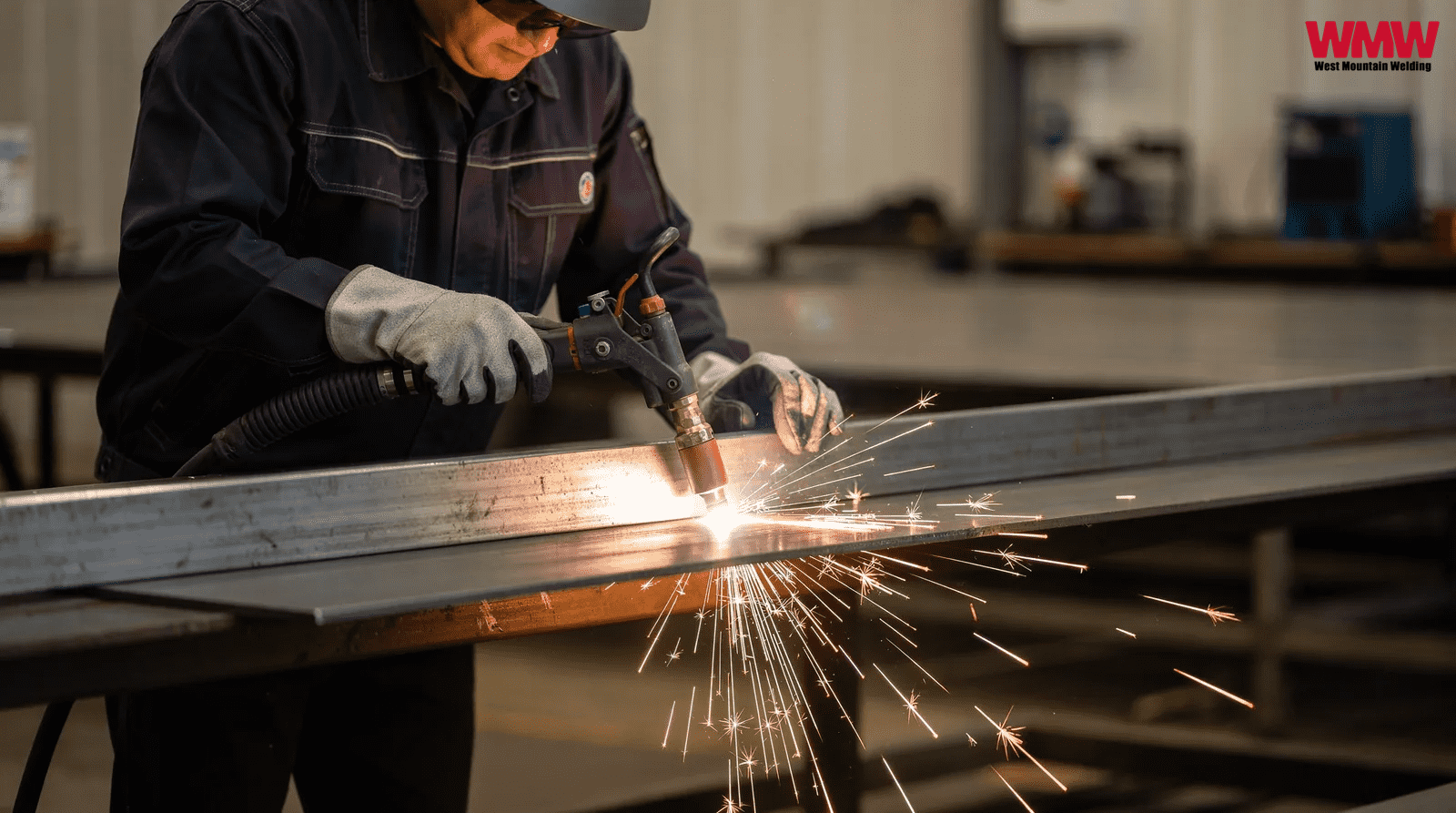
Producing a finished part follows a defined production sequence, not a single cutting event. Skipping a step here is where most rework starts.
Load the design file. The CNC controller reads the cut geometry from a CAD drawing or nesting program.
Set torch height and gas parameters. Operators dial in settings for the specific material type and thickness; this is the step where experience shows. A setting that's clean on 3/8" carbon steel will leave excess dross on 3/8" aluminum.
Cut the profile. The machine drives the torch along the programmed path, melting through the plate or pipe wall.
Inspect the cut. Inspect edges for squareness and dross before the part moves on.
Label and stage the piece. Cut spools and components get marked and organized for welding.
Weld and finish. Fabricated pieces move into the weld shop, where accurate cuts and clear spool drawings cut down on time spent fitting parts together.
That labeling step is easy to underrate until you're the crew unpacking a truck full of unmarked spools on a jobsite. Piping that's cut, welded, and tagged to its drawing goes into place; piping that isn't gets set aside while someone tries to match it to a print.
Which Materials Work Best with CNC Plasma Cutting?
CNC plasma cutting handles any electrically conductive metal, but five materials cover the vast majority of fabrication work: steel, stainless steel, aluminum, brass, and copper. Thickness, alloy composition, and reflectivity all shape how clean the final cut comes out.
Cutting Different Metal Materials
Carbon Steel
Common Use: Structural fabrication and general metalwork.
Cutting Note: Cuts cleanly and quickly compared with many other common alloys.
Stainless Steel
Common Use: Piping, food-processing systems, and chemical applications.
Cutting Note: Requires tighter amperage control to minimize heat-affected areas.
Aluminum
Common Use: Substation bus systems and lightweight structures.
Cutting Note: Can develop dross buildup when cutting settings are not properly adjusted.
Brass and Copper
Common Use: Specialty components and electrical applications.
Cutting Note: High reflectivity can reduce cutting speed and require careful parameter adjustments.
In practice, aluminum and stainless steel give operators the most trouble, not because the machine can't cut them, but because their thermal conductivity and reflectivity punish sloppy amperage settings. Carbon steel is far more forgiving, which is part of why it's the default material for most structural cutting.
Does Material Thickness Change the Result?
Yes. Thinner sheet metal cuts fast with a clean edge. Thicker plate requires slower travel speeds and tighter process control, or the cut edge comes out beveled instead of square, a problem if that edge is heading straight into a weld joint.
Where Fabrication Shops Use CNC Plasma Cutting
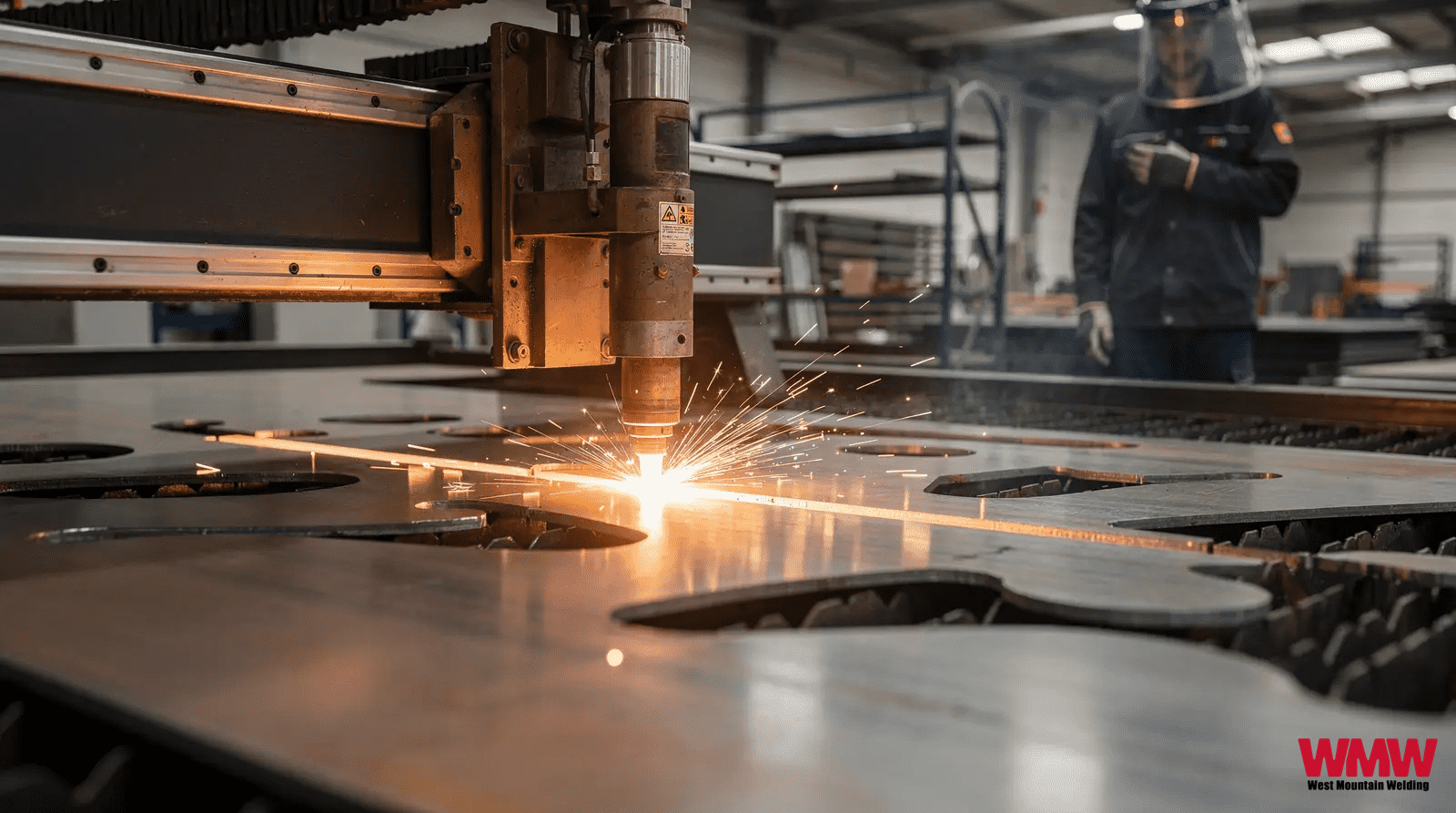
CNC plasma cutting shows up anywhere a shop needs fast, accurate cuts in conductive metal:
Structural and pipe fabrication — cutting plate, tube, and pipe to spec for prefabricated piping systems and custom industrial fabrication
Automotive and equipment repair — cutting replacement panels and components
Salvage and scrap operations — breaking down large metal structures
Industrial construction — producing components for substations, power plants, and other critical infrastructure
At West Mountain Welding, we run this process most often on prefabricated piping and structural components bound for critical infrastructure work across Utah and the Mountain West, from our shop in Payson. Cutting accuracy at this stage is what lets a spool arrive on-site already fitting the drawing, instead of needing field adjustment.
Common CNC Plasma Cutting Mistakes to Avoid
Four issues account for most of the delays we see trace back to the cutting stage:
Skipping tight-tolerance controls. Crews without clear tolerance specs waste hours correcting fit-up issues in the field.
Weak or missing labeling. Prefabricated components only save time on-site if they're clearly tagged to their drawings.
Mismatched equipment. CNC plasma cutters vary by stock form and number of control axes; running the wrong class of machine for the job wastes setup time and hurts cut quality.
Unverified fabricator qualifications. For critical infrastructure work, confirm certifications match the applicable code (ASME, API, AWS) before signing a contract, not mid-project.
Before fabrication starts, confirm:
Spool drawings and tolerance specs are finalized and shared with the shop
Labeling standards are agreed on for every prefabricated section
The fabricator's certifications match the applicable code
The CNC machine's configuration fits the material and axis requirements of the job
Conclusion
CNC plasma cutting delivers the speed, precision, and repeatability that modern fabrication depends on, turning raw plate, tube, and pipe into components that fit right the first time. Whether it's structural steel, pipeline components, or custom shapes, the accuracy of that first cut shapes every step that follows in the weld shop and the field.
At West Mountain Welding, we build plasma-cut components into our broader certified welding and pipe fabrication workflow, so every piece that leaves the shop is ready to install and built to spec.
FAQ
What materials can CNC plasma cutting handle?
CNC plasma cutting works on any electrically conductive metal, most commonly steel, stainless steel, aluminum, brass, and copper.
How does a CNC plasma cutter differ from a hand-held plasma cutter?
A CNC plasma cutter uses a computer-controlled system to guide the torch along a programmed path, producing repeatable, precise profiles that a hand-held torch can't consistently match.
Is CNC plasma cutting faster than oxyfuel cutting?
On thinner conductive metals, plasma cutting is generally faster than oxyfuel torch cutting; exact speed differences depend on material, thickness, and machine settings, so check manufacturer specs for precise figures.
What thickness of metal can a CNC plasma cutter handle?
CNC plasma cutters handle a wide range, from thin sheet metal to thick structural plate, though cut speed and edge quality both decline as thickness increases.
Where does West Mountain Welding use CNC plasma cutting?
West Mountain Welding, based in Payson, UT, applies CNC plasma cutting for tight-tolerance shop fabrication, producing components for prefabricated piping systems and custom industrial fabrication projects.