What is the best welding method for aluminum?
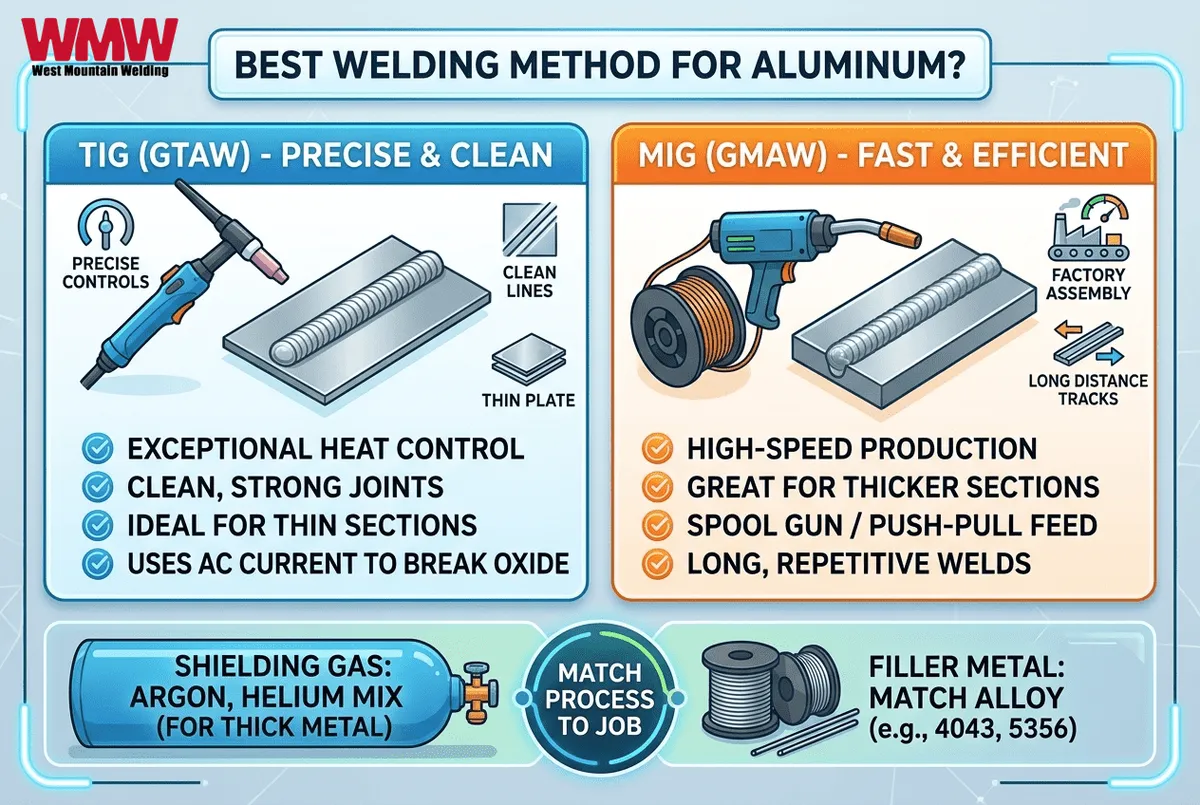
TIG welding, also called GTAW, is generally the best method for aluminum when quality and control matter most, while MIG welding, also called GMAW, is often better for speed on thicker or longer joints. Both work well when the welder matches the process to the job:
TIG gives precise heat control and clean, strong welds on thin or critical joints, using AC current to break up the oxide layer.
MIG is faster and suits production work and thicker sections, often with a spool gun or push-pull gun to feed soft aluminum wire.
Argon shielding gas is standard for both, and thick aluminum may call for argon and helium mixes.
Filler metal must match the base alloy and the job, with 4043 and 5356 among the common choices.
Cleaning comes first, since oxide and oil cause porosity. For substation and bus work, a qualified welder follows a tested procedure, and our page on substation aluminum bus welding shows where these methods are used. See how to remove oxidation from aluminum for prep, and our breakdown of GTAW root pass techniques to see why TIG control matters. Choose TIG for precision and MIG for productivity, and confirm the procedure with your inspector or engineer.