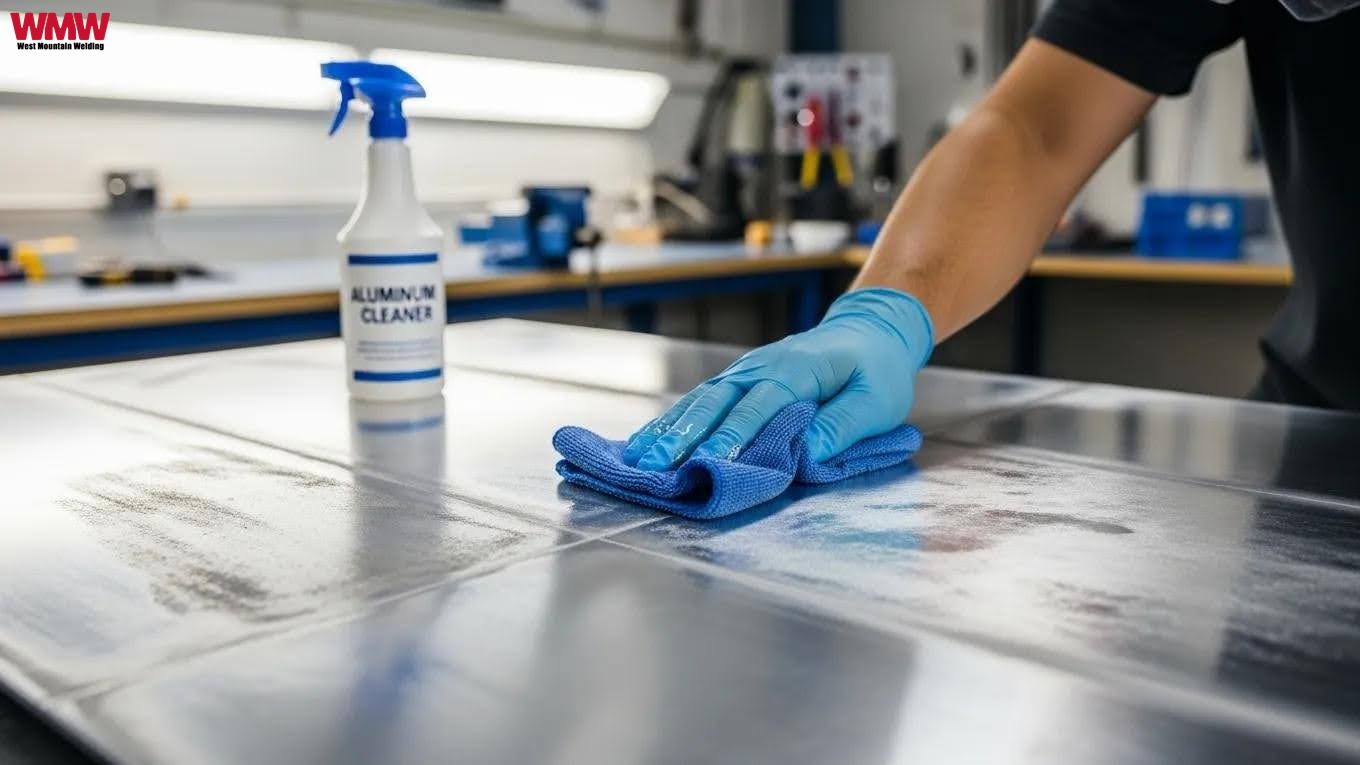
How to Remove Oxidation From Aluminum? Best Proven Ways
To remove oxidation from aluminum, degrease the surface with acetone, apply an acid-based aluminum cleaner to dissolve the oxide layer, then mechanically abrade with a dedicated stainless steel wire brush or aluminum oxide sandpaper. Weld or coat within 30–120 minutes before the surface re-oxidizes. Always wear gloves, goggles, and a respirator.
Key Takeaways
Aluminum oxide forms almost instantly on exposed aluminum and must be removed before welding. Its melting point is nearly 3× higher than that of aluminum itself, causing porosity and weld failure if left in place.
Chemical cleaners (phosphoric or citric acid-based) dissolve bulk oxidation without damaging the base metal when used at correct dilutions and dwell times.
Mechanical methods, such as sanding with 80–180 grit aluminum oxide abrasives or wire brushing with a dedicated stainless steel brush, physically remove the oxide layer and confirm a visually clean surface.
Never use a steel wire brush on aluminum; iron contamination embeds into the surface, causes weld defects, and accelerates galvanic corrosion.
Combining chemical and mechanical cleaning delivers the most reliable pre-weld surface preparation for structural aluminum work.
Aluminum re-oxidizes within minutes. Weld or apply protective coating within 30–120 minutes of final surface prep for best results.
Always use dedicated aluminum-only tooling (brushes, discs, rags) to prevent cross-contamination from steel or other metals.
PPE is non-negotiable: chemical-resistant gloves and goggles for chemical cleaning; N95 dust mask and face shield for grinding and sanding.
Aluminum is one of the most widely used metals in fabrication, construction, and manufacturing, but it oxidizes fast. If you've ever noticed a chalky white film, dull gray coating, or rough, pitted surface on aluminum parts, that's aluminum oxide at work. Knowing how to remove oxidation from aluminum is essential for anyone working in welding, sheet metal fabrication, or structural aluminum repair.
In this guide, we share the best proven methods our team uses to clean aluminum for welding and general surface restoration, the same techniques that deliver results in real shops, on real projects.
What Is Aluminum Oxidation and Why Does It Matter?
Aluminum oxidation is a chemical reaction that occurs when aluminum metal is exposed to oxygen in the air. The result is a thin but hard aluminum oxide (Al₂O₃) layer on the surface. While this layer can act as a natural barrier against further corrosion in some low-stress environments, it causes serious problems in welding and precision fabrication.
How Aluminum Oxide Forms on Metal Surfaces
Aluminum oxide forms almost instantly upon exposure to oxygen, even at room temperature. The process accelerates in humid conditions, marine environments, and areas with airborne contaminants like salt or industrial pollutants. Unlike rust on steel, aluminum oxide doesn't flake off. It bonds tightly to the base metal, which is exactly why aluminum oxidation removal requires deliberate action before welding or coating.
Why Oxidized Aluminum Fails in Welding Applications
The melting point of aluminum oxide (approximately 3,700°F / 2,040°C) is nearly three times higher than aluminum itself (1,220°F / 660°C). This dramatic difference means the oxide layer won't melt during TIG or MIG welding; instead, it sits in the weld pool and creates:
Incomplete fusion and lack of penetration
Porosity and voids within the weld bead
Inclusions that weaken the weld joint
Increased risk of cracking under load
For any structural weld on aluminum, removing oxidation is not optional; it's a prerequisite for a safe, code-compliant result.
Signs Your Aluminum Surface Needs Oxidation Removal
Before choosing a method to remove oxidation from aluminum, it helps to identify what you're dealing with:
Light surface haze: Common on freshly machined or stored aluminum. A matte, slightly cloudy appearance with no visible change in texture.
White powdery deposits: Heavier oxidation that has built up over time, often seen on aluminum extrusions, castings, or outdoor structures.
Pitting and roughness: Advanced oxidation that has etched into the surface, especially in coastal or industrial environments.
Dark staining or discoloration: Often caused by a combination of oxidation and contaminants such as oils, heat scale, or weld spatter.
Each of these conditions calls for a different level of treatment, which is why having multiple removal methods in your toolkit matters.
Best Methods to Remove Oxidation From Aluminum
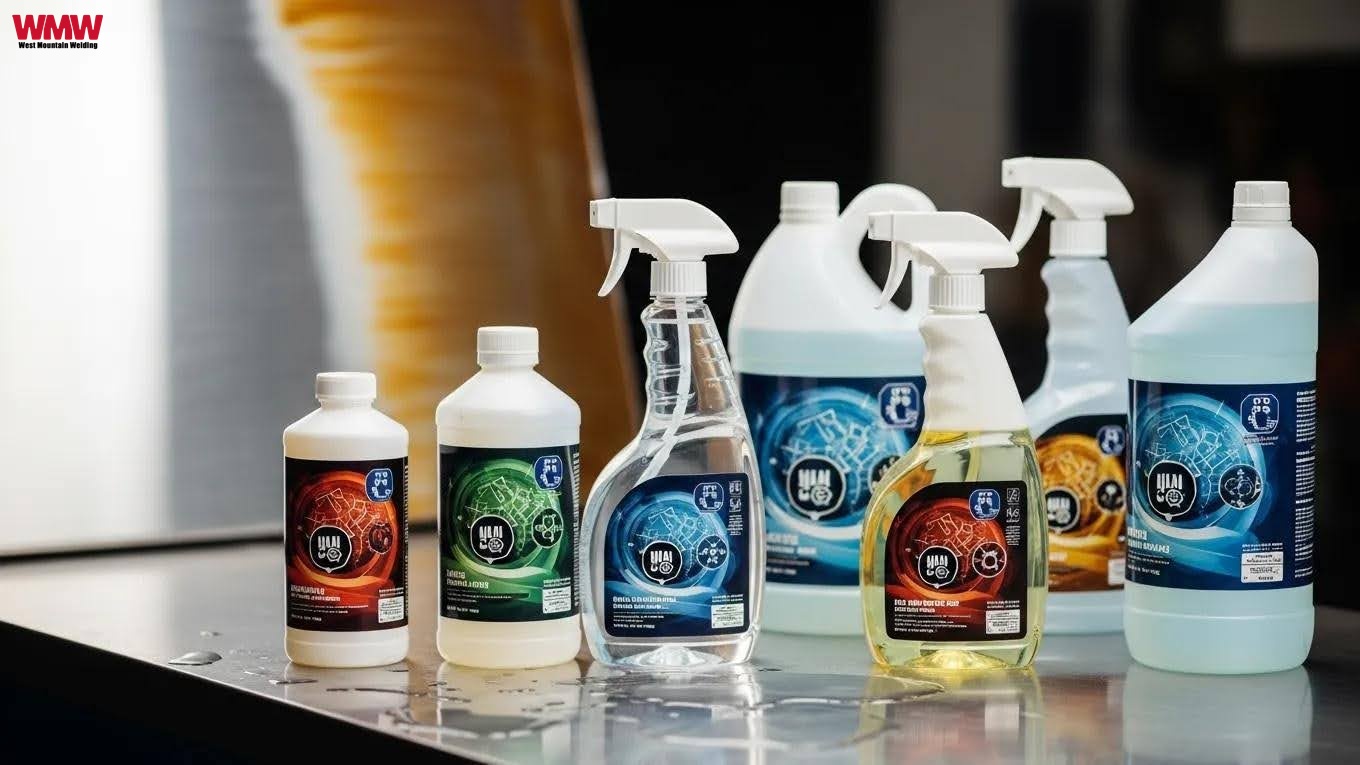
There are two primary approaches: chemical cleaning and mechanical cleaning. For best results, particularly ahead of welding, the two methods are often combined.
Method 1: Chemical Oxidation Removal
Chemical cleaners dissolve aluminum oxide through an acid or alkaline reaction, breaking the molecular bond between the oxide and the base metal. This approach is fast, effective on complex geometries, and ideal when you need to clean large surfaces or reach areas that are difficult to abrade mechanically.
Types of Chemical Cleaners for Aluminum Oxide
Acidic aluminum cleaners — typically phosphoric or citric acid-based formulas are among the most widely used products for aluminum oxide removal. They react with the oxide layer without aggressively attacking the base metal when used at correct dilutions and dwell times.
Alkaline degreasers — sodium hydroxide or potassium hydroxide-based products are effective at removing oxidation, along with oils and organic contamination in a single step. These are common in industrial pre-treatment lines ahead of anodizing or powder coating.
Purpose-formulated aluminum brighteners and pre-weld cleaners — these products are engineered specifically for welding prep. They often combine mild acidity with surfactants to lift oxidation, oils, and contamination simultaneously, leaving a clean, wettable surface.
When selecting the best aluminum oxidation remover for your application, consider:
The severity and age of the oxidation
Whether the part will be welded, coated, or left bare
Environmental and workplace safety requirements
Compatibility with the alloy (some cleaners affect certain aluminum grades differently)
How to Use Chemical Cleaners Safely
Read the product SDS (Safety Data Sheet) before use
Put on appropriate PPE: chemical-resistant gloves, safety goggles, and a respirator rated for chemical vapors
Ensure the work area is well-ventilated or use exhaust ventilation
Apply the cleaner per the manufacturer's recommended method (spray, brush, or immersion)
Allow the specified dwell time. Don't rush it, but don't let the product dry on the surface
Rinse thoroughly with clean water and dry completely before the next step
Dispose of spent chemicals according to local environmental regulations
Never mix acid-based and alkaline cleaners without thoroughly rinsing in between; the reaction can generate heat and hazardous fumes.
Method 2: Mechanical Oxidation Removal
Mechanical methods physically abrade the oxide layer from the aluminum surface. These techniques are fast, don't require chemical handling, and give the welder or fabricator direct visual confirmation that the surface is clean. For pre-weld aluminum surface preparation, mechanical cleaning is often the final step, even after chemical treatment.
Sanding and Abrasive Discs
Sanding is one of the most common and effective ways to remove aluminum surface oxidation. Use aluminum oxide or zirconia abrasive discs, not silicon carbide, which can embed particles into the aluminum surface and cause weld contamination.
Recommended grit sequence for oxidized aluminum:
Start with 80–120 grit to remove heavy oxidation or pitting
Step up to 180–220 grit for a clean, uniform finish
For weld prep, a consistent 120–180 grit scratch pattern is generally acceptable
Use a random orbital sander or angle grinder with a flap disc for flat surfaces. Keep the tool moving to avoid dwelling in one spot, which can heat and distort thin aluminum.
Wire Brushing
Wire brushing is effective for moderate oxidation and is especially useful in tight corners, weld joints, and shaped extrusions. Critical rule: use a stainless steel wire brush that has only ever been used on aluminum. Cross-contamination from a brush previously used on steel or other metals can embed iron particles into the aluminum surface, causing contamination weld defects and accelerating galvanic corrosion.
Power wire brushing with an angle grinder-mounted cup brush speeds up the process considerably on larger surfaces.
Scotch-Brite and Non-Woven Abrasive Pads
For light oxidation and final surface prep before TIG welding, non-woven abrasive pads (such as Scotch-Brite) are a practical choice. They conform to irregular surfaces, remove surface haze efficiently, and don't leave as aggressive a scratch pattern as sandpaper. Aluminum-compatible pads in medium to fine grades work well for this purpose.
Recommended Tools for Industrial Aluminum Surface Preparation
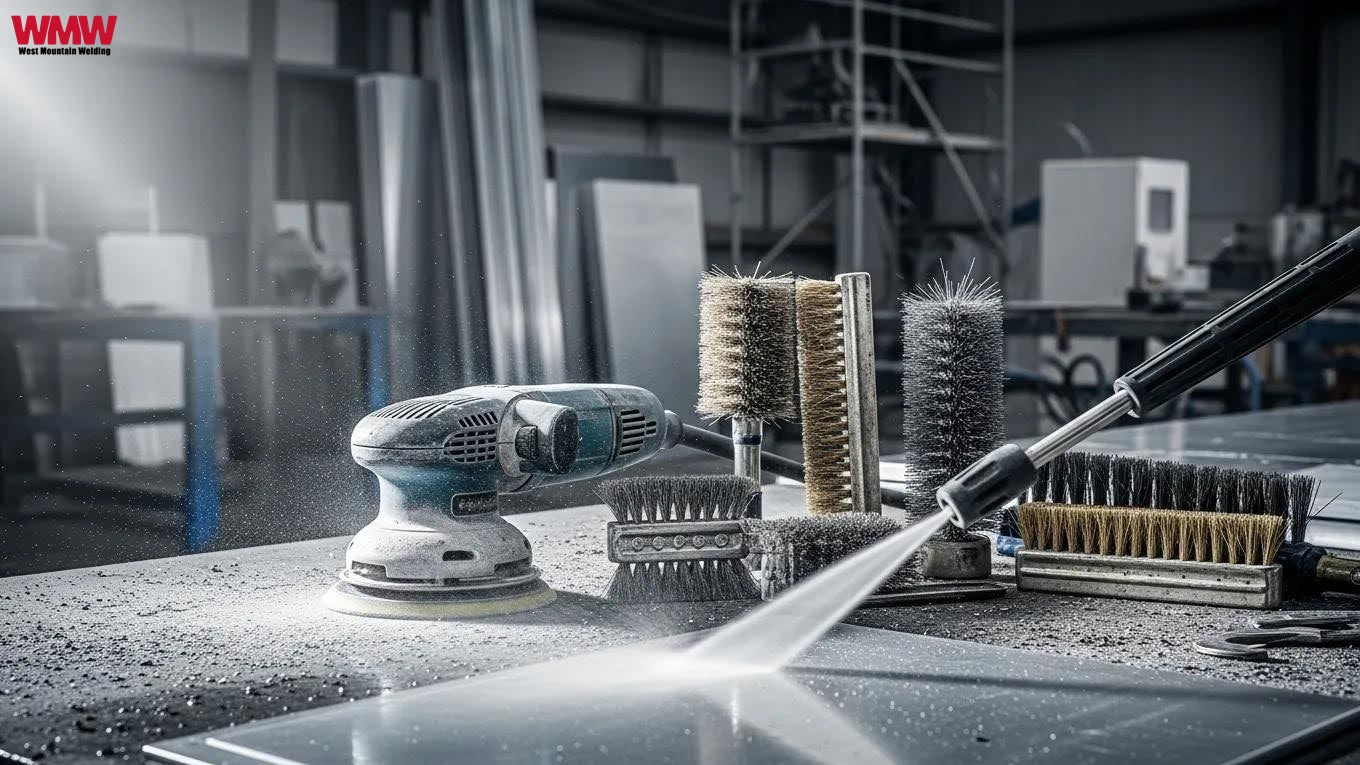
Angle grinder with flap disc – Ideal for removing heavy oxidation on flat or large-radius aluminum surfaces.
Random orbital sander – Best for achieving a smooth finish on sheet aluminum and panels.
Stainless steel wire brush (hand) – Effective for cleaning weld joints, corners, and detailed profiles.
Wire cup brush (power) – Suitable for large structural sections and aluminum plates.
Non-woven abrasive pad – Great for light haze removal and final pre-weld surface preparation.
Power washer (with detergent) – Recommended for pre-cleaning heavily soiled aluminum structures.
Method 3: Combined Chemical and Mechanical Cleaning
For production welding environments or heavily oxidized aluminum, the most reliable aluminum oxidation removal approach combines both methods in sequence:
Degrease first — Remove oil, grease, and cutting fluids with a solvent wipe (acetone or an approved aluminum degreaser). Oil under oxidation defeats both chemical and mechanical treatments.
Apply chemical cleaner — Use an acid or alkaline cleaner to dissolve bulk oxidation and loosen surface contamination.
Rinse and dry — Rinse completely and allow the surface to dry, or dry with clean compressed air.
Mechanically abrade — Follow up with sanding or wire brushing to remove any remaining oxide and create a fresh, exposed metal surface.
Final wipe — Wipe down with clean acetone on a lint-free cloth immediately before welding to remove any residual contamination from the mechanical step.
The window between surface prep and welding matters. Aluminum begins to re-oxidize within minutes at room temperature. In humid or contaminated shop environments, weld as soon as possible after cleaning, ideally within 30 minutes to 2 hours of final prep.
Aluminum Oxidation Removal for Specific Applications
Pre-Weld Surface Preparation
Pre-weld aluminum prep is arguably the most demanding application for oxidation removal. The American Welding Society (AWS) and major welding codes require aluminum base metal to be free of oxide, oil, moisture, and other contaminants before welding. Failure to comply can result in welds that fail inspection or worse, structural failures in service.
For TIG welding (GTAW), the AC arc partially performs oxide cleaning through cathodic etching, but this doesn't eliminate the need for mechanical pre-cleaning. For MIG welding (GMAW), there is no equivalent self-cleaning action; mechanical and/or chemical prep is essential.
Aluminum Restoration and Repair
For aluminum parts being restored rather than welded, the goal is different; you want to remove the oxidation without unnecessary metal removal and protect the surface afterward. In these cases, chemical treatment followed by light mechanical polishing is the preferred sequence, with a final application of clear coat, anodizing, or aluminum wax to delay re-oxidation.
Marine and Architectural Aluminum
Aluminum used in marine or outdoor architectural applications typically faces heavier oxidation due to prolonged salt and moisture exposure. For these surfaces, power washing followed by an acid-based cleaner, then mechanical abrasion, is often required. Protective coatings, marine-grade primers, Alodine (chromate conversion coating), or powder coat should be applied promptly after cleaning.
Safety and Environmental Best Practices
Essential PPE for Aluminum Oxidation Removal
Chemical cleaning: Nitrile or neoprene gloves, chemical splash goggles, acid-resistant apron, and respirator
Sanding / grinding: Safety glasses or face shield, dust mask (N95 minimum), and hearing protection
Wire brushing: Safety glasses and cut-resistant gloves
Solvent wiping: Nitrile gloves, safety glasses, and proper ventilation
Aluminum oxide dust generated during mechanical cleaning is a respiratory hazard. While less dangerous than silica dust, fine aluminum particulate should not be inhaled regularly. Always work with ventilation or respiratory protection.
Responsible Chemical Disposal
Spent chemical cleaners, particularly acid-based products, must be neutralized before disposal or directed to approved chemical waste collection. Check with your local environmental authority for specific requirements. Where possible, choose biodegradable, low-VOC cleaning products to reduce environmental impact without sacrificing performance.
Industrial Case Studies: What Proper Oxidation Removal Achieves
Structural Aluminum Fabrication
A regional manufacturer of architectural aluminum assemblies implemented a standardized pre-weld cleaning protocol combining chemical oxide removal followed by mechanical wire brushing. Weld rejection rates due to porosity dropped significantly, reducing rework labor and improving throughput on tight-tolerance assemblies.
Marine Aluminum Repair
A marine repair facility servicing aluminum vessel hulls and superstructures introduced a systematic cleaning workflow for oxidation-affected aluminum plates. By combining acid wash, power washing, and mechanical grinding ahead of MIG welding, they consistently achieved X-ray quality welds on structural hull repairs, meeting DNV classification requirements.
Key Lessons From Aluminum Surface Preparation Challenges
Shops that struggle with aluminum weld quality often trace the root cause back to surface prep shortcuts. The consistent findings across industrial case studies:
Ad-hoc cleaning produces inconsistent welds — standardizing the process eliminates variability
Training matters — welders who understand why oxidation removal is critical are more likely to do it correctly
Dedicated tooling prevents cross-contamination — aluminum-only brushes, discs, and rags are not optional in a quality-focused shop
Time between prep and welding needs to be controlled — prepping too far in advance negates the work done
Conclusion
Learning how to remove oxidation from aluminum correctly is one of the foundational skills in aluminum fabrication and welding. Whether you're prepping structural members for a TIG weld, restoring oxidized marine hardware, or cleaning architectural aluminum ahead of coating, the same principles apply: degrease, chemically treat if needed, mechanically abrade, and weld or coat promptly.
At West Mountain Welding, surface preparation is never an afterthought; it's the first step to every quality aluminum weld we produce. Use the methods outlined in this guide, invest in the right tools and PPE, and build a consistent pre-weld cleaning process into your workflow. The difference in weld quality will be immediately visible.
Frequently Asked Questions
1. How do you remove oxidation from aluminum at home without special tools?
A paste of cream of tartar and water, or a diluted white vinegar solution, can dissolve light aluminum oxidation. Scrub with a soft brush, rinse, and dry. For heavier oxidation, a hardware-store aluminum brightener and a Scotch-Brite pad will work better.
2. Can I use a steel wire brush to clean aluminum before welding?
No. Steel bristles contaminate the aluminum surface with iron particles, which cause weld defects and promote corrosion. Always use a stainless steel brush dedicated to aluminum only.
3. How quickly does aluminum re-oxidize after cleaning?
Aluminum begins forming a new oxide layer within minutes of cleaning. For welding, prep the surface and weld within 30 minutes to 2 hours. In humid or warm conditions, weld as soon as possible after final prep.
4. What is the best aluminum oxidation remover for pre-weld cleaning?
Purpose-formulated aluminum pre-weld cleaners or mild phosphoric acid-based products are most effective. Follow with mechanical abrasion and a final acetone wipe immediately before welding.
5. Is aluminum oxide dangerous to health?
Aluminum oxide dust from grinding or sanding is a nuisance dust that can irritate the respiratory tract. Use an N95 dust mask or better when generating fine aluminum dust, and ensure adequate ventilation in enclosed work areas.