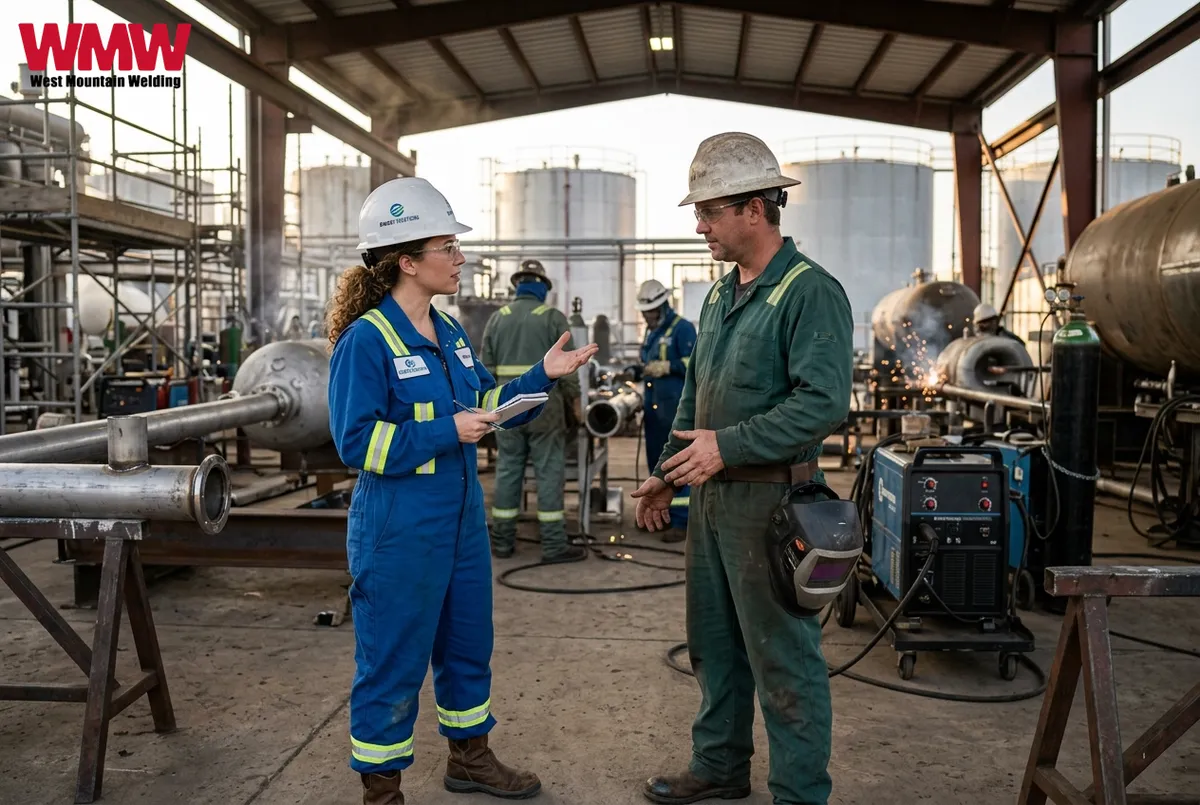
Questions to Ask Before Hiring an Oil and Gas Welding Contractor
Each question below has a correct answer that arrives as a document. If the answer arrives as a promise, keep asking. A simple way to compare bidders: score each contractor from zero to two on every question, where two means documents arrived within a day, and let the totals guide your shortlist.
1. Confirm Code Qualifications Match Your Scope
Ask: "Which codes cover my scope, and can you show the qualified procedures?"
Codes are not interchangeable. API 1104 covers welding on pipelines and related facilities, including new construction and in-service repair. ASME B31.3 governs process piping, ASME B31.1 governs power piping, and AWS D1.2 covers structural aluminum. A crew strong on cross-country pipe may have no qualified procedure for your refinery header.
Request the welding procedure specification (WPS) and its supporting procedure qualification record (PQR) for your pipe grade, wall thickness, and process. If a contractor cannot produce both, that qualification does not exist yet.
2. Check Welder Qualification and Continuity
Ask: "Which welders will be on my job, and when did each last weld with the qualified process?"
Procedures qualify a method. Performance tests qualify the person. Qualifications can lapse when a welder stops using a process for an extended period, so a card dated three years ago proves little about today's crew.
Ask for the named crew, their qualification dates, and the test position each passed. A 6G pipe test is a common benchmark for fixed-position work, but it says nothing about your specific material. Request test records, not training certificates.
3. Pin Down Inspection Methods and Repair Rates
Ask: "What NDT will you use, and what was your weld repair rate on your last three comparable jobs?"
Radiographic, ultrasonic, magnetic particle, and liquid penetrant testing each catch different flaws, and your specification decides which apply. A qualified contractor knows the acceptance criteria before the first weld is struck.
Repair rate is the honest metric because it shows how often welds fail inspection and get cut out. A contractor who tracks it can answer in one call. One who has never calculated it is hoping for quality, not managing it. Ask to see a redacted inspection report from a similar job to confirm the reporting is thorough.
4. Demand Material Traceability and Spool Labeling
Ask: "How do you trace material from mill test report to finished spool?"
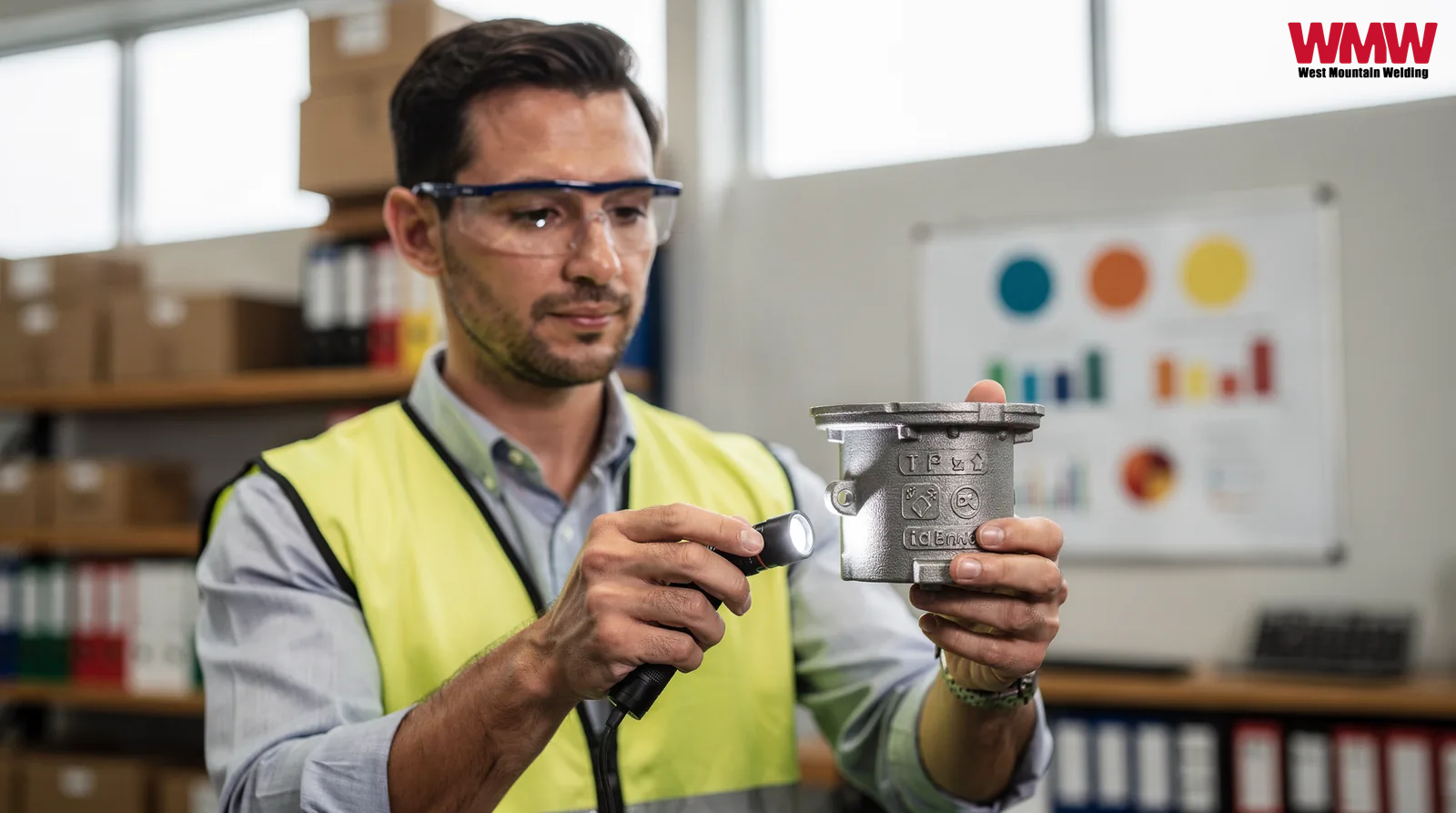
Traceability links heat numbers and material test reports to every fitting and spool. Without it, a failed hydrotest or a client audit can force rework across entire lines.
For shop-built work, ask how spools are marked and if the labels match the isometric drawings field crews will use. Unlabeled or mismatched spools burn shutdown hours while crews sort components on site. Well-run prefabricated piping arrives fully welded, labeled, and ready to install. Also ask what happens when a spool fails dimensional checks, because shop rework costs a fraction of field rework.
5. Review Safety Performance With Numbers
Ask: "What are your recordable incident rate and experience modification rate, and which safety prequalification platforms are you on?"
Many owners require third-party safety prequalification before site access. Request three years of OSHA logs and incident rates, then ask how you handle hot work permits, gas monitoring, and confined space entry.
Finish with a near-miss question: what happened, and what changed afterward? Specific answers signal a working safety program. Vague answers signal a binder on a shelf. Confirm the answers apply to the crew assigned to your job, not the company's best year.
6. Verify Insurance and Contract Terms
Ask: "Can you send certificates of insurance naming us as additional insured?"
Confirm that general liability, workers' compensation, auto, and umbrella limits meet your master service agreement minimums. If the work touches live hydrocarbon systems, ask about pollution liability as well.
Read the indemnity language before signing. Coverage gaps surface after an incident, when they are too late to fix.
7. Test Schedule Capacity and Shutdown Readiness
Ask: "How many crews can you commit to my window, and what happens if another client's emergency hits?"
Capacity claims deserve scrutiny. A contractor juggling ten jobs with no system creates more risk than one running three with tight coordination. Ask who sequences the work, how shutdown crews are staffed, and if shop and field work sit under one team. Handoffs between separate subcontractors are where spool drawings get misread.
Confirm after-hours dispatch for repairs too. For regional specifics, see our guide to choosing a pipe welding contractor in Utah.
8. Lock Down Change Orders and Communication
Ask: "Who is my single point of contact, and how are scope changes priced and approved?"
Field conditions change. Buried lines differ from drawings, and tie-in points move. Get the change-order process in writing, along with the reporting cadence, such as daily logs and weekly progress updates.
Then call two references with comparable scope. Ask what went wrong and how the contractor responded, because that answer says more than the success story. Knowing the common oil and gas pipe welding problems helps you ask sharper follow-ups.
Red Flags That Should Pause Your Hiring Decision
The lowest bid is the most expensive filter, because rework and delay erase early savings. Slow down if you see any of these:
Qualification records promised "later"
No named crew or supervisor
A bid that omits NDT, mobilization, or repairs
No incident or repair-rate data
Undisclosed subcontracting of field work
How West Mountain Welding Answers These Questions
West Mountain Welding, based in Payson, Utah, works to API 1104, ASME B31.1, ASME B31.3, and AWS D1.2, with procedures and qualifications available on request. Shop and mobile field crews work as one team, and prefabricated piping arrives welded and labeled for faster installation. Review our oil and gas welding services and bring these eight questions to your next bid call.
Conclusion
Vetting an oil and gas welding contractor comes down to one habit: ask for proof, then check it. Codes, crew records, inspection data, safety numbers, and contract terms all leave a paper trail. Contractors who welcome these questions have usually built systems to answer them, and those systems are what protect your schedule under pressure. Use the eight questions above as a written bid-review template, send them to every bidder, and compare the documents that come back.
Frequently Asked Questions
1. What should I ask an oil and gas welding contractor before hiring?
Ask for code qualifications, welder records, inspection methods, safety statistics, insurance certificates, and change-order terms. Every answer should come with documentation.
2. What certifications does a pipeline welding contractor need?
Pipeline work typically requires welders and procedures qualified to API 1104. Pressure piping in plants and refineries generally adds ASME Section IX-based qualifications.
3. How do I compare oil and gas welding companies?
Compare them on the same documents: qualified procedures, named crew records, repair rates, and incident rates. Price only matters after those match your scope.
4. Why is the lowest bid risky for oil and gas welding services?
Low bids often omit inspection, repairs, or mobilization, which return as change orders. Poor workmanship can also cause rework and delays that outweigh the savings.
5. What documents should an industrial welding contractor provide before mobilizing?
Expect WPS and PQR records, welder qualifications, insurance certificates, safety statistics, and an inspection plan. Reliable contractors send these without being chased.