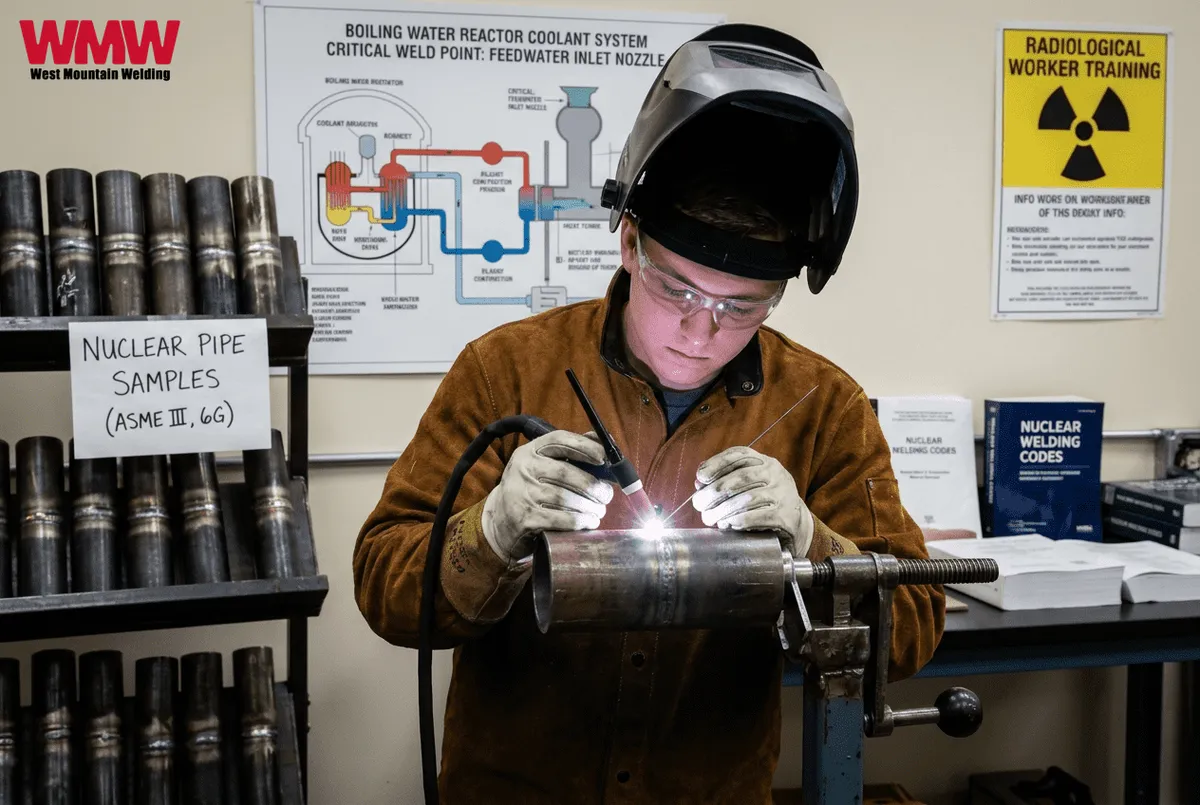
How to become a nuclear power plant welder?
To become a nuclear power plant welder, you need strong pipe welding skills, code qualifications such as ASME welder tests, field experience on pressure piping, and clearance to work at a plant, which includes background checks and safety training. The path usually takes several years, since plants want welders who can produce inspectable work under strict quality rules. The steps look like this:
Learn the basics through a welding program or apprenticeship, covering stick, MIG, and TIG welding.
Specialize in pipe welding, with focus on TIG root passes and stainless steel, alloy, and carbon steel pipe.
Earn welder performance qualifications under codes such as ASME Section IX, and keep them current.
Gain experience on pressure piping in power plants, refineries, or similar industrial settings.
Meet plant requirements, which typically include background screening, drug testing, and radiation worker training.
Get comfortable with documentation, since nuclear work requires detailed records of each weld, material, and procedure.
Many welders enter this field through union apprenticeships or through contractors that staff plant outages. Work is often tied to outage schedules, so be ready to travel. You can learn how related work is done in our page on power plant welding and maintenance, and our posts on stainless steel TIG welding and GTAW root pass techniques cover skills that carry over. Start by building clean, consistent pipe welds, then ask employers and unions which qualifications they require.