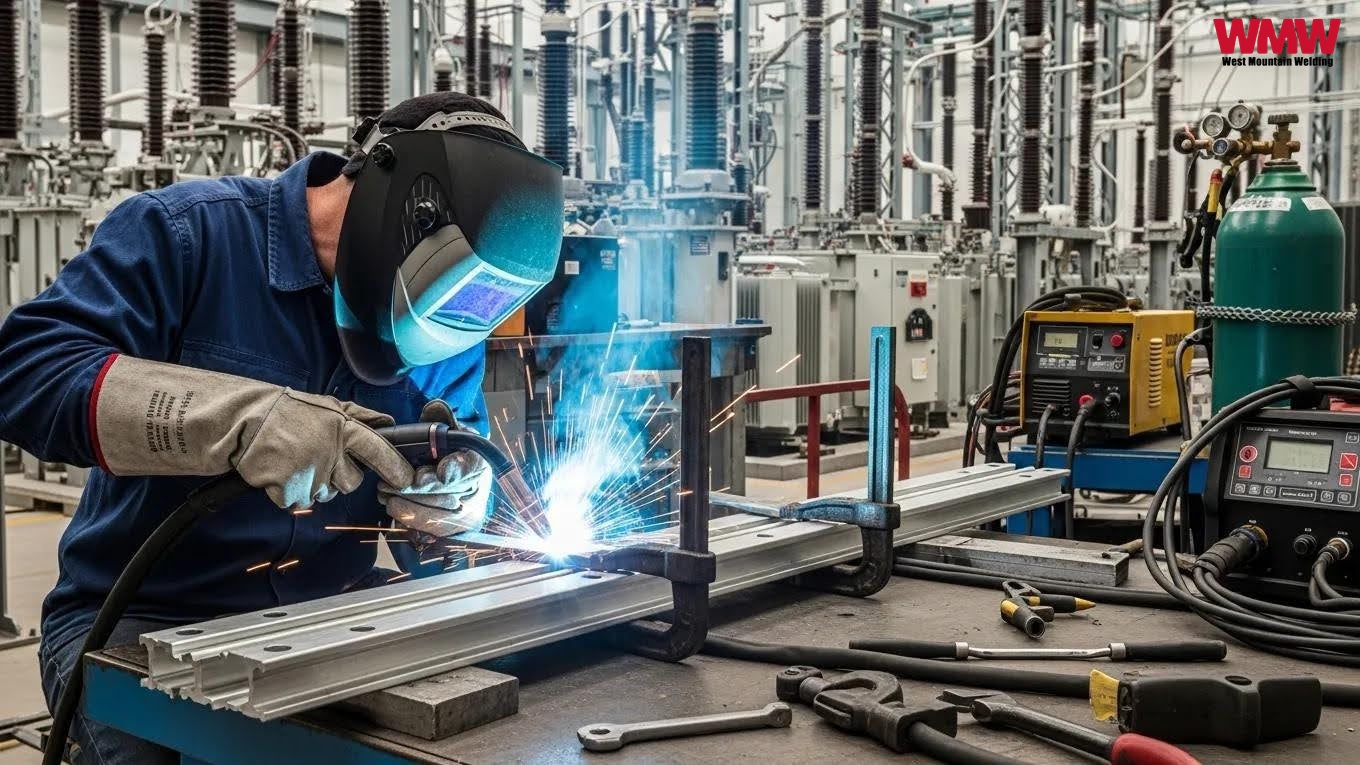
Complete Guide to Aluminum Welding in Substation Systems
Aluminum welding in substation systems is one of the most technically demanding disciplines in electrical infrastructure. A single failed weld on a substation aluminum busbar can trigger cascading outages, equipment damage, and serious safety incidents.
Whether you're planning a new build, scheduling substation maintenance, aluminum welding, or sourcing a certified repair contractor in the Mountain West, this guide gives you the field-tested foundation you need.
3 Core Welding Methods Used in Substations
Choosing the right process for aluminum welding in substation work depends on the component, access conditions, and quality requirements. Three methods cover the vast majority of applications.
1. MIG Welding — Best for Speed and Repair
MIG welding (GMAW) is the workhorse of substation aluminum busbar welding and conductor repair. It offers a high deposition rate that shortens maintenance windows and accommodates a wide range of aluminum thicknesses and joint geometries. Research on UHV substation construction confirms argon arc MIG welding is technically sound for large-diameter tubular aluminum busbars, provided procedures and operator training are tightly controlled. For any aluminum welding substation repair where speed and versatility matter, MIG is typically the first choice.
2. TIG Welding — Best for Critical Connections
TIG welding (GTAW) is the precision method for aluminum welding for electrical substations. The non-consumable tungsten electrode gives welders fine control over heat input, critical for thin-wall components, complex bus geometries, and connections where inspection criteria are strict. Substation aluminum busbar welding on tap points, transformer terminals, and switchgear interfaces commonly specifies TIG because the weld quality it produces is unmatched for high-consequence applications.
3. Stick Welding — Best for Remote or Emergency Work
Stick welding sees limited use in aluminum welding substation work because shielding gas control is harder to maintain outdoors. It remains practical when portability is the overriding constraint, such as remote sites, emergency field repairs, or locations where gas logistics are prohibitive.
Welding Standards Every Substation Contractor Must Know
High-voltage substation aluminum welding is governed by a layered set of standards. Compliance directly affects project acceptance, owner liability, and long-term equipment reliability.
AWS D1.2 – Structural Welding Code for Aluminum covering welder and procedure qualification, along with documentation requirements.
ASME Section IX – Welding and brazing qualification standard that verifies the repeatability of procedures and welder performance.
OSHA 29 CFR 1910/1926 – Regulations requiring PPE, pre-job hazard analysis, electrical safety measures, and confined-space controls.
NFPA 70E – Standard addressing arc flash and shock hazard protection for welding near energized equipment.
EPC firms and utility owners should require documented Welding Procedure Specifications (WPS), Procedure Qualification Records (PQR), and Welder Performance Qualifications (WPQ) from every contractor performing aluminum welding in substation scope. These records are the compliance paper trail that protects all parties in the event of a post-weld failure investigation.
TIG vs. MIG: Which Process Is Right for Your Application?
Both TIG and MIG welding are essential to aluminum busbar welding techniques used in substations. Here is how they compare across the factors that matter most in the field.
Heat Control TIG's adjustable amperage and foot-pedal control make it ideal for managing aluminum's low melting point without burning through thin sections. MIG runs hotter and faster, which suits heavier cross-sections and faster repair timelines.
Weld Quality: TIG produces cleaner, more inspectable welds with minimal spatter, which is important when post-weld liquid penetrant or radiographic testing is specified. MIG welds are strong and reliable, but require tighter process discipline to avoid porosity in field conditions.
Electrical Conductivity at the Joint: Both processes produce welds with acceptable conductivity when correctly executed. Poor fusion or internal porosity from either process increases resistance at the connection point, generates heat under load, and degrades performance over time.
Practical Takeaway: Use TIG for critical connections where weld integrity is the top priority. Use MIG for conductor repairs, large-format bus fabrication, and situations with significant schedule pressure.
Safety Requirements for Aluminum Welding in Substation Environments
Substation maintenance aluminum welding introduces hazards that go well beyond a standard fabrication shop. Proximity to energized equipment, confined work areas, and SF6 gas in switchgear all require layered controls.
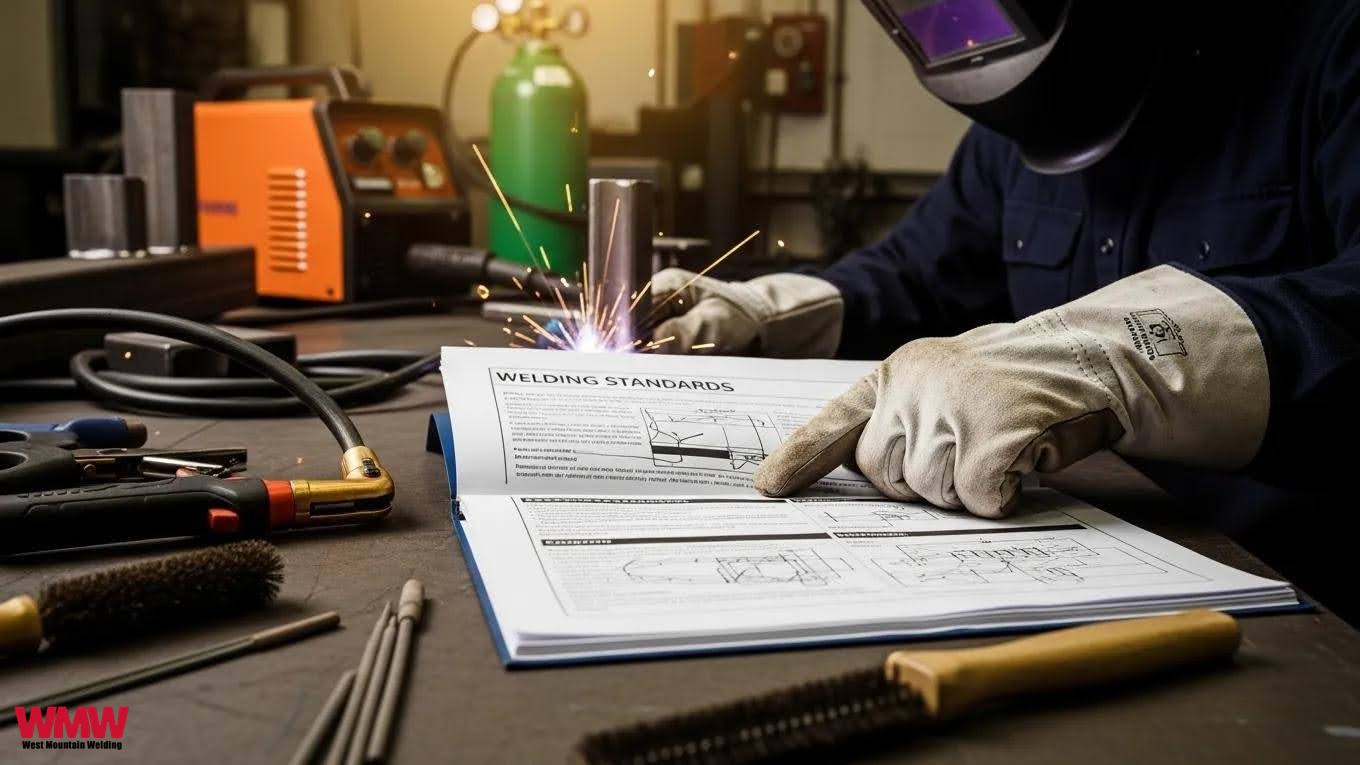
Personal Protective Equipment (PPE)
Auto-darkening welding helmet rated for the process amperage
Leather welding gloves and flame-resistant clothing
Safety boots and arc-rated PPE selected to the incident energy level per NFPA 70E when near energized equipment
Rubber insulating gloves when working adjacent to live circuits
Pre-Job Safety Requirements
Written Job Hazard Analysis (JHA) completed before any welding begins
Lockout/Tagout (LOTO) verified on all de-energized circuits in the work zone
Hot work permit issued by the utility or site owner, with fire watch personnel assigned
Exclusion zones established around energized equipment
Ventilation and Fume Control
Aluminum welding generates aluminum oxide fume. In enclosed substation bays, transformer rooms, or cable vaults, local exhaust ventilation or supplied-air respiratory protection is required. Never rely on natural ventilation alone in a partially enclosed space.
Best Practices for Installation and Substation Maintenance
These practices are standard for any quality-focused aluminum welding for electrical substations, whether on a new build or a maintenance, repair.
Joint Preparation: The Step Most Often Rushed
Aluminum forms an oxide layer almost instantaneously when exposed to air. This oxide melts at roughly three times the temperature of the base aluminum and will contaminate the weld if not removed immediately before welding. The correct sequence:
Mechanically clean the joint with a stainless steel brush reserved exclusively for aluminum
Wipe with an approved solvent to remove oils and surface contamination
Begin welding immediately; do not let the cleaned surface sit
Ongoing Maintenance Inspections
Annual infrared thermography under load to identify high-resistance joints before failure
Torque verification on all bolted connections using calibrated torque wrenches, with values recorded against manufacturer specs
Post-weld visual inspection per AWS D1.2 acceptance criteria on all new or repaired welds
Liquid penetrant testing (PT) for critical connections; radiographic or ultrasonic testing where owner specifications require it
4 Common Challenges in Aluminum Conductor Welding, and How to Solve Them
Aluminum presents material-specific challenges that require intentional technique and process discipline to control.
1. Oxide Film Contamination
Oxide reforms within seconds of cleaning. In field conditions, wind, dust, and humidity, the challenge is compounded. Use adequate argon shielding gas flow (15–25 CFH for TIG, higher for MIG), work quickly after surface prep, and avoid touching cleaned surfaces with bare hands.
2. Thermal Expansion and Distortion
Aluminum's coefficient of thermal expansion is roughly twice that of steel. In long bus runs, thermal cycling induces significant stress at welded joints. Use proper fixturing, control interpass temperature, and sequence welds to minimize locked-in stress. Failure to manage thermal expansion is a leading cause of cracking in rigid aluminum bus systems.
3. Hydrogen Porosity
Moisture, lubricants, and surface contamination all introduce hydrogen into the weld pool. As the pool solidifies, hydrogen comes out of solution and leaves voids that weaken the joint and increase electrical resistance. Prevention: store filler wire in sealed containers, keep base metal clean and dry, and maintain adequate travel speed to allow the pool to degas before solidification.
4. Hot Cracking in Susceptible Alloys
Certain aluminum alloys used in bus applications are susceptible to hot cracking in the heat-affected zone. Proper filler metal selection is the primary defense, typically 4043 or 5356 for most substation aluminum busbar welding applications. The WPS should specify filler alloy based on the base metal designation, and welders should verify filler identity before starting any critical weld.
How Fabrication Services Support Substation Construction
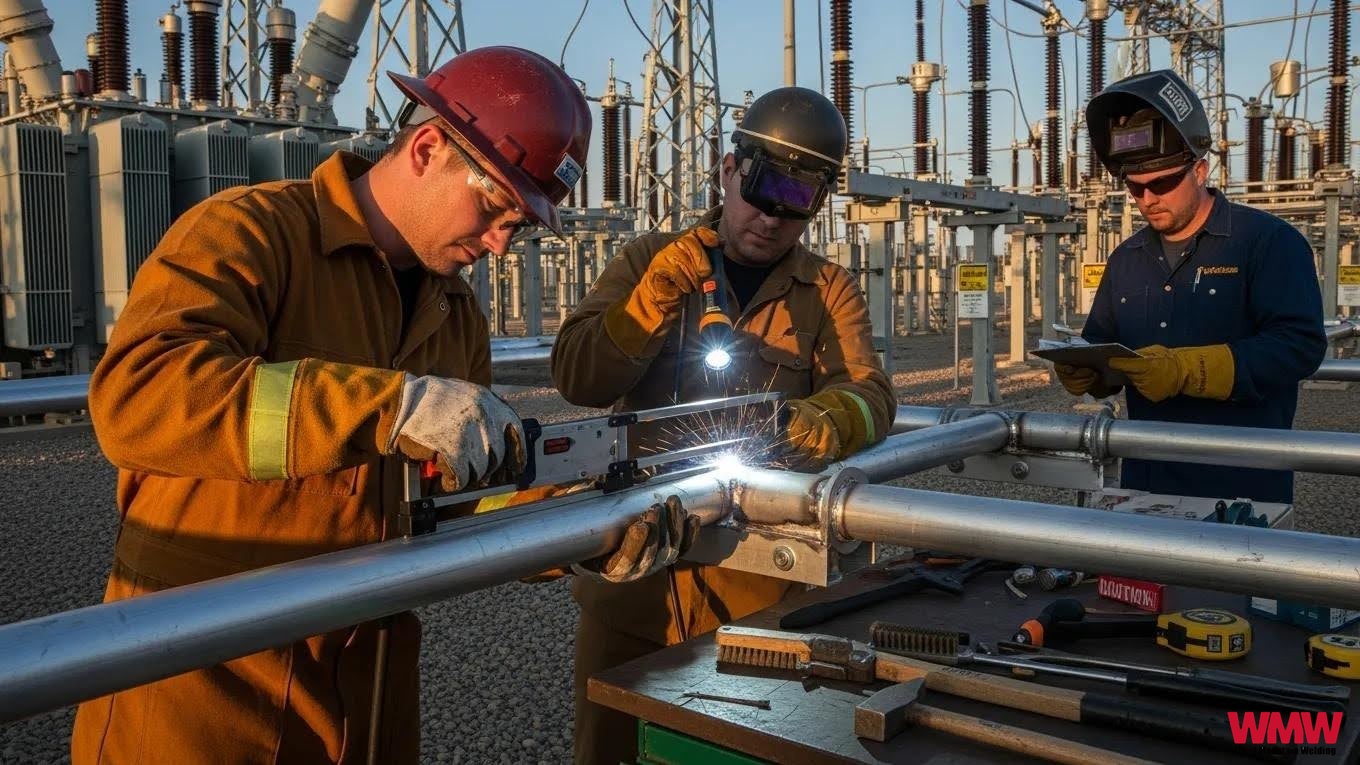
Aluminum welding for electrical substations is rarely limited to field repair. New substation construction and major upgrades require fabricated aluminum bus assemblies, custom transition pieces, and prefabricated components that arrive on site ready to install.
Certified shop fabrication of rigid tubular bus, flat bar bus, and custom transition fittings reduces field welding time, improves quality consistency, and simplifies owner inspection. Shops that maintain AWS D1.2-certified procedures and can provide complete WPS/PQR documentation give EPC contractors the compliance assurance that project specifications require.
Field fabrication capability is equally important. High voltage substation aluminum welding during construction or outage maintenance often requires qualified welders to work on-site, adapting to existing infrastructure geometry and schedule pressure. The best fabrication partners offer certified procedures and full quality documentation regardless of whether the work happens in the shop or in the field.
Why West Mountain Welding for Substation Aluminum Welding
West Mountain Welding is built specifically around the technical demands of aluminum welding in substation systems. Here is what that means in practice.
Certified Procedures and Qualified Welders
West Mountain Welding maintains AWS D1.2-certified welding procedures across the process, position, and base metal combinations encountered in substation work. All welders hold current, documented performance qualifications available for owner review on request.
Field Experience in High Voltage Environments
Substation welding is different from shop fabrication. West Mountain Welding's crews understand the access restrictions, hot work permitting, LOTO coordination, and scheduling protocols that utility owners require, and they know how to execute efficiently within those constraints.
Rapid Response for Emergency Repairs
Substation failures do not happen on a convenient schedule. West Mountain Welding has the capacity to mobilize quickly for emergency aluminum-welding substation repairs, bringing certified welders and qualified procedures to the site to restore service as safely and quickly as possible.
Full Documentation on Every Project
Every project is supported by WPS references, welder qualifications, inspection records, and as-built documentation, protecting the owner, satisfying regulatory requirements, and providing the baseline for future maintenance planning.
Conclusion
Aluminum welding in substation systems demands procedural rigor, material-specific expertise, and field experience to execute reliably in a live utility environment. From selecting the right aluminum busbar welding techniques to managing porosity and thermal expansion on-site, every step has direct consequences for substation safety and reliability.
For utility companies and EPC firms in the Mountain West, West Mountain Welding delivers the certifications, field experience, and documentation discipline that substation projects require. Contact West Mountain Welding to discuss your aluminum welding substation repair, new construction, or fabrication scope.
FAQs: Aluminum Welding in Substations
1. What is the most common welding method for substation busbar work?
MIG welding is most common for substation aluminum busbar welding due to its speed and versatility. TIG is used where precision and strict inspection criteria apply.
2. Why is oxide removal so critical before aluminum welding?
Aluminum oxide melts at roughly three times the base metal's melting point. If not removed immediately before welding, it contaminates the weld pool and creates defects that weaken the joint and increase electrical resistance.
3. Which certification matters most for substation aluminum welding contractors?
AWS D1.2 is the primary requirement. Contractors should also hold documented WPS and PQR records for the specific processes and joint configurations used on the project.
4. How often should welded aluminum substation connections be inspected?
Annual infrared thermography inspections under load are the standard. Critical connections may warrant more frequent inspection based on operating history and loading conditions.
5. Can MIG welding be used on large-diameter aluminum busbars in UHV substations?
Yes. Research confirms MIG (argon arc) welding is appropriate for large-diameter tubular aluminum busbars when procedures are properly qualified and operators are adequately trained.