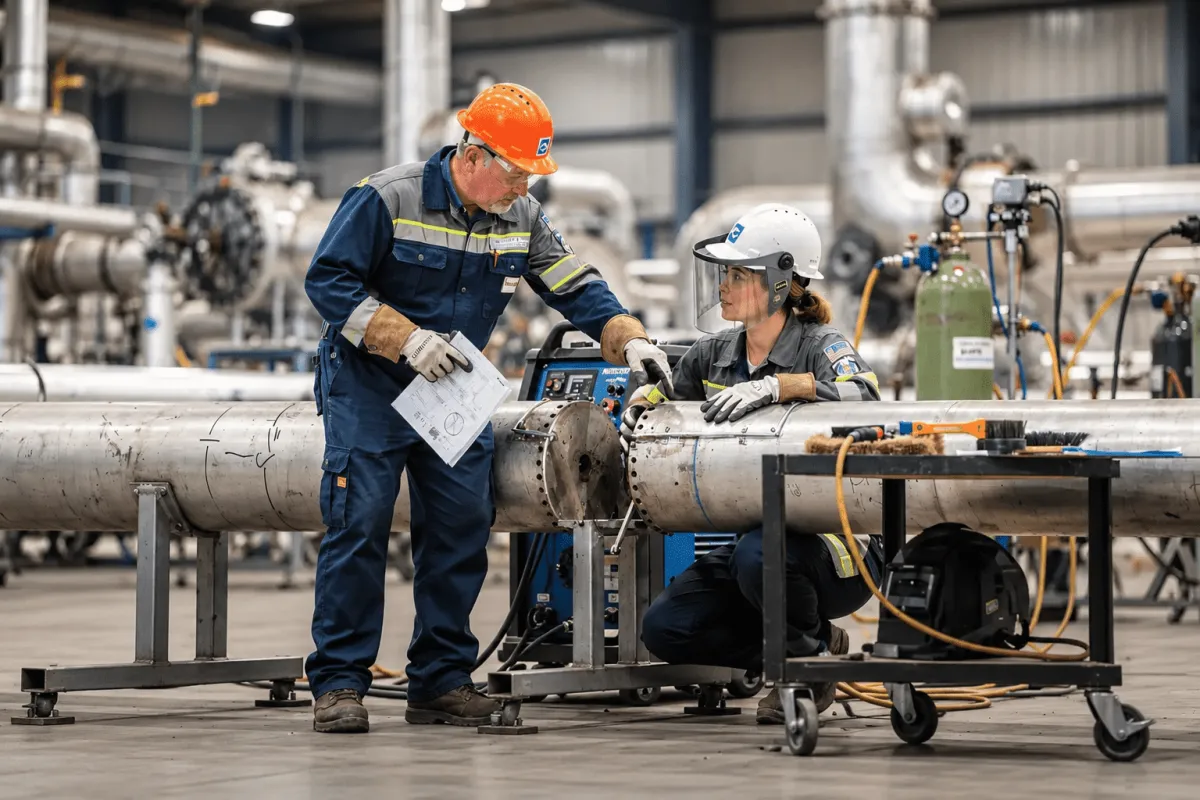
Steam Pipe Welding Tips for Reliable Power Plant Operations
Steam pipe welding on power plant piping requires a documented steam pipe welding procedure built around ASME B31.1 compliance, verified base metal, controlled preheat, and post-weld heat treatment (PWHT). These steam pipe welding tips walk through the sequence, from material verification through final nondestructive examination, to keep high-pressure, high-temperature lines running safely between outages and prevent the catastrophic failures that follow rushed or undocumented work.
Key Takeaways
A documented steam pipe welding procedure, not field improvisation, separates a code-compliant joint from a future forced outage.
Positive material identification (PMI) confirms actual alloy composition before hot work begins on decades-old steam lines.
Preheat and post-weld heat treatment (PWHT) control cracking risk and relieve residual stress in the heat-affected zone.
Orbital and automated welding deliver more consistent penetration than manual methods on repetitive high-pressure pipe runs.
Complete documentation — WPS, welder qualification records, and NDE results protect facilities during audits and code inspections.
1. Confirm Welder Qualification and Code Compliance Before Mobilization
Every sound steam pipe welding procedure starts with people, not pipe. Certified welders working to ASME B31.1, ASME B31.3, API 1104, and AWS D1.2 form the foundation of safe, code-compliant work on high-pressure steam systems. Welding procedure specifications (WPS) and current welder performance qualification records should be available for review before a crew ever mobilizes to a job site or shop floor.
Facility managers, EPC contractors, and utility operations engineers should request this paperwork upfront, not after crews arrive. A welder qualified on one process or position isn't automatically qualified for another, and a mismatch between the WPS on file and the actual joint configuration is one of the most common and most avoidable sources of rework on power plant piping projects.
2. Verify Base Metal Before Any Arc Strikes Steel
Operating steam pipe often carries decades of thermal cycling that alters grain structure in ways a visual inspection simply cannot catch. Positive material identification (PMI) testing confirms the actual base metal grade against original drawings before any hot work begins, protecting against a mismatched filler or procedure on a pressurized system.
Consider a 20-inch schedule 80 line rated for 650 psi and 750°F that has run for 25 years. Decades of thermal stress can shift its metallurgy well outside its original specification. One of the most consistent steam pipe welding tips across the industry: never assume a line's stamped rating still matches its current condition. Verify it every time, on every joint.
3. Run a Formal Risk Assessment Before Hot Tap Work
A documented risk assessment led by a Certified Welding Inspector (CWI) catches hazards specific to welding on an energized steam system that a routine work order often misses. This review flags pressure boundaries, missing heat numbers, and material unknowns that can change the entire welding approach before a crew commits to a cut or a hot tap.
Treat CWI sign-off as a hard prerequisite rather than a formality. On live, in-service lines, skipping this step trades a manageable planning delay for the far greater risk of an uncontrolled release, a failed joint, or an unplanned plant shutdown.
4. Complete a Defined Weldability Test Sequence
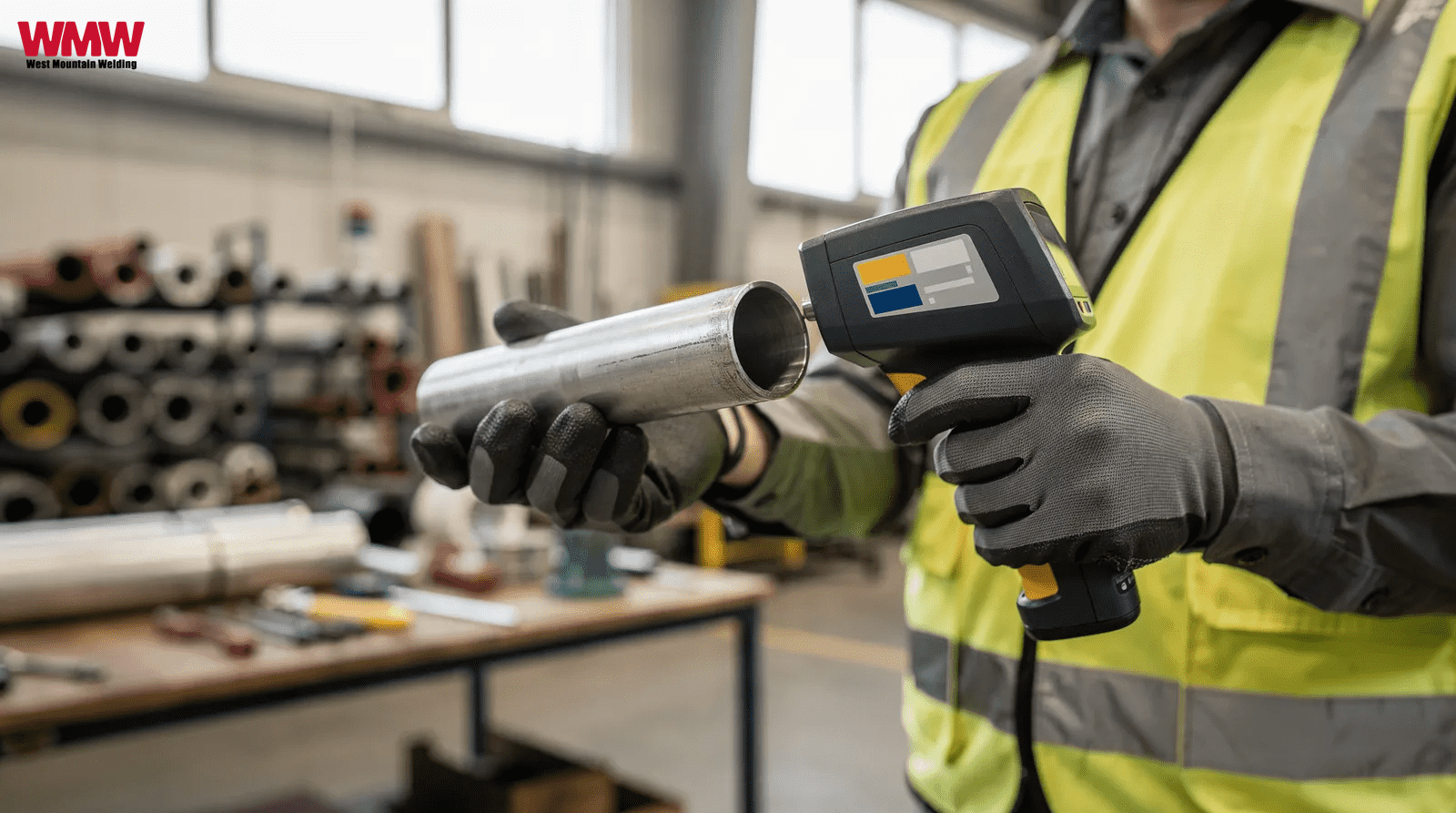
Confirming that aging steam pipe can safely accept a new weld calls for a specific, repeatable sequence rather than a single spot check:
Run positive material identification to confirm alloy composition against drawings and heat numbers.
Perform ultrasonic lamination scanning across a band surrounding the intended weld location.
Conduct hardness testing near the weld zone to detect graphitization from long-term high-temperature exposure.
Produce a weld test coupon using the qualified filler metal before committing to the live joint.
These checks apply equally to a hot tap on an in-service line and to a planned outage repair. A disciplined steam pipe welding procedure keeps verified materials, filler selections, and inspection records traceable from prefabrication through final tie-in, which protects both schedule and safety long after the arc goes cold.
5. Control Preheat and Post-Weld Heat Treatment
Correct preheat, matched filler alloy, and disciplined post-weld heat treatment (PWHT) stand between a durable joint and a safety-critical failure. Preheating the base material to the temperature specified in the qualified procedure reduces cracking risk in the heat-affected zone, particularly on higher-carbon and chrome-moly alloys common in power plant steam service.
PWHT, where the procedure calls for it, controls cooling rate to relieve residual stress built up during welding. Skipping or shortcutting either step is one of the fastest paths to a joint that passes initial inspection but develops cracks once thermal cycling and pressure loads take their toll over months of service.
6. Weld With Consistent Travel Speed and Amperage Control
Consistency, not raw skill alone, produces a sound weld on repetitive pipe runs. Steady travel speed and controlled amperage limit variation in penetration and bead profile across a joint, and favoring automated or orbital welding methods on long, repetitive runs adds another layer of consistency that manual technique struggles to match.
Automated and orbital welding hold arc position and heat input steady across extended pipe runs, producing a higher standard of joint quality than manual welding on comparable work. That consistency matters most where tight tolerances and precise spool drawings are non-negotiable for eventual field fit-up.
7. Use Prefabricated Spools to Reduce Field Exposure
Prefabricated spools that arrive fully welded and clearly labeled cut field welding time and limit crew exposure inside a live, operating plant. Less time spent inside an energized unit during a shutdown window means fewer variables, tighter scheduling, and reduced risk exposure for crews working around high-pressure steam.
Shop fabrication also allows for controlled-environment quality control that's difficult to replicate in the field. Consistent lighting, climate control, and equipment calibration all contribute to more predictable joint quality before spools ever reach the site.
8. Inspect and Document Every Completed Joint
A completed joint means little to a facility's records without a matching procedure record, welder certification, and nondestructive examination (NDE) results. Verification of a steam pipe welding procedure should follow a consistent sequence:
Confirm the procedure specification matches the pipe's pressure class and material grade.
Verify the assigned welder holds current qualification for that specific procedure.
Complete the weld and record heat numbers, filler metal, and pass sequence.
Perform required nondestructive examination X-ray or ultrasonic testing on critical joints and log results against the joint number.
File the completed documentation package before crews demobilize.
Facility managers should specifically request the qualified WPS, the assigned welder's performance qualification record, and NDE results tied to the specific spool or joint number. Cross-checking heat numbers against material certifications at this stage prevents documentation gaps before they surface during an audit.
9. Avoid the Habits That Cause Repeat Failures
Most steam pipe weld failures trace back to a handful of recurring mistakes rather than unpredictable circumstances:
Relying on legacy techniques instead of updated methods. Skipping modern welding approaches produces lower-quality, inconsistent joints on lines that can't tolerate variability.
Passing over automated or orbital processes where they'd help. Ignoring more repeatable welding methods forces a plant to chase efficiency through added inspection and rework rather than building consistency into the weld itself.
Treating multi-site or phased builds as an afterthought. Steam systems spanning several job sites need code-compliant planning from day one; retrofitting compliance after fabrication starts invites costly delays.
Using uncertified crews or unverified procedures. Certified welding and proper industrial metalwork keep small oversights from escalating into forced outages on critical infrastructure.
Weld quality problems on high-pressure systems often surface only after repeated thermal cycling stresses a joint over time, which is exactly why documentation and procedure discipline matter as much as the weld itself.
10. Follow a Documented Procedure From Day One
The fastest way to reduce steam pipe welding rework is following a documented procedure from the start rather than correcting problems after fabrication is already underway. Pairing a qualified steam pipe welding procedure with certified welders and code-compliant planning consistently outperforms an approach built around fixing issues in the field.
Of all the steam pipe welding tips covered here, this is the one that compounds: procedure discipline applied early prevents the rework, delays, and safety incidents that undermine plant reliability later.
Building Steam Pipe Welding Into a Reliability Program
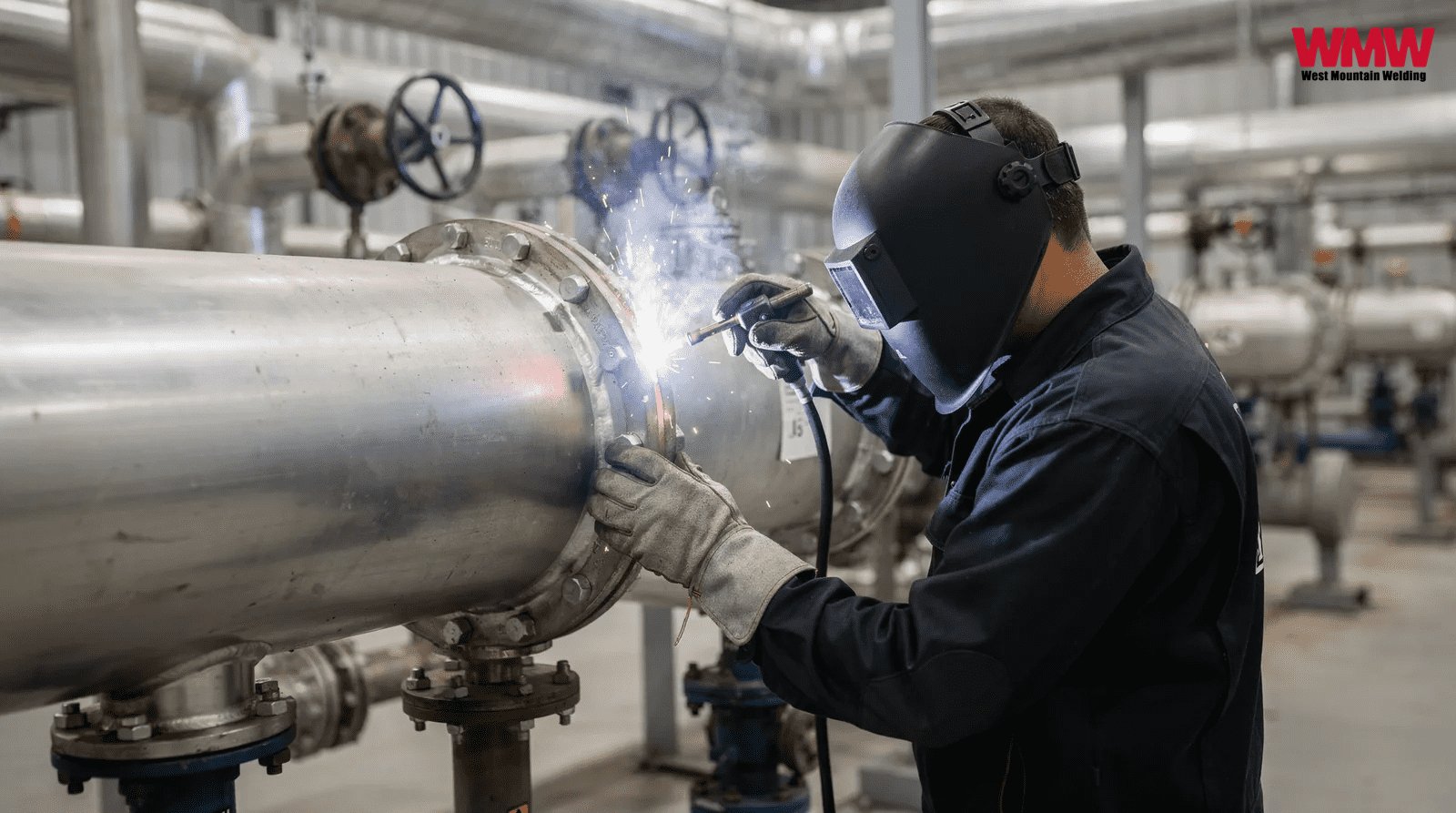
Treating steam pipe welding as a one-off task rather than part of an ongoing reliability program is a missed opportunity. Pipe that passes inspection today is still subject to thermal cycling and gradual metallurgical change tomorrow. Building periodic PMI checks, hardness testing, and documentation review into a standing maintenance schedule, rather than revisiting steam piping only after a failure catches degradation, is a planning problem instead of an emergency outage.
Facilities that fold these steam pipe welding tips into a documented maintenance cadence tend to see fewer surprise failures and shorter, more predictable outage windows over time.
Need reliable pipe welding support for your next project? West Mountain Welding provides precision oil and gas pipe welding backed by experienced fabrication and documented quality practices. Contact us to discuss your project.
Frequently Asked Questions
What codes govern steam pipe welding for power plants?
Certified welders work to ASME B31.1, ASME B31.3, API 1104, and AWS D1.2 standards, which govern qualification, procedure, and inspection requirements for high-pressure steam piping.
Why does material verification matter before welding a live steam line?
Decades of thermal cycling can alter a pipe's grain structure and effective rating. PMI testing confirms actual base metal grade before hot work begins on a pressurized system.
What documentation should be ready before crews mobilize?
A qualified WPS and current welder performance qualification records should be available for review before mobilization, not requested after crews arrive on site.
Why is post-weld heat treatment necessary on steam pipe joints?
PWHT controls cooling rate and relieves residual stress built up during welding, reducing the risk of delayed cracking once the joint enters service.
How often do steam pipe welds fail after passing initial inspection?
Failures after initial inspection typically stem from thermal cycling and pressure loads over months of service, not from the inspection itself, which is why documented procedures and NDE remain essential.