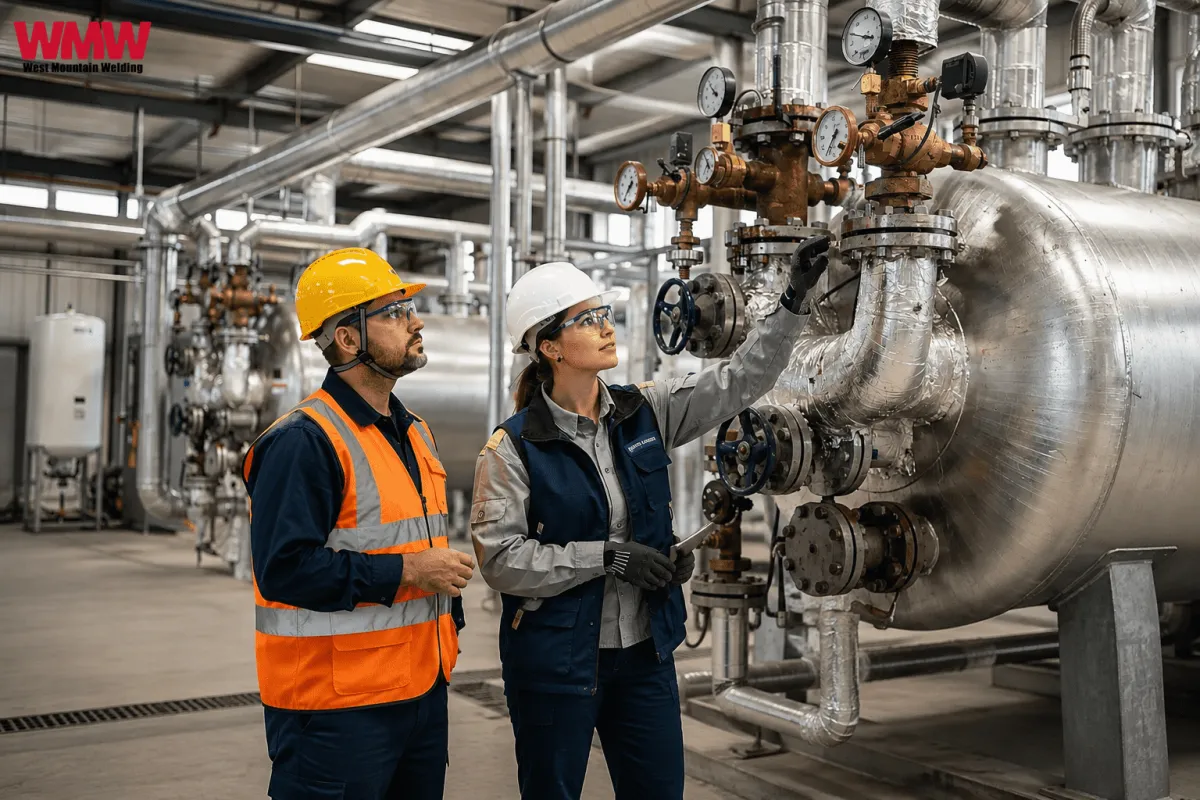
What Is High Pressure Boiler Welding and How Is It Performed?
A high-pressure boiler is a pressure vessel or piping system that operates above the thresholds defined by governing piping codes, typically producing steam or heated fluid at pressures and temperatures that demand certified welding, strict material control, and documented quality assurance. High-pressure boiler welding is the certified process of joining boiler tubes, headers, and pressure vessel components using code-qualified welding procedures under standards such as ASME Section IX, ASME B31.1, and ASME B31.3.
Because the tubing involved is typically low-alloy heat-resistant steel prone to cracking under uncontrolled heat, the work carries tighter tolerances than standard structural or piping welds.
Key Takeaways
A high-pressure boiler is defined by piping code classification, not just pipe diameter or wall thickness.
High-pressure boiler welding depends on a written, ASME Section IX-qualified welding procedure specification (WPS) before any arc strikes metal.
Boiler tube alloys with chromium, molybdenum, and carbon content are prone to quench hardening, which raises cracking risk near the weld.
ASME B31.1 governs power piping, ASME B31.3 governs process piping, and B31.9 applies to lower-pressure institutional systems.
Selecting the correct piping code is the facility owner's responsibility, not the welding contractor's.
High-Pressure Boiler Basics
Governing piping codes, not the welding crew, define what qualifies as a high-pressure boiler. Classification depends on service pressure, fluid type, and system function, and it carries real consequences for weld qualification, inspection frequency, and legal liability. A misclassified system invites failed inspections and expensive rework once a project is already underway.
Selecting the correct piping code is the responsibility of the facility owner, since several codes overlap and can blur the line between an ordinary piping system and one that demands stricter process controls. A boiler tube network can fall under a more rigorous code purely because of its fluid service category, independent of pipe diameter or wall thickness. Getting this classification right at the outset determines every downstream decision, from welder qualification to post-weld inspection.
The Welding Challenge With Boiler Tubes
Base metals common to boiler tubing, particularly low-alloy heat-resistant steels, resist welding by nature. Their elevated chromium, molybdenum, and carbon content creates a strong tendency toward quench hardening, a condition in which rapid cooling produces a hard, brittle microstructure near the weld. That hardening raises cracking risk in the heat-affected zone, which is why high-pressure boiler welding demands tighter preheat, interpass temperature, and cooling-rate control than ordinary structural work requires.
Standards Behind High-Pressure Boiler Welding
Certified welders execute this work against recognized industrial codes rather than general shop practice. Standards commonly cited across the industry include:
ASME B31.1 for power piping in power plants and boiler rooms
ASME B31.3 for process piping in industrial facilities
ASME B31.9 for lower-pressure institutional piping systems
API 1104 for pipeline welding
AWS D1.2 for structural aluminum welding
West Mountain Welding performs boiler and pressure piping projects to these standards, with welding procedures and welder qualification records available on request. Matching the correct code to the correct system, before any welding begins, is the foundation of every high-pressure boiler repair or fabrication project.
Preparation Before the Weld Begins
Preparation determines whether a high-pressure boiler weld passes inspection or fails under load. Skipping documentation costs contractors rework, downtime, and in some cases regulatory citations. Before an arc ever strikes metal, four elements need to be confirmed and on file.
Written Welding Procedure Specifications
Any contractor performing boiler repairs must hold a written welding procedure specification (WPS) qualified under ASME Section IX before starting work. This document defines joint design, filler metal, preheat temperature, and welding technique, and it has to exist before mobilization, not during it.
Qualified personnel matter just as much as paperwork. Reputable boiler repair teams staff licensed professionals and certified ASME welders rather than general fabricators pulled from unrelated jobs. West Mountain Welding follows this standard, assigning certified welders to projects governed by ASME B31.1, B31.3, API 1104, and AWS D1.2, with procedures and qualifications available for review.
WPS and Welder Qualification Responsibility
Responsibility for qualifying both the welding procedure specification and the individual welders typically falls on the employer, not the equipment owner or an individual tradesperson. Certain construction codes raise the bar further: depending on service conditions, some require Charpy impact testing to verify toughness at low temperatures, while others mandate post-weld heat treatment to relieve residual stress. Confirming these requirements early prevents costly rejection after a weld is already complete.
Pre-weld checklist
Verify the qualified WPS matches the applicable code
Confirm welder certifications are current and documented
Identify if Charpy impact testing applies to the service condition
Determine if post-weld heat treatment is required
How Do You Perform High-Pressure Boiler Welding?
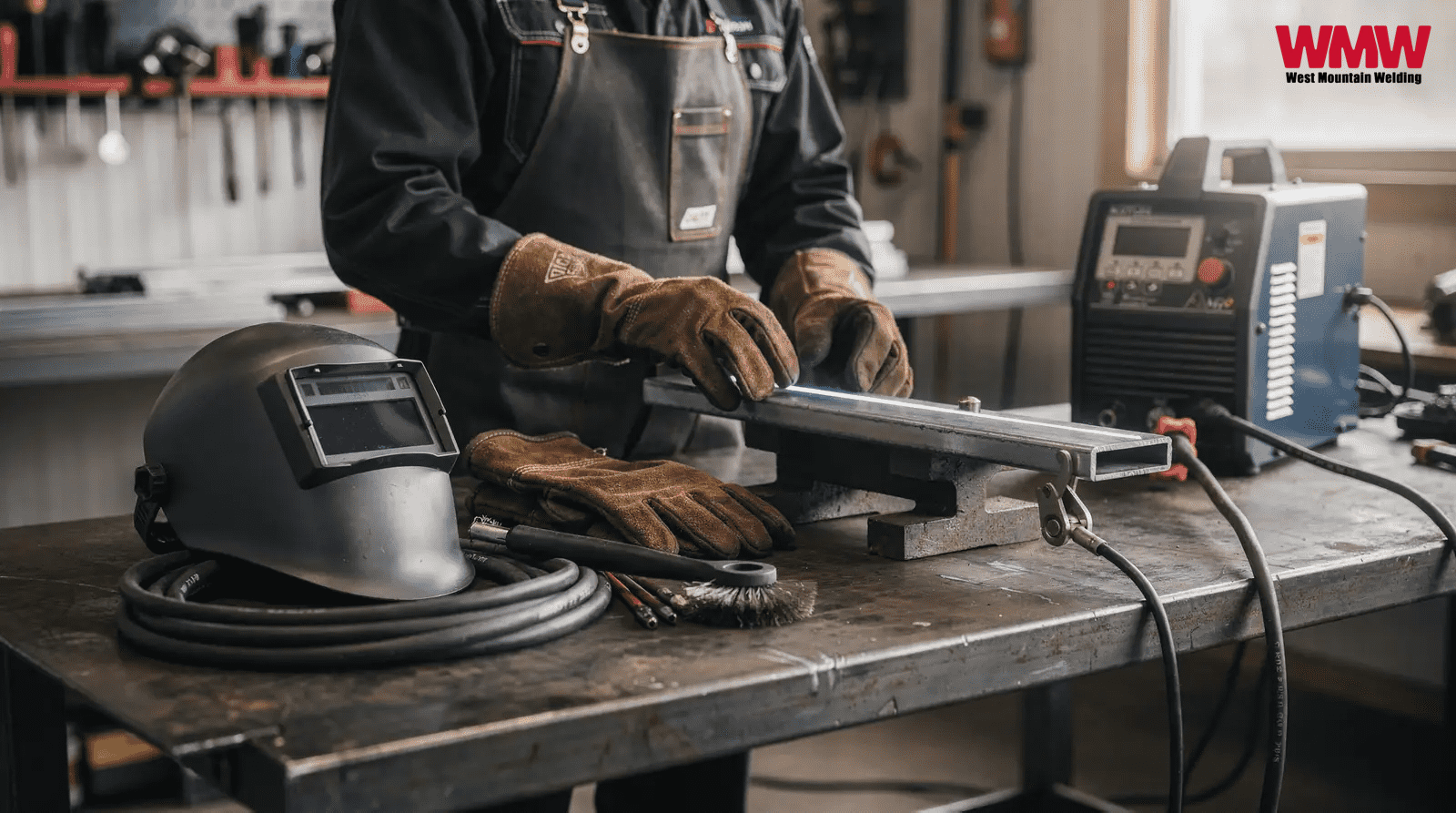
High-pressure boiler welding follows a defined sequence: review drawings, fabricate in a controlled shop environment, weld to code, then install and inspect in the field. Skipping steps invites cracked welds, failed hydrotests, and costly shutdown delays on critical infrastructure.
Following this sequence consistently reduces rework and keeps projects on schedule.
1. Review drawings and specifications. Projects begin with drawings and specs sent for engineering review, followed by an accurate quote and a defined project timeline before fabrication starts.
2. Fabricate spools in a controlled shop. Fitters and welders hold tight dimensional tolerances, apply clear spool labeling, and run quality control checks in a controlled environment before any component leaves the shop floor.
3. Weld and label piping for field use. Certified, prefabricated piping is fully welded and labeled to match drawings, so field crews spend less time fitting components on-site and more time closing out the installation.
4. Account for base metal behavior. Low-alloy heat-resistant steel s used in boiler tubes carry higher chromium, molybdenum, and carbon content, creating a tendency toward quench hardening. Welders control heat input and cooling rate deliberately to avoid brittle zones and cracking near the weld.
5. Mobilize field crews for installation and support. Field crews handle installation, repairs, planned shutdown work, and emergency response once prefabricated spools arrive on-site.
Shop Fabrication and Field Risk Reduction
Controlled-environment fabrication limits variables like wind, moisture, and temperature swings that degrade weld quality outdoors. Tight-tolerance shop work paired with clear spool labeling means field crews install components as designed, cutting fit-up errors and reducing time spent on shutdown.
Boiler Tube Welding Versus Standard Piping
Boiler tube steel is engineered to resist oxidation and hold strength at elevated temperature. That same alloy content makes it prone to quench hardening. Poor weldability means welders need tighter control over preheat, interpass temperature, and cooling rate than standard carbon steel piping requires. It means visual inspection alone is rarely sufficient to confirm weld integrity.
Piping Code Overlap and Selection
ASME Section IX governs the qualification of welding procedures and welders used in the construction, installation, repair, or alteration of a boiler, with the applicable piping code determined by the specific vessel or system involved. No single standard covers every situation. Welders and inspectors must match the correct code to the piping system, pressure class, and service type before any arc strikes metal.
Piping codes overlap considerably, which creates confusion on multi-discipline job sites. ASME B31.1 applies to power piping found in power plants and boiler rooms. ASME B31.3 governs process piping in industrial facilities. ASME B31.9, by contrast, covers smaller-diameter, lower-pressure institutional piping and carries the loosest acceptance criteria of the three. Selecting the wrong standard risks failed inspections and expensive rework.
Code Selection Responsibility
Responsibility falls on the facility owner, not the welding contractor. Because piping codes overlap, owners must determine which standard suits their application before fabrication begins. Field crews and shop welders then execute to that determination, documenting compliance throughout the project.
West Mountain Welding's certified welders work across the code range this decision-making requires, including ASME B31.1 for power piping in generation facilities, ASME B31.3 for process piping systems, API 1104 for pipeline welding, and AWS D1.2 for structural aluminum applications. Procedures and qualification records remain available on request, giving engineers and inspectors documentation to verify compliance before a single joint is certified.
Common Mistakes on Boiler Repairs
Two errors account for most boiler repair failures: skipping written procedure qualification and ignoring alloy steel's hardening behavior under heat. Both mistakes cost time and money, and in the worst cases, they compromise safety. Crews working on high-pressure boiler systems face unforgiving tolerances, so shortcuts rarely go unnoticed for long.
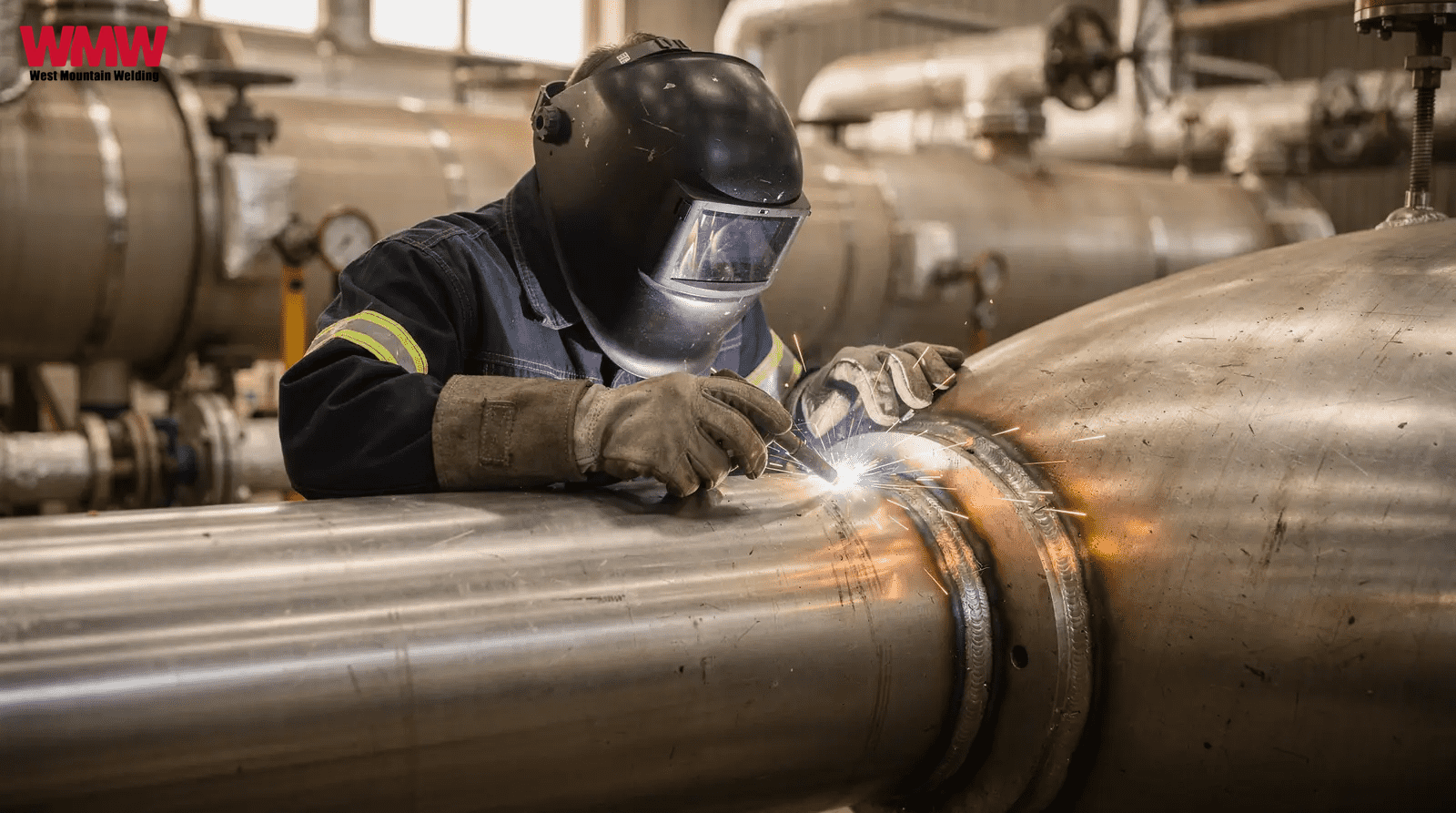
Skipping a Qualified Procedure
Repair work performed without a written WPS, prepared and qualified under ASME Section IX, falls out of compliance immediately. Inspectors flag this gap quickly, and rework follows. A documented, code-qualified procedure isn't paperwork for its own sake; it's the record that proves a repair meets the standard the vessel was originally built to.
Rushing Alloy Tube Steel
Tube steel alloyed with chromium, molybdenum, and carbon hardens quickly when quenched during welding, and poor technique makes that tendency worse. Rushed cooling or inconsistent heat input raises the risk of cracking once the tube returns to high-pressure service. Skilled technicians control heat input and cooling rate deliberately rather than treating alloy tubes like standard carbon steel.
Common mistakes to avoid:
Welding without a qualified procedure specification on file
Disregarding preheat and interpass temperature control on alloy tubes
Rushing cooling cycles instead of managing quench-hardening risk
Treating boiler tube steel like standard carbon steel piping
Skipping post-weld heat treatment when the code requires it
Conclusion
High-pressure boiler welding demands precision, documented qualifications, and unwavering adherence to code. Whether the project involves a power plant retrofit, a critical outage, or new pressure piping infrastructure, certified welding executed to ASME standards keeps systems operating safely and reliably for years.
West Mountain Welding's certified crews bring that field-proven experience to every boiler and pressure piping project, with procedures and qualifications available on request.
Frequently Asked Questions
What is a high-pressure boiler?
A high-pressure boiler is a pressure vessel or piping system classified under codes like ASME B31.1 based on service pressure and fluid type, requiring certified welding and strict quality control.
What codes govern high-pressure boiler welding?
Common standards include ASME B31.1 and B31.3 for power and process piping, API 1104 for pipeline welding, and AWS D1.2 for structural aluminum welding.
Why is boiler tube welding so difficult?
Boiler tubing uses low-alloy heat-resistant steels with higher chromium, molybdenum, and carbon content, creating a tendency toward quench hardening and cracking near the weld.
Who decides which piping code applies to a boiler system?
The facility owner is responsible for selecting the correct piping code, since overlapping codes can blur the line between standard and higher-pressure systems.
What documentation is required before high-pressure boiler welding begins?
A written welding procedure specification qualified under ASME Section IX, along with current welder certifications, must be on file before any welding starts.